
Senior Fellow of the Leimena Institute (IL), Dr. Alwi Shihab, served as a speaker at IL’s media gathering together with Senior Fellow IL and Ministerial Special Staff, Prof. Dr. Siti Ruhaini Dzuhayatin, Vice Head of Education and Training of Istiqlal Mosque, Dr. Mulawarman Hannase, and Executive Director of IL, Matius Ho, in Jakarta, June 10, 2024.
Jakarta, LKLB News – A total of 8,055 educators from 37 provinces in Indonesia have graduated as alumni of the Cross-Cultural Religious Literacy (CCRL) training held by the Leimena Institute and 32 educational and religious institutions over a period of about 2.5 years. CCRL equips educators in Indonesia, consisting of school/madrasah teachers and religious counselors, with the competence to build tolerance and peaceful interfaith collaboration.
Executive Director of the Leimena Institute, Matius Ho, stated that in a world that is increasingly fragmented and polarized, there is a need for educational approaches that emphasize strengthening cooperation and solidarity. That is why the CCRL program has become very significant, especially for teachers as the main actors in the world of education.
“Cross-Cultural Religious Literacy is our joint effort to build mutual trust among followers of different religions. This is social capital for the progress of the Indonesian nation,” said Matius Ho at the media gathering in Jakarta, Monday (10/6/2024).
Matius said CCRL strengthens interfaith dialogue because it is not only aimed at building mutual understanding and tolerance, but also at encouraging concrete interfaith cooperation. CCRL trains educators to have three competencies: personal competence, comparative competence, and collaborative competence.
Personal competence means how believers can understand their own religion well and how their religion teaches them to treat people who are different from themselves. Comparative competence, on the other hand, encourages us to understand other religions from the perspective of their adherents.
“I need to understand a different religion through the lens of its own followers. So if I want to understand Islam, then I need to ask Dr. Alwi Shihab, not search in a Christian book about Islam, because that would not be accurate and might even be negative,” said Matius.
The CCRL program, which began in October 2021, has grown very positively with a total of 9,969 educators participating in the training. CCRL has become known as an Indonesian educational approach to building social cohesion. The Leimena Institute partners with various institutions in implementing CCRL, including 20 Islamic institutions, 7 Christian institutions, and new partnerships with Buddhist, Hindu, and Confucian institutions.
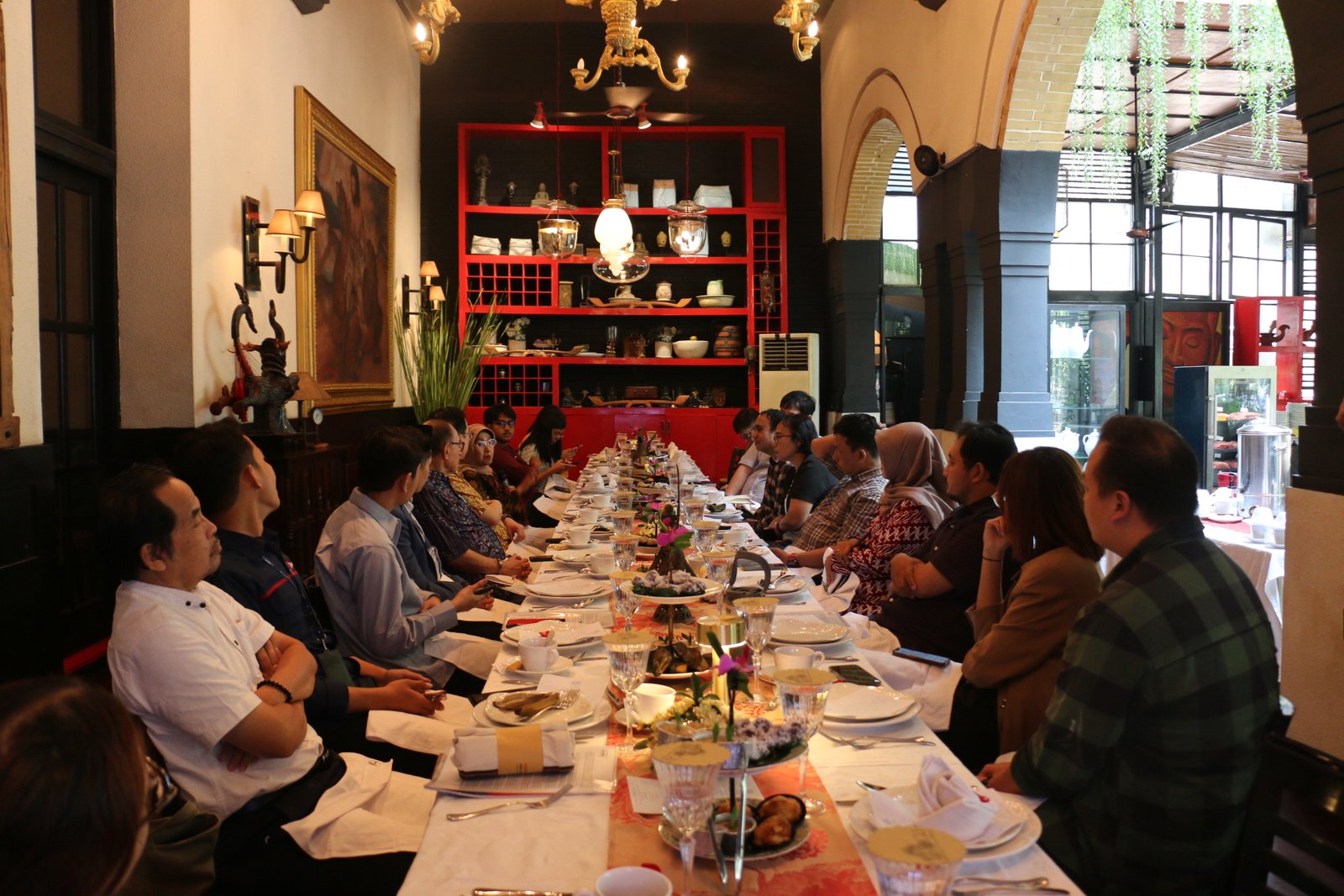
The journalists listened to the presentations from the speakers.
In line with this, Senior Fellow of the Leimena Institute as well as former Minister of Foreign Affairs and Presidential Special Envoy for the Middle East and the Organization of Islamic Cooperation (OIC), Dr. Alwi Shihab, said the CCRL program trains teachers to develop harmonious interactions, mutual respect, and positive interfaith collaboration.
“Teachers are at the forefront of protecting their communities from the influence of religious intolerance and extremism. Unfortunately, we observe that the rise of radicalism in educational institutions is linked to models of interpretation, understanding, and teaching, as well as certain schools of thought,” said Alwi Shihab, who is also a Senior Fellow of the Leimena Institute.
Alwi added that intolerance still flourishes in Indonesia not solely because of hatred, but because of misunderstandings of religious teachings. That is why CCRL is increasingly important to be delivered to teachers so they can pass it on to students as future leaders of the nation.
“If they are not equipped with proper knowledge, they can become intolerant leaders. Of course, tolerance is not only in the religious field, but also in politics, socio-cultural life, and other areas,” said Alwi.
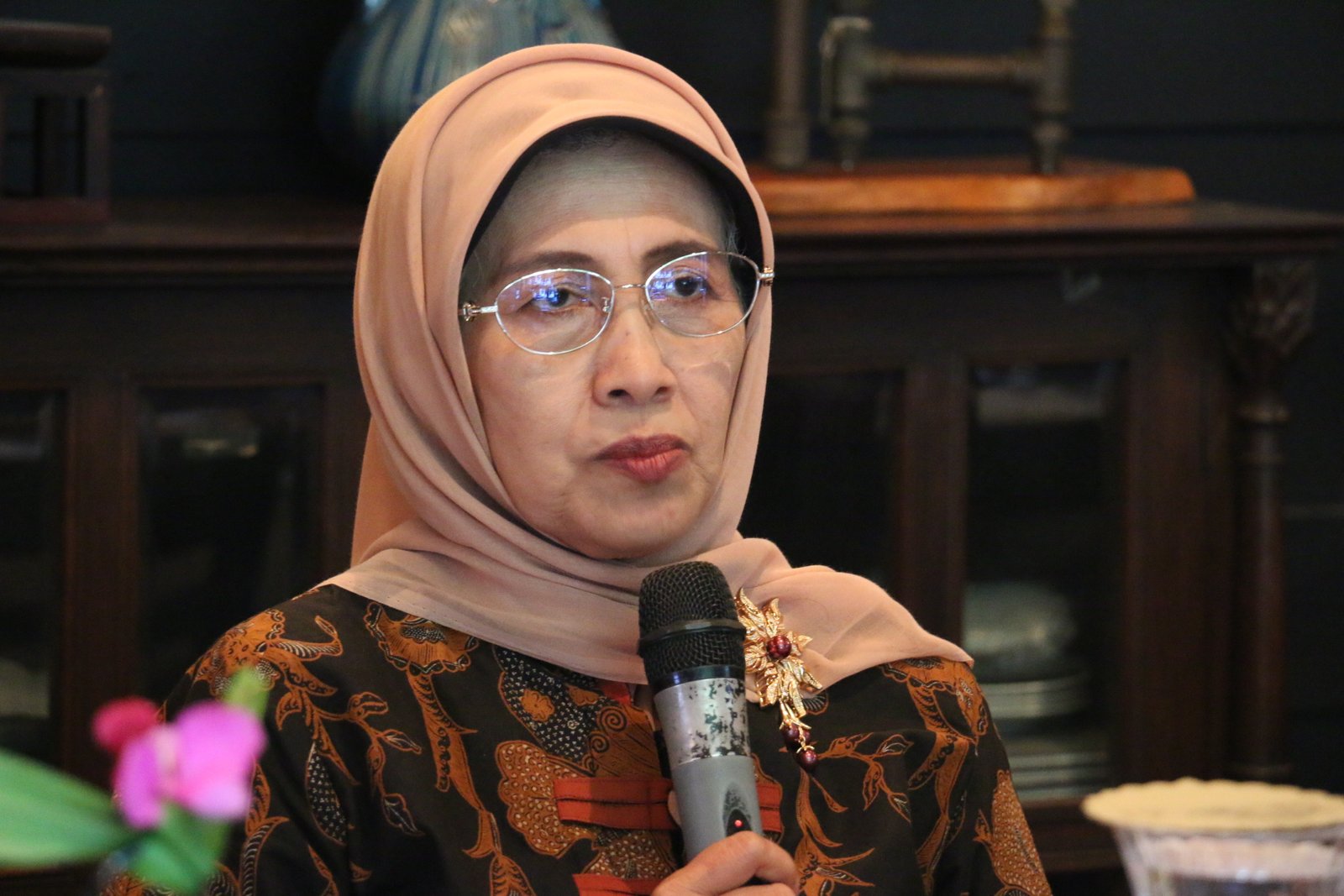
Presidential Special Staff and Senior Fellow of the Leimena Institute, Prof. Dr. Siti Ruhaini Dzuhayatin.
In agreement, Ministerial Special Staff and Senior Fellow of the Leimena Institute, Prof. Dr. Siti Ruhaini Dzuhayatin, affirmed that although Indonesians appear to be an open and tolerant people, in reality, frictions often occur at the grassroots level. The problem does not lie in hatred, but in misunderstandings of religious teachings.
“These misunderstandings or lack of understanding trigger intolerance, which occurs not only in Indonesia, but also in many Islamic countries worldwide. Therefore, we need pedagogy that incorporates curriculum on religious moderation, and this is where CCRL becomes important,” said Ruhaini.
According to her, tolerance cannot only be taught cognitively but must also be experienced in practice. CCRL is therefore very fitting to be included in the learning process. CCRL gives teachers direct experience of diversity through encounters and dialogue with people of different religions, including opportunities to ask in-depth questions about other religious teachings.
“CCRL is a very sharp pedagogy to ground religious moderation that is still conceptual,” said Ruhaini.