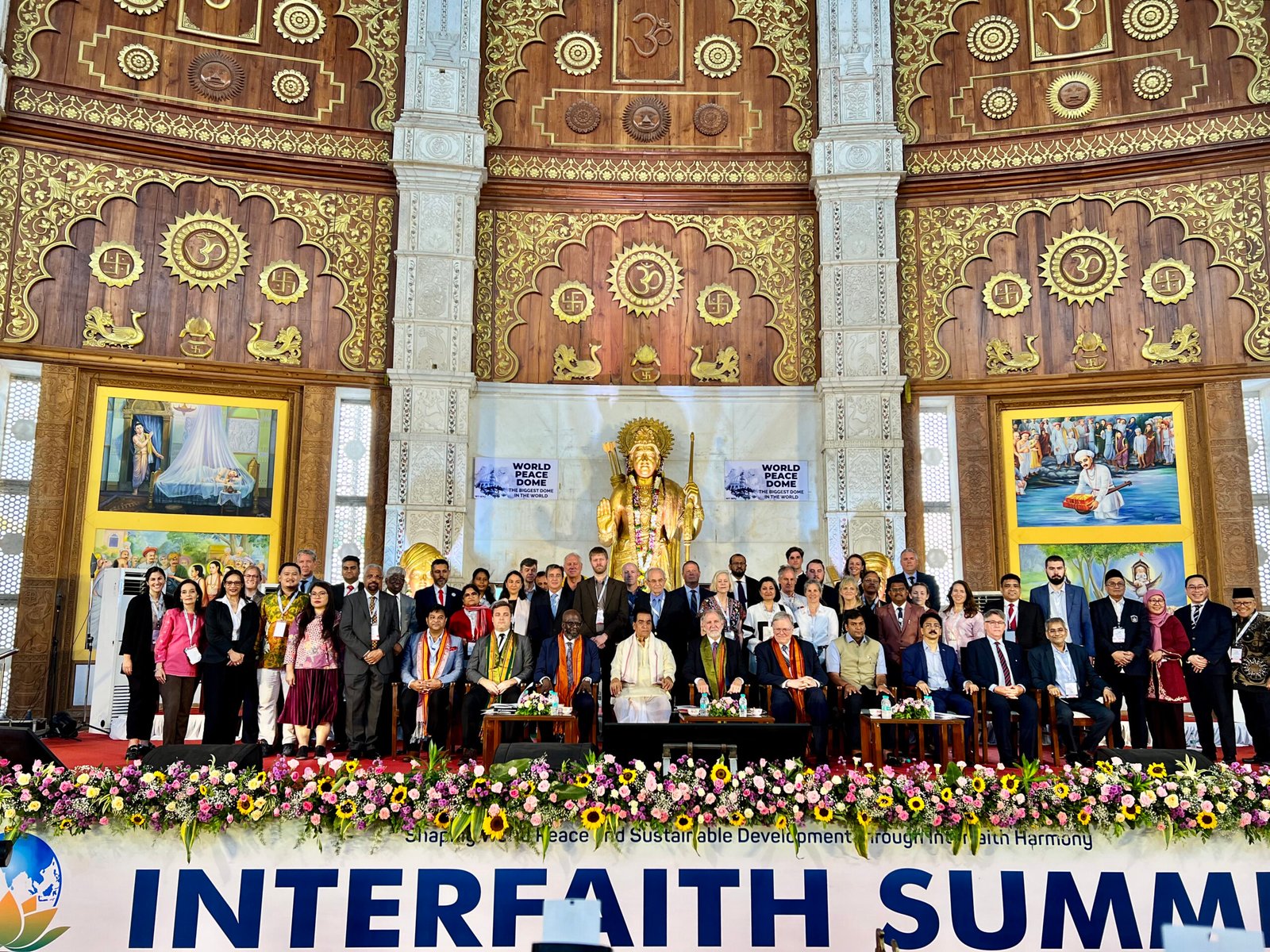
Participants of the G20 Interfaith Forum in Pune, India, September 5–7, 2023, held under India’s G20 Presidency.
Jakarta, LKLB News – The Leimena Institute has been recognized for its significant contribution to the development of interfaith education in Indonesia through the Cross-Cultural Religious Literacy (CCRL) program. The President of the G20 Interfaith Forum Association, Prof. W. Cole Durham, Jr., gave special recognition to the Executive Director of the Leimena Institute, Matius Ho, as one of the distinguished participants at the G20 Interfaith Forum in Pune, India, on September 5–7, 2023.
The G20 Interfaith Forum in Pune, India, carried the theme “Shaping World Peace and Sustainable Development through Interfaith Harmony.” The event, which opened with a reception at the World Peace Dome in Pune, was organized by the G20 Interfaith Forum Association, the Interfaith Alliance for Safer Communities, and the World Peace Center in Alandi, Pune.
“Through the CCRL program, Leimena Institute seeks to provide religious literacy and interfaith education that creates space for teachers to gain positive experiences in engaging with different religions,” said Matius Ho, who served as one of the plenary speakers.
In this forum, Matius was joined by delegates from the CCRL program: the Chairman of the Pesantren Tebuireng Endowment Board (BWPT), K.H. Abdul Halim Mahfudz; Vice-Rector of the Indonesian Muslim University (UMI), Prof. Hattah Fattah; and Faculty of Psychology lecturer at Muhammadiyah University of Surakarta, Yayah Khisbiyah.
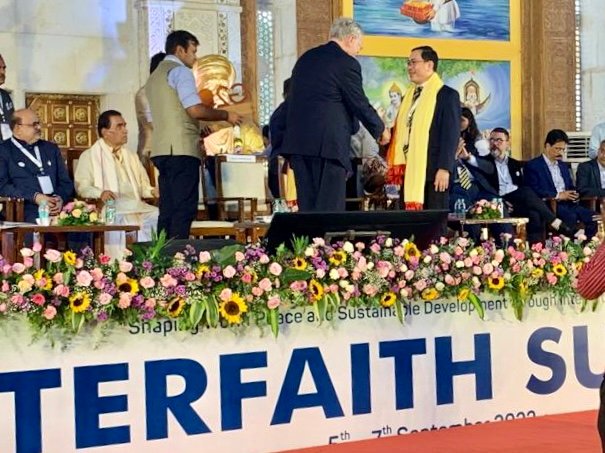
Leimena Institute Executive Director, Matius Ho, received a yellow shawl of honor from Prof. W. Cole Durham, Jr., President of the G20 Interfaith Forum Association, as one of the “distinguished participants” of the G20 Interfaith Forum in Pune, India.
“I presented on global education perspectives in the Indonesian context. The National Education System Law requires religious education; however, unfortunately, our religious education tends not to foster interaction with people of different faiths. This correlates with high levels of intolerance among teachers and students, as reflected in several surveys,” Matius explained.
He further noted that CCRL, as an alternative model of interfaith education, provides positive experiences in introducing diversity to teachers. CCRL training enables teachers to encounter religious differences directly from the adherents themselves. Teachers who graduate from the CCRL training can also join follow-up programs such as lesson plan development, workshops, and webinars featuring national and international speakers.
Amid today’s interconnected global crises—including violent conflict, widening inequality, the climate emergency, and declining trust in global and local institutions—leaders who can foster cross-sectoral and interfaith cooperation are urgently needed.
The G20 Interfaith Forum aims to generate innovative solutions, promote dialogue, and inspire meaningful change. By adopting a holistic approach that integrates religious and ethical perspectives, the forum seeks to shape a more inclusive, peaceful, and sustainable world for all.
“This is the contribution of CCRL to the field of education. Why present it at an international forum in India? Because the CCRL program, which has been running for more than two years, is seen as having great potential and applicability in other countries. Vietnam, for example, has already shown interest in the program,” said Matius.
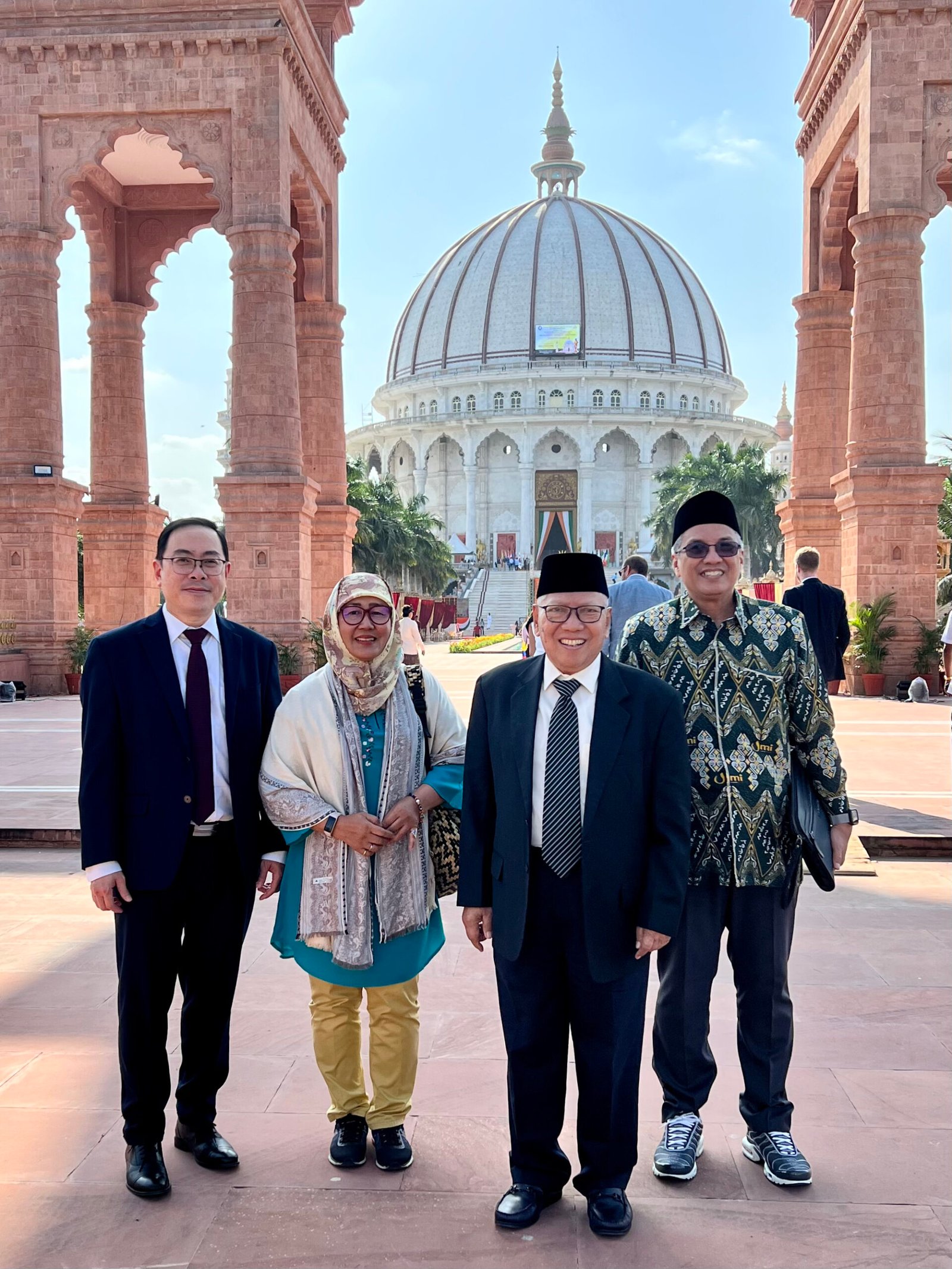
Delegates of the Cross-Cultural Religious Literacy (CCRL) program included: Matius Ho (Executive Director, Leimena Institute), Yayah Khisbiyah (Faculty of Psychology Lecturer, Muhammadiyah University of Surakarta), K.H. Abdul Halim Mahfudz (Chairman, Pesantren Tebuireng Endowment Board), and Prof. Hattah Fattah (Vice-Rector, Indonesian Muslim University).
The G20 Interfaith Forum in Pune was also attended by senior Indian government officials. Issues raised ranged from global socio-economic crises to the Sustainable Development Goals (SDGs). The forum highlighted concrete steps that can be integrated into the G20 process, emphasizing the transformative power of interfaith collaboration.