Written by Ahmad Syafi’i
At 25 years old, being a teacher is not easy. My educational journey began in 2002 at Pertiwi Kindergarten in Unyi Village and continued from 2004 to 2010 at State Elementary School 92 Uloe, and from 2010 to 2013 at MTs As’adiyah Uloe. After that, I set foot in another regency to study at the As’adiyah Central Islamic Boarding School in Sengkang, specifically at MA As’adiyah Putra in Macanang.
My journey then led me to eastern Indonesia, to West Papua, a place people call “a slice of heaven,” the oil city, the city of the Bible, and even the city of a thousand and one rivers. It was in West Papua that I earned my bachelor’s degree in Islamic Religious Education at the State Islamic Institute (IAIN) of Sorong from 2016 to 2020. Afterward, I returned to my hometown to continue my scholarly pursuit at the Alauddin State Islamic University (UIN) in Makassar, South Sulawesi, from 2021 to 2023.
For me, reading is something I truly enjoy, as is writing. In fact, writing academic papers or research has become one of my hobbies. While it’s always difficult at the beginning, over time it becomes a habit. Through writing academic papers, I’ve had the opportunity to visit cities I had never been to before, all on a zero-dollar budget. I’ve been able to do this not just once, but multiple times, by attending events related to scientific writing and other forms of authorship.
I first discovered the Cross-Cultural Religious Literacy (CCRL) program on Instagram. It felt like a blessing from the Quran (allahummarhamna bil qur’an). I imagined the CCRL training would be exciting, and it turned out to be true. Throughout the training, I was impressed by the various international speakers the program brought in. That is why, even today, as a CCRL alumni, I remain enthusiastic about participating in the many activities held by the Leimena Institute through the CCRL program.
The core themes of CCRL—tolerance, intolerance, moderation, and radicalism—have fueled my passion for learning. These issues are ripe for discussion, and by focusing on them, I was even able to have my paper accepted at the 2022 Annual International Conference on Islamic Studies (AICIS) in Bali.
Speaking of moderation, it’s best for me to share a bit about my impressions while living in Sorong City, West Papua. First, a strong sense of harmony is a defining characteristic of the community there. The fact that Muslims are considered a minority and non-Muslims a majority is commonplace, just like in other regions such as Manado, Medan, Bali, and other cities in Papua and West Papua. Despite this, houses of worship in Sorong coexist.
It’s also common to find mosques and churches located very close to each other. This raises the question: does a life like this lead to conflict? For someone born and raised in Bone—a place where the religious majority and minority have never even been discussed—my initial mindset was quite rigid.
When faced with a living situation where people of different faiths coexist, there was certainly a feeling of unease. That’s the mindset I had when I first arrived in Sorong. I thought, “How is it possible for people of different religions to live in the same neighborhood? How can a mosque and a church be so close? Don’t they interfere with each other’s worship?”
However, the reality I encountered was the concept of lita’arafu from the Quran, Surah Al-Hujurat, verse 13, being brought to life in this city. This concept doesn’t just mean to “get to know one another”; it means more than that. It means to respect, honor, and accept one another.
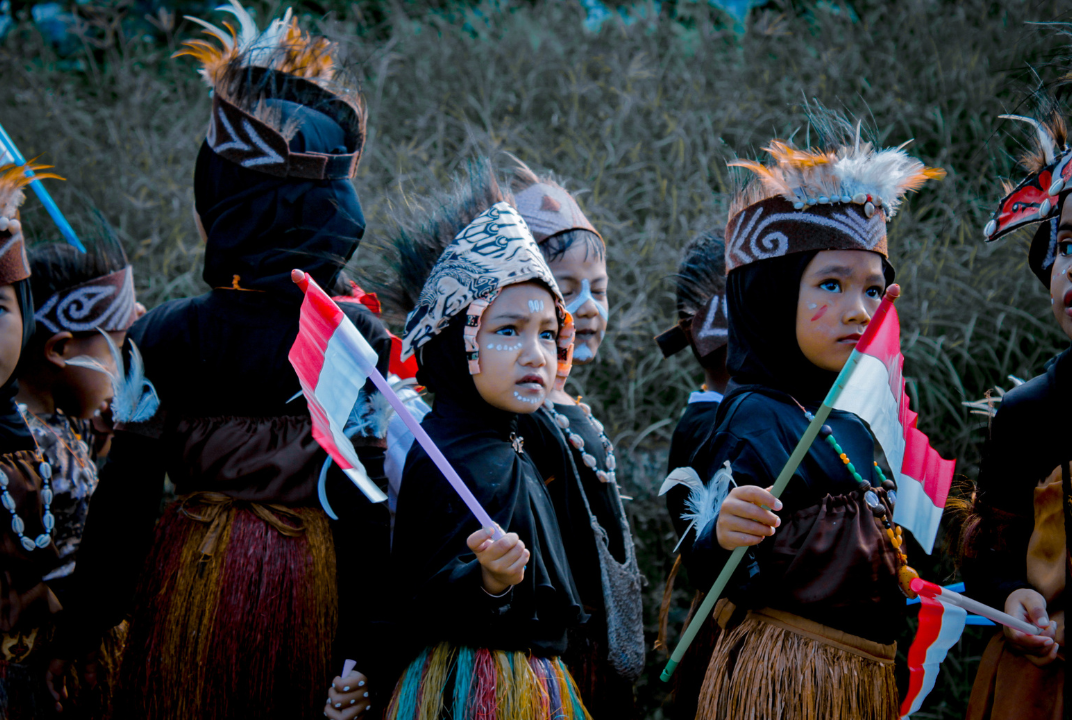
Second, there is synergy. I borrow this word to illustrate the style and pattern of life in Sorong City. Working together and helping one another to achieve a single goal—that is the picture of West Papua. This is even expressed in the local proverb, “satu tungku tiga batu,” which means “one stove, three stones.” This concept is a slogan and a reflection of religious moderation in West Papua. The stove symbolizes life, and the three stones symbolize “you, me, and them,” integrating differences in religion, ethnicity, and social status into a single vessel of brotherhood.
It’s no wonder that tribal chiefs, village heads, local governments, community organizations, religious leaders, and education leaders join hands to embody diversity in the land of the Bird of Paradise. The CCRL program further enlightened my perspective. It shaped my mindset to truly understand how theoretical foundations are implemented by championing three approaches: collaborative, personal, and comparative competence.
The CCRL program aims to educate the public on how to think, behave, and act in cooperation with people of different faiths and beliefs. It also provides an understanding of a moral, spiritual, and self-knowledge framework for oneself and for people with different views and religions. With this foundation in place, CCRL helped build my own foundation to be more solid, complete, and enlightened about the theoretical and practical urgency of moderation for synergy. I have come to understand that the implicit goal of moderation is the realization of good brotherhood and synergy among people of the same faith and across different faiths, all to achieve a “baldatun thayyibatun wa rabbun gafur”—a beautiful, good city with a forgiving God.
After completing the training, I, as a newcomer, feel challenged to promote this program as an effort to combat radicalism, extremism, fundamentalism, and other similar ideologies. In my view, the very content of moderation is CCRL. It is this content that should be championed, because the term “moderation” is too general for the public.
Even among academics, some say, “We already know what moderation is—it’s not clashing Pancasila and religion. But how do we apply it? From our experience, it seems as if religious moderation is difficult, when it’s not. This is just a theory, while the practice is already being carried out.”
In my opinion, the CCRL training provides the substance of religious moderation. The online format of the training has also adapted to today’s digital era. Through the CCRL program and its organizers, I have been given the opportunity to improve my writing skills. For that, I am grateful to CCRL and all the organizers.
I hope that CCRL remains active in contributing to educating the public about the importance of cross-religious and cross-cultural understanding. I also hope that CCRL and its organizers will facilitate writing workshops or mentoring for scientific articles. My ultimate hope is that this will provide a platform for educators to publish academic papers, especially on the topic of religious moderation.
According to the author, the CCRL training provides the substance of religious moderation. The online format of the training has also adapted to today’s digital era.
Writer’s Profile
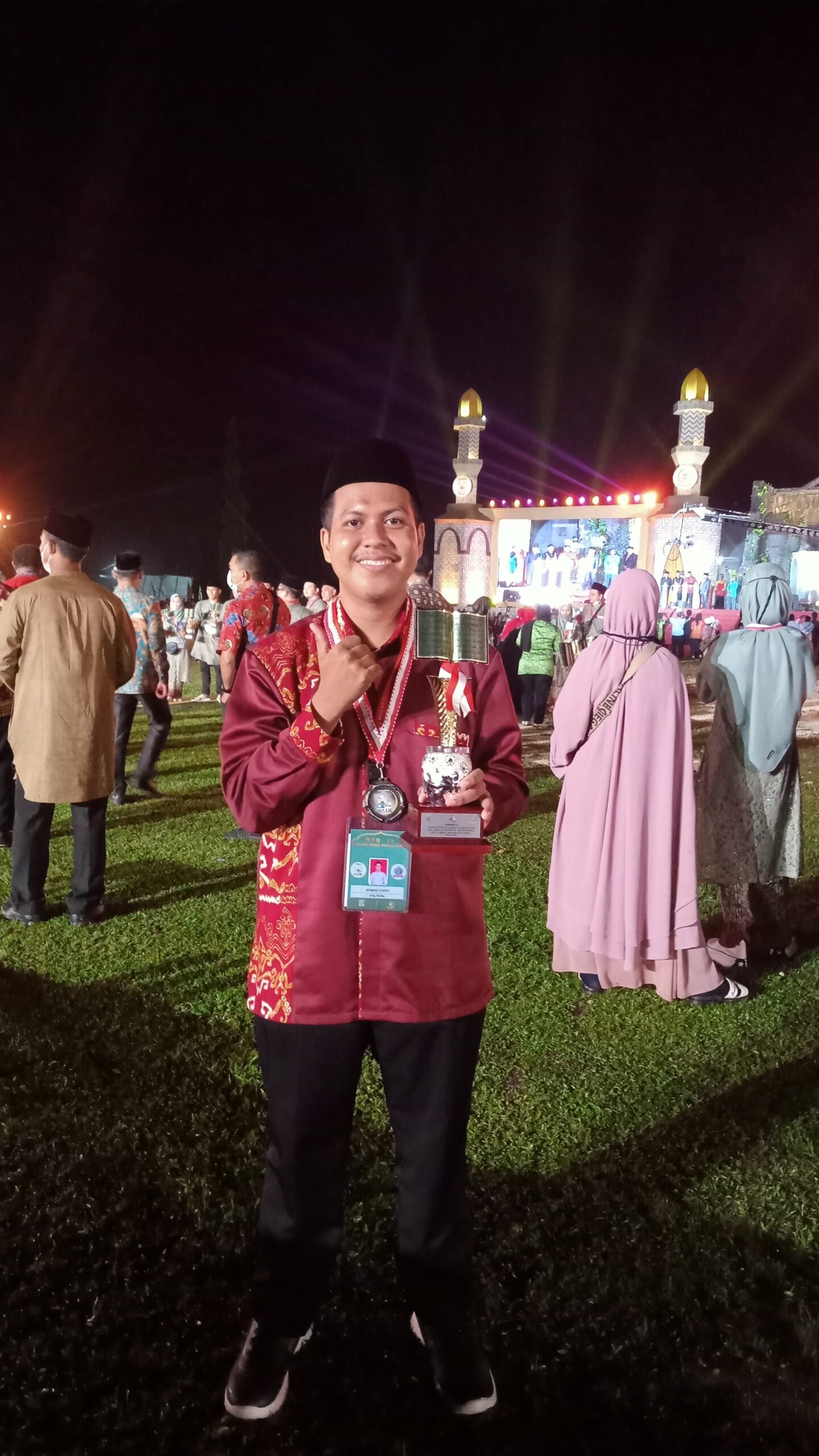
Ahmad Syafi’i
CCRL Alumni Batch 28
Teacher at MTs As’adiyah Uloe, Bone, South Sulawesi
0 Comments