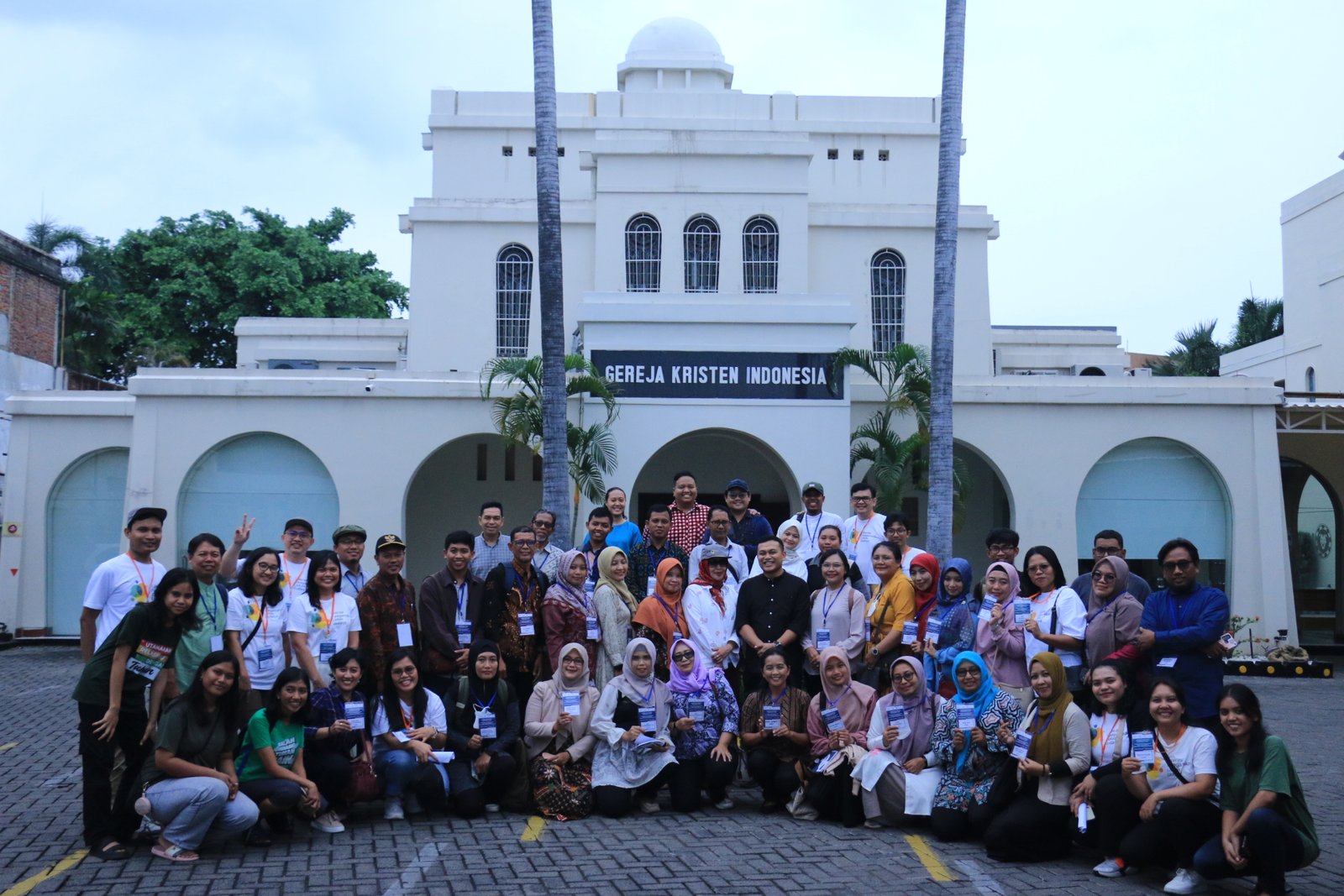
Teachers participating in the Hybrid Upgrading Workshop on Cross-Cultural Religious Literacy organized by the Leimena Institute visited Pregolan Bunder Church, Surabaya, February 1, 2025.
Surabaya, LKLB News – The effort to open spaces for interfaith encounters is vital in Indonesia’s plural society. Positive encounters can dispel prejudice and encourage a spirit of cooperation among people of different religions and cultures.
This was the experience of about 35 teachers from Islam, Christianity, Hinduism, and Buddhism when they visited the Indonesian Christian Church (GKI) Pregolan Bunder in Surabaya, East Java, which locals often call the “mosque church” because of its Mediterranean-style architecture with a dome.
The visit to this house of worship was one of the sessions in the series of the Hybrid Upgrading Workshop on Cross-Cultural Religious Literacy (HUW CCRL) held by the Leimena Institute from January 31 to February 2, 2025 in Surabaya. In addition to the church, the HUW CCRL participants also visited Pura Agung Jagat Karana, Surabaya, for a dialogue with Hindu religious leaders there.
“People around here call it the mosque church. Some tourists staying downtown, like those from Uzbekistan or Turkey, have asked permission to pray here because they could not find a mosque,” said GKI Pregolan Bunder Pastor, Sandi Nugroho.
Sandi explained that GKI Pregolan Bunder is a cultural heritage building dating back to the colonial era in 1881. The church itself was built in 1921 and originally served as a residence for pastors.
He also answered a number of questions from the teachers about Christianity—for example, why Christians worship on Sundays, or the differences between Protestant and Catholic Christianity. All questions were raised openly, with the aim of deepening teachers’ understanding of people of different faiths, so as to help eliminate prejudice against those of other religions.

Pastor Sandi Nugroho of GKI Pregolan Bunder receives a memento from Leimena Institute Program Director, Daniel Adipranata, accompanied by Professor of the Faculty of Ushuluddin and Islamic Thought at Sunan Kalijaga State Islamic University (UIN) Yogyakarta, Prof. Dr. Inayah Rohmaniyah.
Meanwhile, Leimena Institute Program Director, Daniel Adipranata, said that the Cross-Cultural Religious Literacy (CCRL) program organized by the Leimena Institute since 2021 has helped create spaces for encounters in Indonesia’s religiously and culturally diverse society. The program specifically targets teachers, who hold a strategic role in bringing about real change in society.
“We may have traditions of interfaith dialogue, but usually they only reach the elite—religious leaders and figures may not have a problem, but at the grassroots, it’s different. There has been no infrastructure to build tolerance in the wider community,” Daniel told CCRL News.
Daniel explained that the CCRL program has reached teachers and educators from all provinces in Indonesia, both urban and rural. It consists of two stages: online training (already conducted in 61 classes), followed by face-to-face workshops (already held 18 times in several cities in Indonesia).
“Tolerance cannot remain just knowledge; it must be lived through direct interaction with those of different religions. The CCRL program enables this. For example, a Muslim teacher can ask anything about Christianity to a pastor, while a Christian teacher can also directly ask questions to an ustaz,” Daniel said.
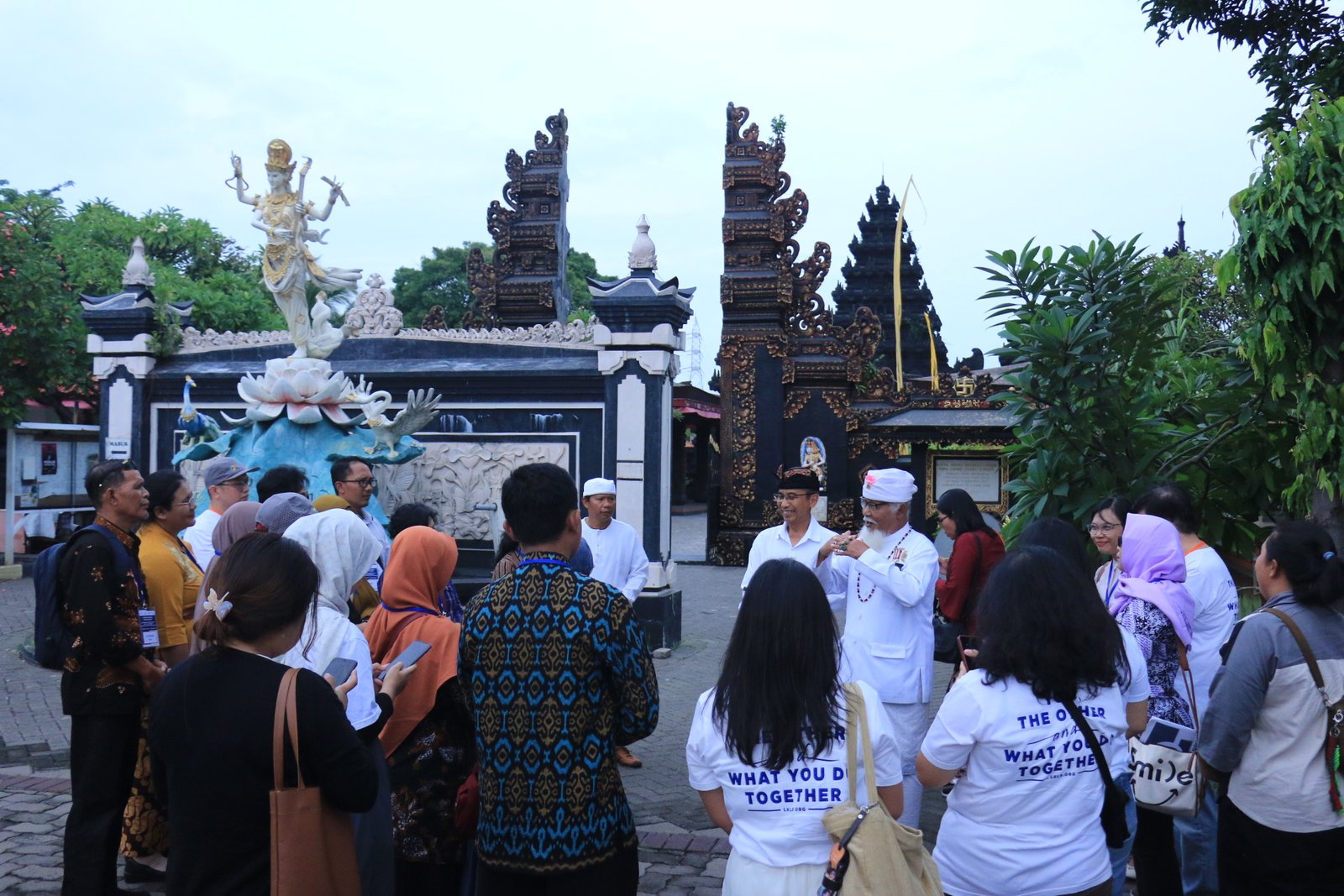
Teachers also visited and held discussions with Hindu religious leaders at Pura Agung Jagat Karana, Surabaya.
The CCRL workshop, held on January 31–February 2, 2025 in Surabaya, carried the theme “Developing Programs and Teaching Modules Based on CCRL.” It was attended by teachers of Islam, Christianity, Buddhism, and Hinduism, who had previously completed one week of online introductory CCRL training. They came from various regions of East Java, including Surabaya, Lamongan, Malang, Mojokerto, Kediri, Bondowoso, Banyuwangi, and others.
Dwi Kartika, a teacher from SMAN 1 Malang, said that humans should not only think of themselves but also interact with others as part of practicing their religion.
“It turns out Christians also carry out social activities, such as giving free lessons to children in the surrounding neighborhood who are mostly Muslim, organizing iftar meals, and doing community clean-ups,” Dwi said.
Professor of the Faculty of Ushuluddin and Islamic Thought at Sunan Kalijaga State Islamic University (UIN) Yogyakarta, Prof. Dr. Inayah Rohmaniyah, said that the CCRL program began with ideas from figures such as the late Buya Syafii Maarif, Alwi Shihab, and Amin Abdullah. CCRL equips teachers with concrete competencies and skills for critical thinking, including in religious education in schools, which often emphasizes indoctrination.
“We witnessed firsthand that the CCRL model of change is very effective because it starts with the self—by providing understanding that leads to attitudes, where teachers of different religions sit together, draft lesson plans, and collaborate,” said Prof. Inayah.
Prof. Inayah is one of the figures who partners with the Leimena Institute to develop CCRL workshop modules. Teachers of various subjects are guided to create lesson plans or programs that incorporate CCRL values.
“So, after returning from this workshop, teachers already have a lesson plan or program they can directly implement in their schools. This is expected to become a massive movement, a snowball effect that we hope will bring change in the future,” Inayah said.