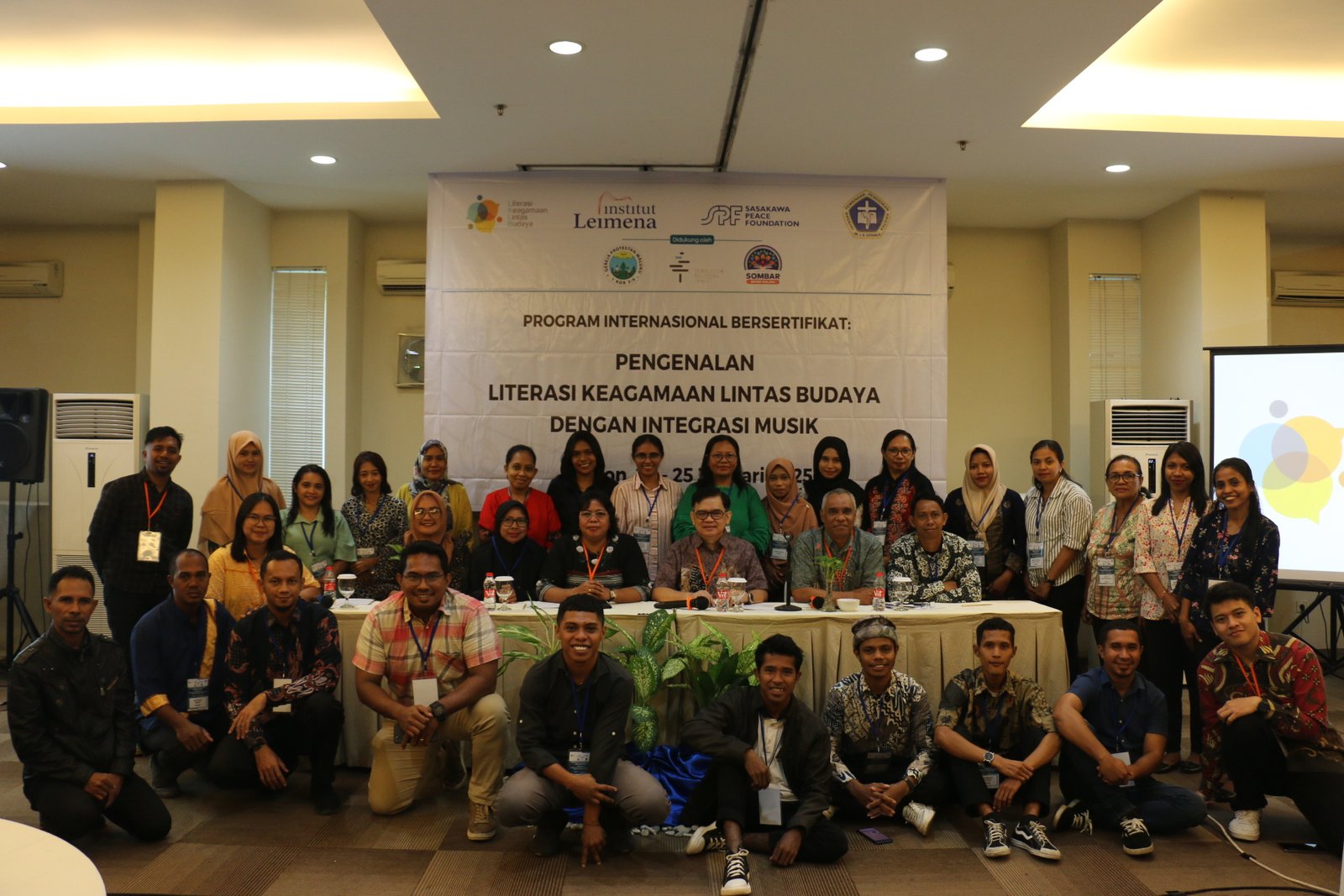
The implementation of the second Cross-Cultural Religious Literacy (CCRL) training with music integration in Ambon, Maluku, was attended by around 25 teachers from various subjects.
Jakarta, LKLB News – Efforts to promote peace in Maluku, particularly in the city of Ambon, must continue to be encouraged in order to foster interreligious relations that remain vulnerable due to past conflicts. Institut Leimena is actively contributing through the Cross-Cultural Religious Literacy (CCRL) training in Ambon, which was specifically integrated with a music-based approach for peace.
The CCRL training in Ambon has been held twice, on November 4–9, 2024, and January 20–25, 2025, in a format of two days online and four days in person. This training was attended by 50 Muslim and Christian teachers, as a result of collaboration between Institut Leimena, the Christian Education Development Foundation Dr. JB. Sitanala, and the Sasakawa Peace Foundation, with support from the Protestant Church of Maluku, Templeton Religion Trust, and Sombar Negeri Maluku Foundation.
“Institut Leimena has experience in teacher training through the Cross-Cultural Religious Literacy program, which aims to develop teachers’ competencies to be able to live together peacefully,” said Institut Leimena Program Manager, Puansari Siregar, to CCRL News recently.
The CCRL training with music integration in Ambon is important, considering that the city has been designated by the United Nations Educational, Scientific and Cultural Organization (UNESCO) as a world city of music. According to Puansari, this program was indeed designed to use music as the strength or distinctive character of Maluku.
Teachers were directed to create musical works as an educational tool to facilitate dialogue, mutual respect, and collaboration. As a result, participants of the CCRL training succeeded in creating 11 songs with the theme of peace, including titles such as Assalamualaikum deng Shalom, Laeng Sayang Laeng, Orang Sudara, and Dalam Doa.
“A clear understanding of one’s own religion and of different religions can become a bridge to build respect and love, which will strengthen peaceful interreligious relations and collaboration,” said Puansari.
One of the topics raised in the CCRL training in Ambon was the relationship between Islam and Christianity, viewed historically, socially, and culturally. The speakers were the Chairperson of the Synod of the Protestant Church of Maluku, Rev. Elifas Maspaitella; Chairperson of the Sombar Negeri Maluku Foundation, Dr. Hasbollah Toisuta; and Vice Rector of the Christian University of Indonesia Maluku, Dr. Steve Gazperz.
“The sessions went well, equipping participants with historical, social, and cultural insights into Islamic–Christian relations,” Puansari continued.
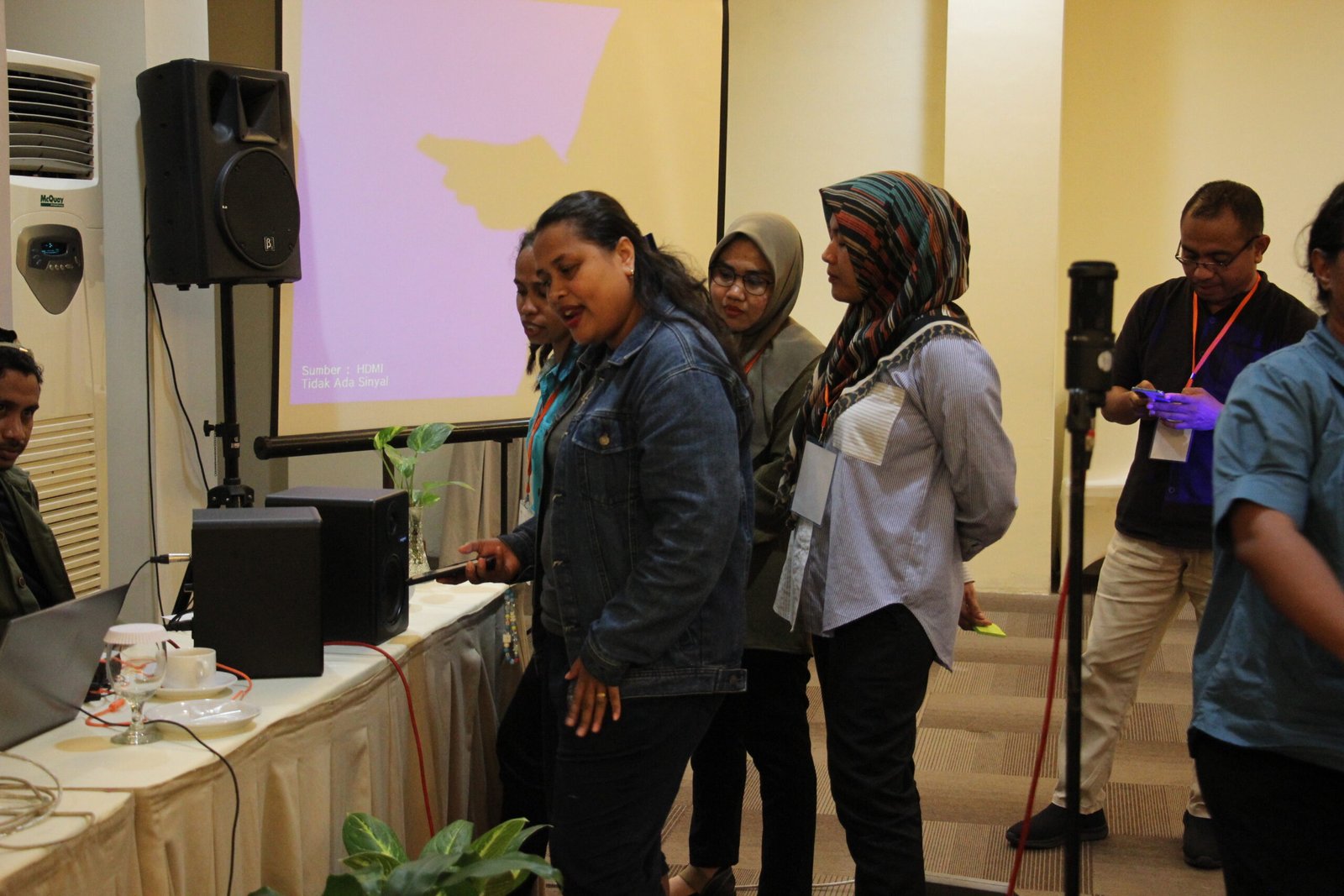
The teachers participating in the CCRL training were divided into groups to discuss the songs they would create on the themes of peace and interreligious tolerance.
Sekolah Gandong
Meanwhile, the collaborative competence session was delivered by a teacher and CCRL program alumna, Salomina Patty. She has integrated Cross-Cultural Religious Literacy into a school project, namely Sekolah Gandong. Salomina shared her experience in fostering brotherhood between Christians (Sitanala Christian School) and Muslims (Al Hilaal School).
Several figures delivered remarks, namely the General Chairperson of the Christian Education Development Foundation (YPPK), Dr. JB. Sitanala; Dr. Sarlota Singerin; Executive Director of Institut Leimena, Matius Ho; Jin Fujimoto of the Sasakawa Peace Foundation; and Dr. Hasbollah Toisuta of the Sombar Negeri Maluku Foundation. All conveyed the same hope that the CCRL program could serve as an alternative approach contributing to the ongoing peace efforts in Maluku.
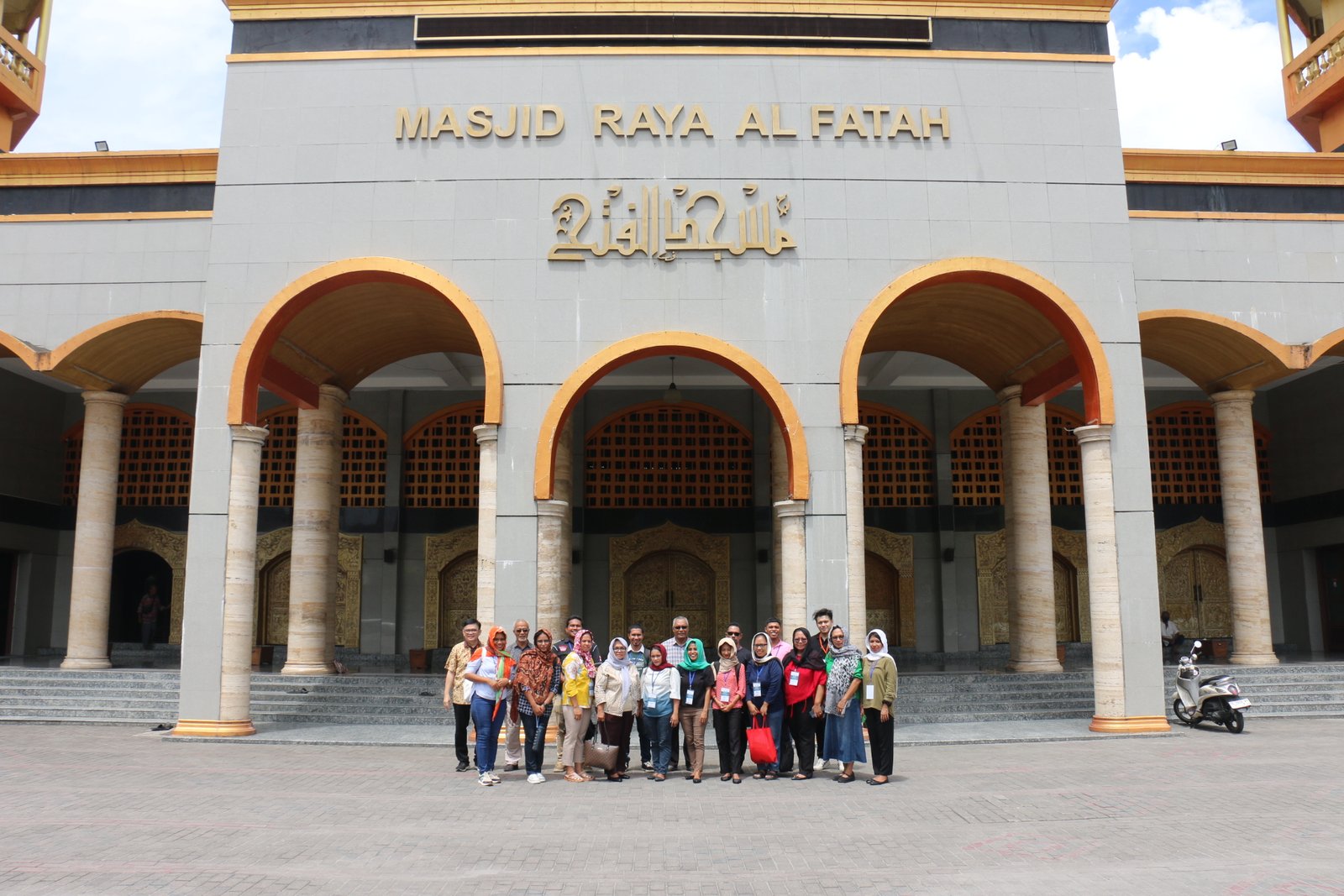
Visit to places of worship as one of the sessions in the CCRL training to strengthen teachers’ comparative competence.
A touching session was the visit to places of worship, namely Al Fatah Grand Mosque Ambon and the Protestant Church of Maluku, Immanuel OSM Congregation, Ambon Island Classis. Muslim participants visited the church, while Christian participants visited the mosque. For many participants, this was their first time meeting and visiting a house of worship of another religion. They engaged in dialogue with the hosts of each house of worship and asked many questions about the beliefs and practices of that religion. Encounters at places of worship provided a safe space for them to learn more about others.
All these activities were part of the knowledge and perspectives of CCRL, which were then translated into songs. To facilitate this, Dr. Dewi Tika Lestari emphasized the importance of music as a tool to strengthen the collective memory of Orang Basudara. She highlighted that music is not only entertainment but also an educational tool to promote peace.
This session laid the foundation for participants to translate their knowledge into music. Vice Rector of the State Christian Institute of Ambon (IAKN), Dr. Branckly Egbert Picanussa, assisted participants in writing lyrics based on the CCRL concept and composing suitable melodies.
“The effort to translate the principles of CCRL into songs is an application of collaborative competence, where Muslim and Christian teachers collaborate to work together on something,” added Puansari.