
Written by Firman Syukria
A message arrived on my WhatsApp from my friend named Hamdani, who also serves at the Office of Religious Affairs (KUA) in the Arongan Lambalek Sub-district, West Aceh Regency, Aceh Province. The message was an invitation to join an international certified training program organized by the Leimena Institute in collaboration with the management of the Istiqlal Mosque in Jakarta. The program was about Cross-Cultural Religious Literacy (CCRL) for Islamic religious teachers and counselors. As an Islamic religious counselor, I was interested in the event as a way to gain knowledge, insight, and experience. At the time, only three people from my generation in Aceh graduated and received the certificate: myself, my friend from the Meureubo Sub-district, and one from the Aceh Besar Regency.
I gained a lot of lessons and experiences after participating in the CCRL program, because CCRL has become embodied in my life. It taught me how to develop my faith (personal competence), how to develop my understanding of people from different religions (comparative competence), and even how to collaborate to bring about the common good for all of humanity (collaborative competence). At first glance, it seemed less relevant in our area because we don’t have a lot of interaction with non-Muslims, but I can apply it in my own Muslim community to foster harmony within society and among followers of the same religion. Even among fellow Muslims, there are many khilafiyah (differences of opinion among scholars) that can be draining and often lead to actions that are not in line with our social ethics and manners.
In today’s age of advanced technology, there are more and more platforms that cause conflict and division. Because of this, we urgently need individual or collective skills in reading, writing, speaking, and problem-solving without creating more problems. We need to find solutions that meet people’s expectations.
For example, in determining the start of Dzulhijjah and the date of Eid al-Adha in 2023, there were differences, particularly between Nahdlatul Ulama (NU) and Muhammadiyah. There was also a difference between the date we celebrated in Indonesia and the date of the standing ritual at ‘Arafah in Mecca, which takes place one day before Eid al-Adha. Many people were confused at the time, not just in Indonesia but also in several East Asian countries. Some even condemned the difference. There were even public figures who questioned it, asking, “Why is Indonesia, which is located further east than Saudi Arabia, celebrating Eid al-Adha later? Why can a time difference of only four hours with Saudi Arabia cause such a great difference?”
It takes a skillful and wise mentor to handle these differences and cool down the situation, so that both parties can get along and live harmoniously in a religious society, even amidst their differences.
In reality, if we understand the core issue, the difference in the start of Dzulhijjah and Eid al-Adha, for instance, is not a fundamental difference. This is where the need for someone to provide complete information and clarification comes in. Although it seems as if there are differences based on the lunar (Qamariyah) calendar and the solar (Syamsiyah) calendar, the reality is that both can be accommodated.
Some people also question why the date can’t just be standardized with Saudi Arabia, asking why we in Indonesia and other parts of the world don’t follow the date of Eid al-Adha in Saudi Arabia. In other words, why not use Mecca as the reference point? The reason given is logical and simple: Mecca has the Ka’bah, the Qibla (direction of prayer) for all Muslims in the world, so it’s only fitting that the time for religious holidays and other events be determined by the direction of the Qibla. On the surface, this opinion seems correct, but upon deeper study, it has no legal or scientific basis. This opinion seeks uniformity based on the solar calendar but ignores the lunar calendar, even though the times for Islamic worship are determined by the lunar calendar.
In the case of a dispute, after we provide an opinion and response that is unbiased and doesn’t blame anyone, using logic, science, and analogies that can be understood by both sides, the two parties can eventually sit together in the same village, the same room, or even at the same table to communicate and exchange opinions. They come to understand that the dispute is only a matter of perspective, and they no longer prioritize ego or force.
What’s even more interesting are the disputes and differences in determining the start of Ramadan and Eid al-Fitr. This is particularly fascinating because it sometimes coincides with a solar eclipse, which makes the arguments more powerful and precise. Once again, it comes down to NU, which bases its determination on imkanur rukyat (the possibility of sighting the crescent moon), and Muhammadiyah, which bases its determination on wujudul hilal (the existence of the crescent moon).
The definition of a hilal (crescent moon), according to the Al-Shafi’i school of thought, is the light of the sun reflected on the moon. The beginning of the new month is not determined by the moon’s existence above the sun at sunset but by the visibility of the sun’s light on the moon at sunset. This means the determination is based on a visible crescent moon, not on mathematical or astronomical calculations (hisab). Hisab is only a supporting tool to determine the moon’s position. The beginning of the month has no connection to a solar eclipse, because a solar eclipse only confirms the moon’s existence above the sun at sunset, not the visibility of the sun’s light on the moon.
Based on this information, we encourage people to have religious literacy for the sake of mutual comfort, so they can eventually accept and practice their worship in their own way, despite the differences.
Thanks to the knowledge I gained through various activities in the CCRL program, I am optimistic that I can face and overcome these challenges. Indonesia is a Pancasila state, full of religious and cultural diversity. What kind of education does Pancasila provide to face the challenges of social cohesion? What should our attitude be in the face of hate speech? All of these things have been explored, and to a great extent, they have become a resource for me in my community and in dealing with social problems. Thank you, Leimena Institute.
I gained many lessons and experiences after participating in the CCRL program because it has become embodied in my life. It has taught me how to develop my faith (personal competence), how to develop my understanding of people from different religions (comparative competence), and even how to collaborate to bring about the common good for all of humanity (collaborative competence).
Writer’s Profile
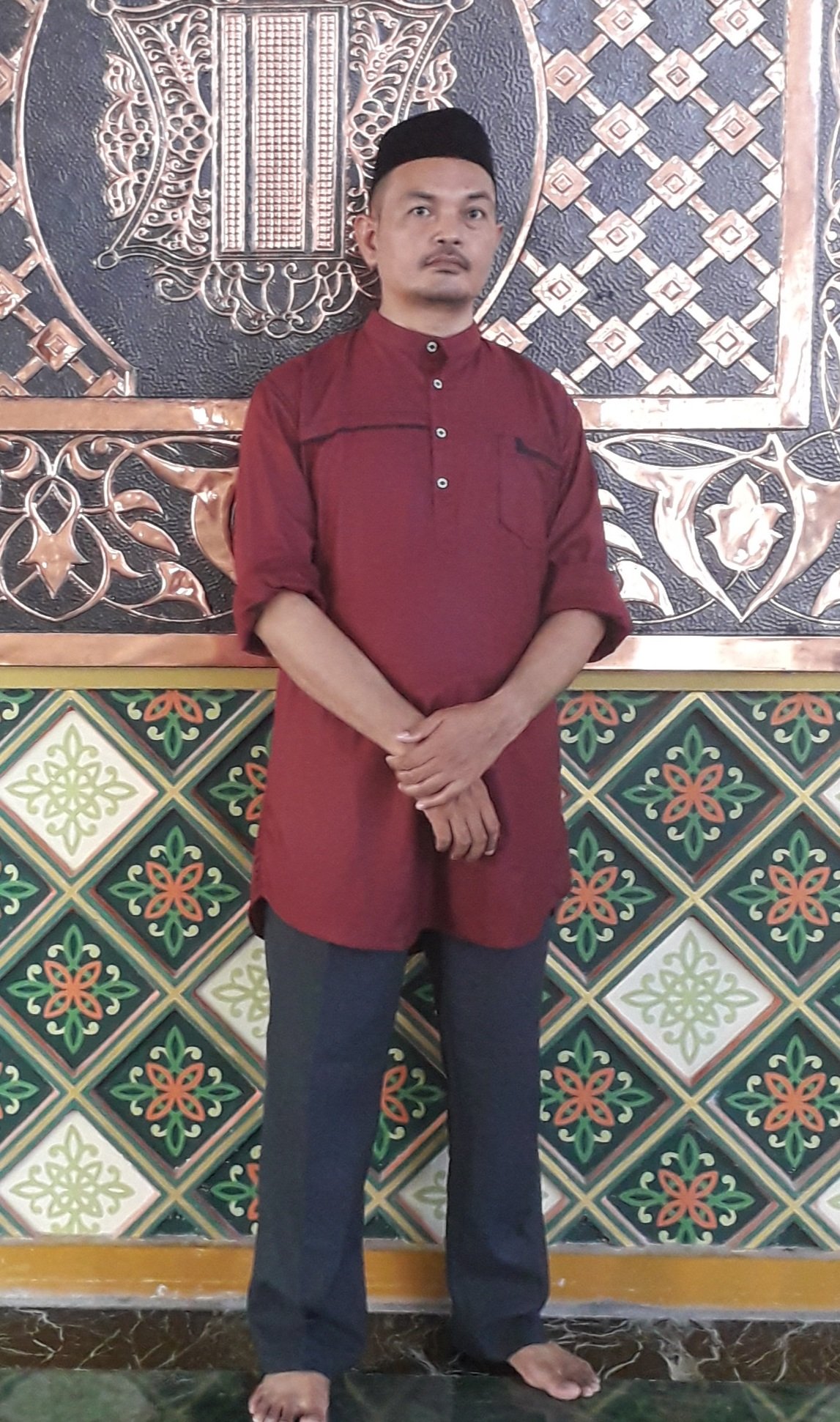
Firman Syukria
CCRL Alumni Batch 28
Islamic Religious Counselor at Kabupaten Aceh Barat, Aceh
0 Comments