Written by Yuliatun
What is the meaning of religious literacy? Religious literacy is the act of reading and studying sources of knowledge related to religion, such as morals, ethics, and good character, whether in text, oral, digital, or visual form. In this regard, we must understand religion. Religious literacy is a crucial element, especially in the social life of a community, and generally, in the life of the nation and state. In Indonesia, there are six religions officially recognized by the government: Islam, Christianity, Catholicism, Hinduism, Buddhism, and Confucianism. Each follower of a religion will have their own differences, particularly in communication and socialization. For this reason, we must respect and honor one another.
In my opinion, the Cross-Cultural Religious Literacy (CCRL) program initiated by the Leimena Institute is very beneficial. As a madrasah (Islamic school) teacher, the CCRL program has improved my understanding of religious literacy principles for use in classroom learning. CCRL must be based on our shared belief and awareness in finding the diverse religions and beliefs that exist. It is through these followers that we can engage in a process of communication within different traditions. It is from these differences that we can remain united in diversity.
Furthermore, the CCRL program helps develop a community of educators who can apply religious values. The CCRL program also enhances the knowledge and skills related to being an educator, so they can be applied in classroom practice. I also have the opportunity to participate in other very diverse activities within the CCRL program.
Another benefit I gained from the CCRL program is new insight and knowledge. I met speakers who are competent in their fields. The knowledge I gained will certainly be very useful for doing good. I got to know and understand people with high levels of knowledge. I am sometimes inspired after getting to know them because the speakers are truly exceptional people.
When I spoke with people of different faiths, it sometimes made me feel awkward and uneasy. This was especially true when I met religious leaders directly; their different ways of dressing, speaking, and greeting would give me mixed feelings. By learning in the CCRL program, I was able to study the three main competencies for relating to people of different faiths: personal, comparative, and collaborative. I was also taught skills in communicating, negotiating, and evaluating my understanding of these religious differences.
By understanding a different religion, our faith will not diminish; instead, it will only increase. We can cooperate and understand other religions well without feeling awkward or uneasy, because, in the eyes of God, all humans are equal. Therefore, we as human beings must always be at peace and create peace.
We must get to know religious differences more deeply because Indonesia has so much diversity, including in its ethnicities, cultures, and religions. This is encapsulated in our shared motto, “Bhinneka Tunggal Ika,” which means “Unity in Diversity.” As a teacher, I hope that my students will become the nation’s next generation, possessing a good presumption toward religious differences. I also hope that my students will be able to view and treat people of different faiths with kindness and fairness. It is necessary to provide strong preparation to students in understanding religious differences so they do not lose their own faith and religious identity.
CCRL gave me an understanding of the immense diversity in Indonesia. Therefore, we must have a high level of tolerance for this diversity. I must have various strategies for applying what I’ve learned in the classroom. Personally, I still have some thoughts and feelings that feel like a hurdle in this regard. Still, by learning in the CCRL program, I gained new experiences and new friends.
My new friends have a wide range of characteristics, competencies, and even different cultures and religions. It is from these friends that I will further understand what CCRL is. The CCRL program can be a forum or a place for silaturahmi (fellowship) among people, even between different faiths. In principle, every person will understand and practice the teachings of their own religion well. They will come to understand how important it is to maintain harmony and peace among all faiths. As a Muslim, without knowing the teachings of other religions, it would be very awkward for me to be taught an attitude of tolerance toward them.
Therefore, I believe that for matters related to community, business, and other social activities, there is still an open opportunity to cooperate and work together. However, on matters of belief, faith, and aqidah (creed), a Muslim’s position is clear and firm: “lakum dinukum waliyadin,” which means “to you your religion, and to me mine.” This verse explains a very important principle of Islamic creed. We are not influenced by the beliefs of other religions, so in our daily lives, a beautiful peace can be created.
As a madrasah teacher, the CCRL program can enhance my understanding of the principles of religious literacy for my classroom teaching. CCRL must be based on our shared conviction and awareness in discovering the diverse religions and beliefs that exist.
Writer’s Profile
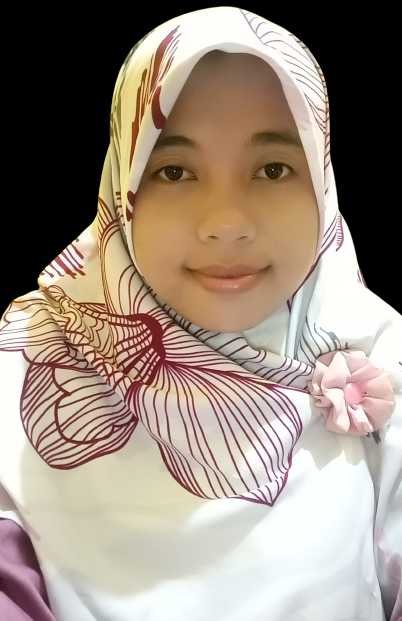
Yuliatun
CCRL Alumni Batch 6
Teacher at Madrasah Ibtidaiyah Istiqlal Mosque
0 Comments