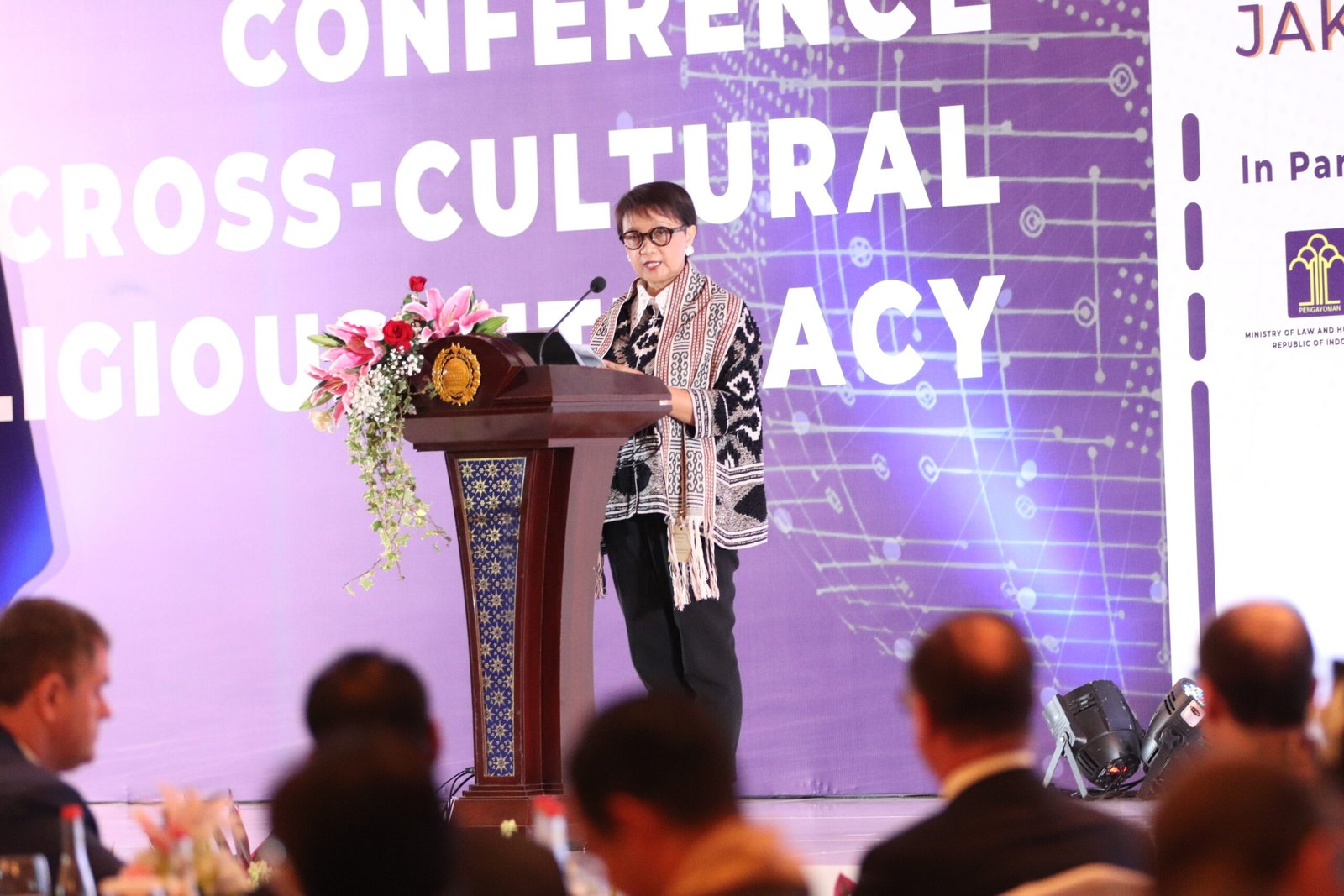
The Minister of Foreign Affairs of the Republic of Indonesia, Retno L.P. Marsudi, delivered the keynote speech at the opening session of the International Conference on Cross-Cultural Religious Literacy in Jakarta, July 10–11, 2024.
Jakarta, LKLB News – The Indonesian Minister of Foreign Affairs, Retno, officially opened the International Conference on Cross-Cultural Religious Literacy (CCRL) with the theme “Multi-Faith Collaboration in an Inclusive Society” held on July 10–11, 2024, in cooperation between the Ministry of Foreign Affairs and the Leimena Institute. In her remarks, Wednesday (10/7/2024), Minister Retno emphasized cross-cultural religious literacy as an effort to understand religious diversity and foster collaboration among religious communities.
Retno mentioned that the search for peace is now an urgent matter. According to her, alarming conditions—open conflicts that claim more lives worldwide, ranging from the war in Ukraine to the situations in Afghanistan and Palestine—have called into question the existence of solidarity and humanity.
“These conflicts are not inherently religious, but religious elements often appear and heighten tensions. Therefore, understanding religious diversity becomes very important, an effort that we must continually nurture,” said Minister Retno at the International Conference on CCRL, attended by around 200 participants and invitees from within and outside the country.
The opening event was attended by 22 representatives of foreign countries, including a number of ambassadors: the Ambassador of Austria to Indonesia Thomas Loidl, the Ambassador of Jordan to Indonesia and ASEAN Sudqi Atallah Abd Alkader Al Omoush, the Ambassador of Romania Dan Adrian Balanescu, the Ambassador of Spain Francisco Aguilera Aranda, the Ambassador of the United Arab Emirates Abdulla Salem Al Dhaheri, and the Ambassador of the Holy See to the Republic of Indonesia Mgr Piero Pioppo.
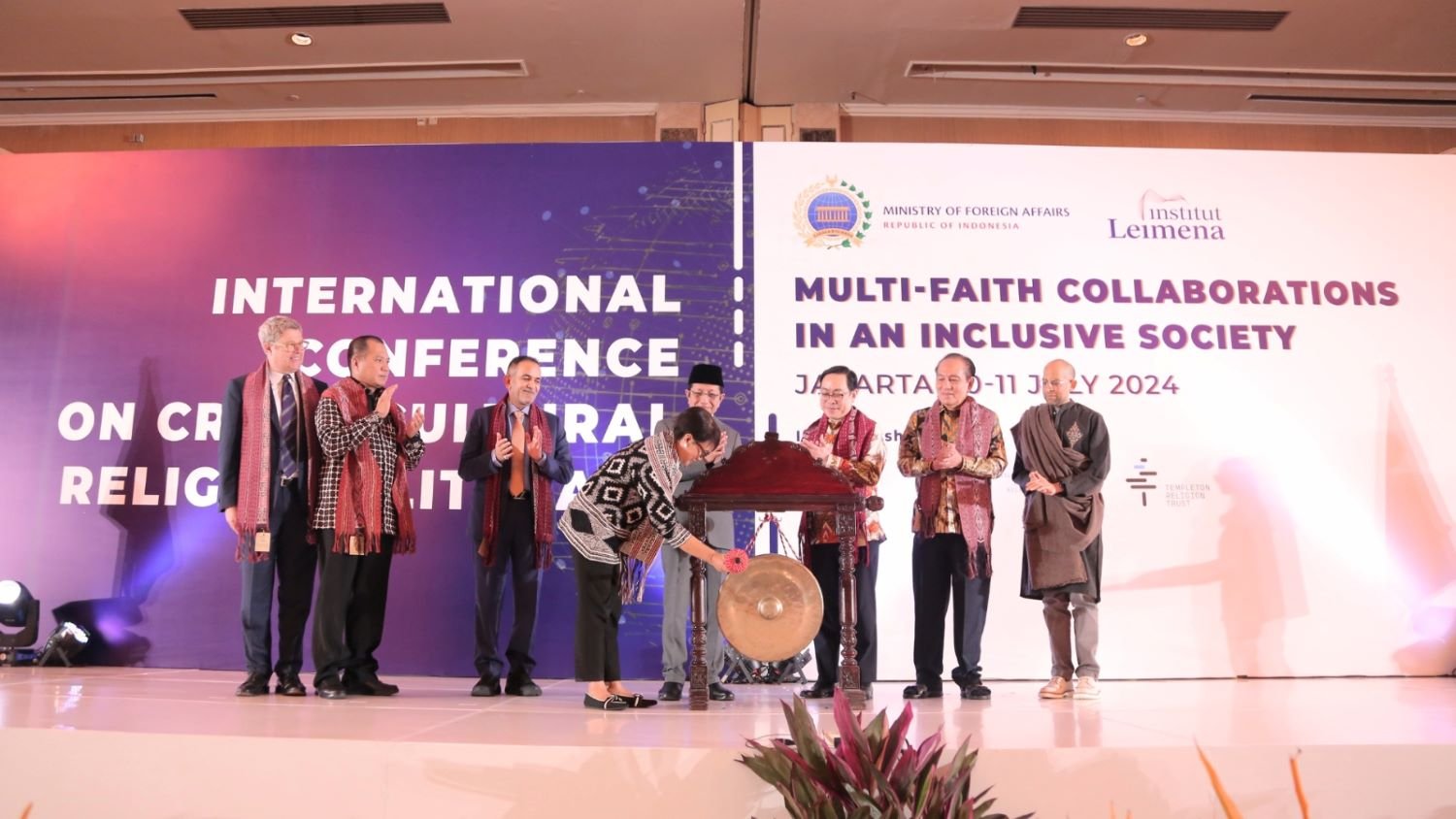
The Minister of Foreign Affairs, Retno Marsudi, struck the gong to open the International Conference, accompanied from left to right by: Director of the International Center for Law and Religion Studies, Brigham Young University Law School, Dr. Brett Scharffs; Director General of Human Rights, Ministry of Law and Human Rights, Dr. Dhahana Putra; Secretary General of the Higher Committee of Human Fraternity, United Arab Emirates, Dr. Khalid Al Ghaith; Grand Imam of Istiqlal Mosque, Nasaruddin Umar; Executive Director of the Leimena Institute, Matius Ho; Member of the Leimena Institute Association, Theo Sambuaga; and Program Director of Templeton Religion Trust, Iqbal Akhtar.
Retno stressed that resolving these conflicts requires the conflicting parties to have the will to engage in constructive dialogue. However, this willingness does not fall from the sky—there must be parties who strive for it. It is not only political leaders who bear this responsibility, but also all elements of society, especially religious leaders.
Retno stated that the freedom of every religion must be legally guaranteed; on the other hand, diversity must be respected. Religious differences must not give rise to fanaticism and create tensions.
“In Gaza more than 37,000 people have been killed, most of them women and children. All atrocities must be stopped. Humanity and humankind must be placed as the top priority, number one,” said Minister Retno Marsudi.
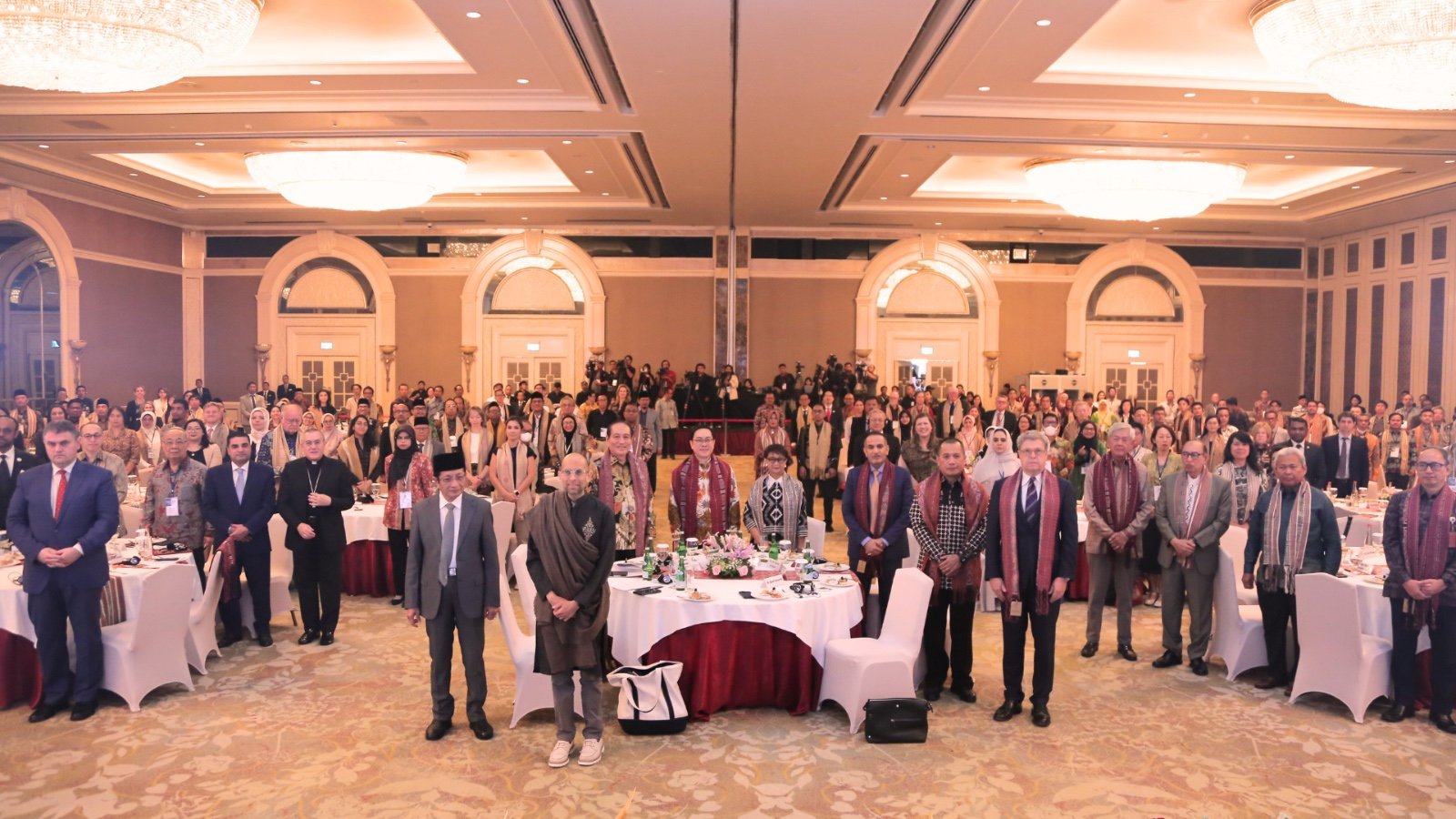
The opening session was attended by around 200 participants, including a number of ambassadors and representatives of foreign countries in Jakarta.
Retno went on to say that Indonesia is actively cooperating with the international community on three agendas. First, strengthening tolerance to prevent social polarization that can increase tensions or even open conflict. Within ASEAN, Indonesia promotes the principle of Bhinneka Tunggal Ika to encourage cross-religious and cross-cultural understanding in facing the complexities of global issues.
Second, promoting inclusivity. Diverse beliefs must be seen as assets for advocating peace. When parties from various backgrounds participate in constructive dialogue, the solutions offered will be sharper. Therefore, Indonesia earnestly involves world religious leaders. Interfaith dialogue is an important part of Indonesia’s diplomacy.
“Indonesia has 34 interfaith dialogue partner countries, to collaborate in promoting interfaith and cross-cultural literacy,” said Retno.
Third, fostering interfaith collaboration, which is the reason for convening the Conference on Cross-Cultural Religious Literacy. Striking differences must not prevent us from respecting and collaborating with one another for the sake of humanity. Our differences must become our strength and asset, not our weakness.
“Through interfaith dialogue and collaboration, let us build a better and more peaceful world,” said Retno.
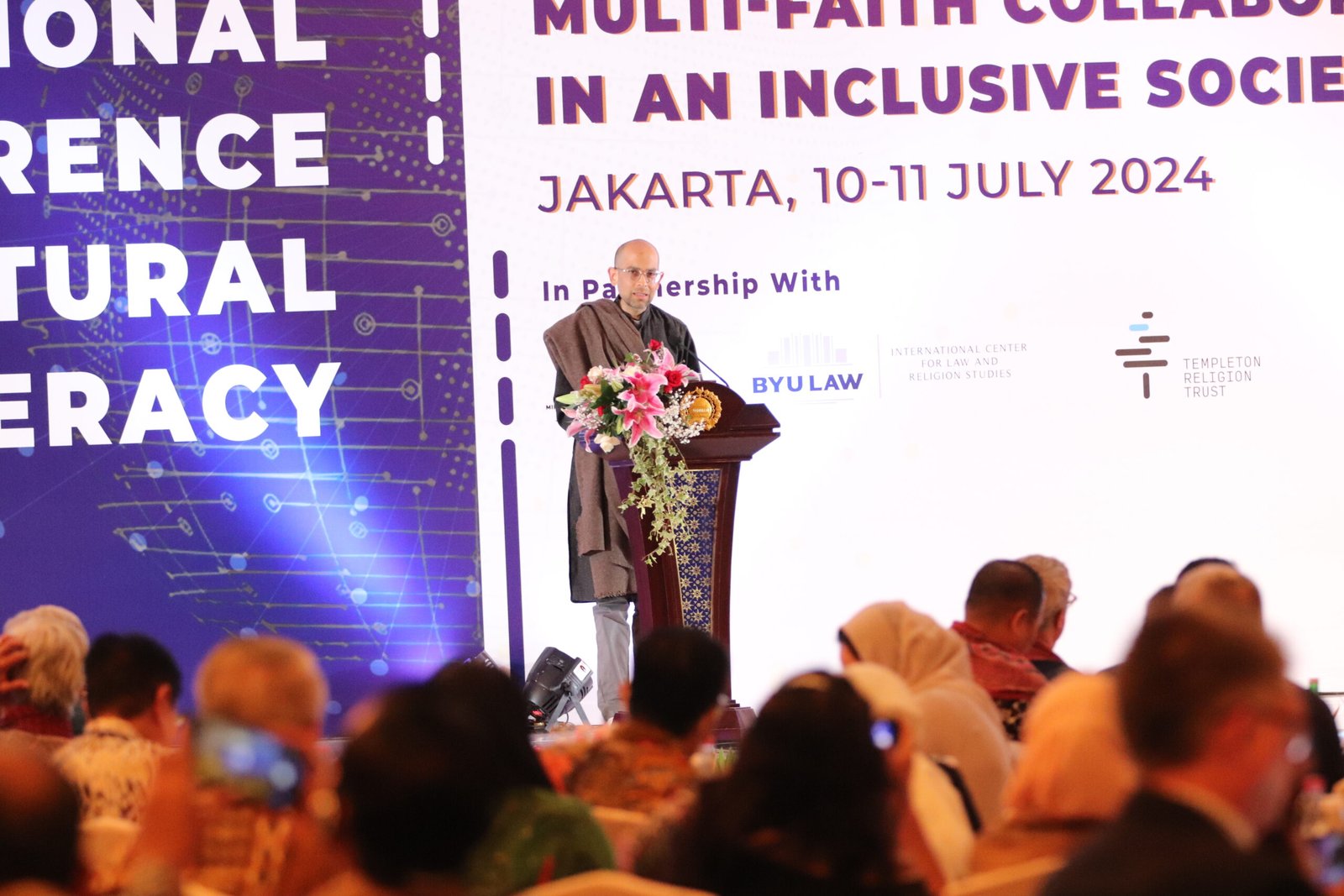
Program Director of Templeton Religion Trust, Iqbal Akhtar, during the opening session.
Meanwhile, Program Director of Templeton Religion Trust, Iqbal Akhtar, stated that with the motto Bhinneka Tunggal Ika, Indonesia is once again at the forefront of important initiatives to strengthen interfaith and cross-cultural dialogue, as well as multi-faith or multi-belief collaboration in today’s increasingly divided world.
“Your shared vision of the essential role that educational institutions must play in promoting religious literacy, as well as the values of humility, empathy, and patience, creates conditions that enable constructive engagement among believers and the formation of global citizens,” said Iqbal.