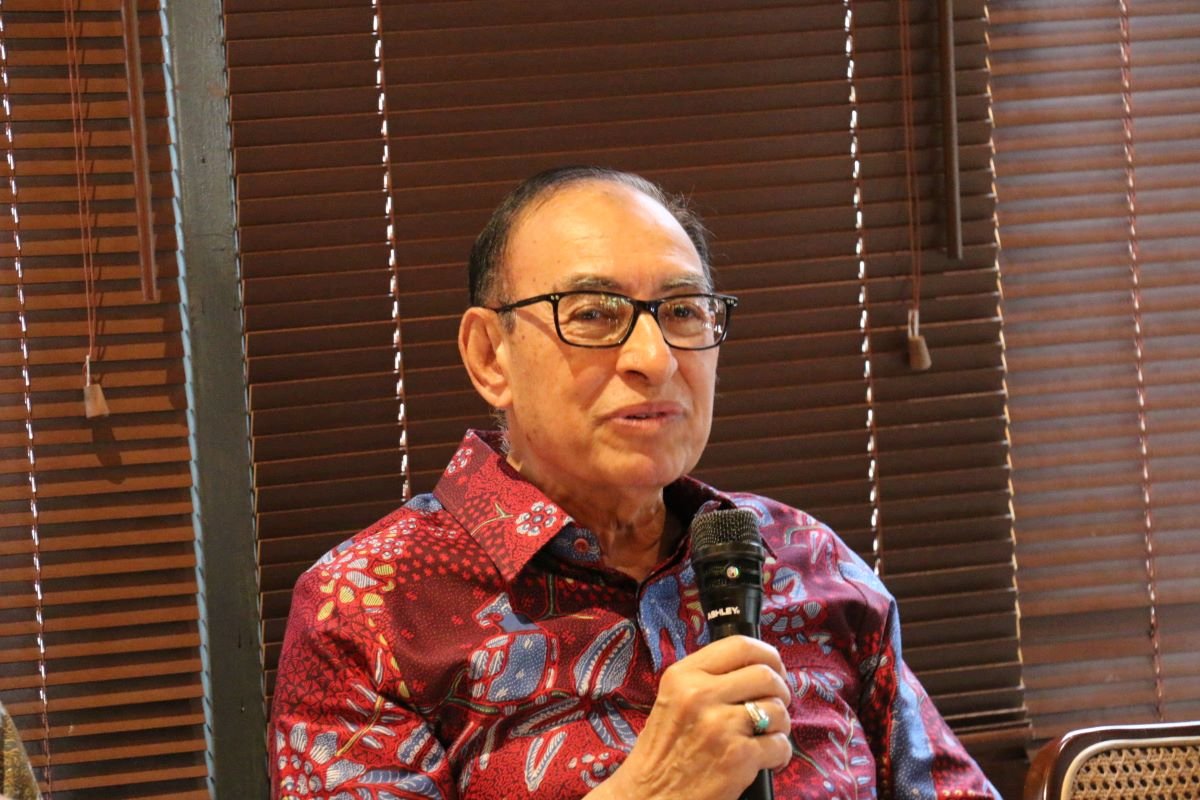
Senior Fellow of the Leimena Institute and Former Special Envoy of the President of the Republic of Indonesia for the Middle East and the Organization of Islamic Cooperation, Dr. Alwi Shihab, at the pre-event press conference on July 5, 2024, ahead of the International Conference on Cross-Cultural Religious Literacy (ICCRL).
Jakarta, LKLB News – Although Indonesia is regarded as capable of managing diversity, the problem of intolerance in society has not disappeared and remains a challenge. Education is considered the key and also a preventive effort to continue building an inclusive plural society.
This was conveyed by Senior Fellow of the Leimena Institute, Dr. Alwi Shihab, who also served as the Special Envoy of the President of Indonesia for the Middle East and the Organization of Islamic Cooperation from 2016–2019. Alwi stated that intolerance has long been difficult to overcome, including in Indonesia.
“Indeed, Indonesia is considered a country with a plural society that has performed quite well in terms of community interaction. But that does not mean intolerance in Indonesia has disappeared. Compared with many countries, intolerance here may not be too great in degree, but it is still concerning,” said Alwi, who also served as Minister of Foreign Affairs of Indonesia from 1999–2001, at the pre-event press conference for the International Conference on Cross-Cultural Religious Literacy (ICCRL) earlier this July.
This situation has motivated Alwi Shihab to carry forward the aspirations of earlier national figures to create harmonious relations among religious communities in Indonesia, free from fanaticism and radicalism. According to him, terrorist attacks such as the Bali bombings and the bombing of the JW Marriott Hotel in Jakarta occurred because seeds of intolerance were manipulated by certain groups.
Alwi, an Indonesian interfaith scholar who once served on the board of Hartford Seminary and the Harvard Center for the Study of World Religions in the United States, explained that there is a line of thought about how Indonesian society can contribute to overcoming intolerance. He once proposed to the Ministry of Education and the Ministry of Religious Affairs to teach religion in a descriptive, rather than purely normative, way. Descriptive teaching of religion would broaden students’ perspectives on the contributions of other religions to humanity, without the need to debate sensitive theological issues.
Unfortunately, this proposal was not implemented. Alwi, who also once served as a Member of Parliament, together with a fellow Christian MP, reintroduced the idea until it eventually received positive support from Indonesia’s 4th President, Abdurrahman Wahid (Gus Dur). As a result, the Center for Religious and Cross-Cultural Studies (CRCS) was established in Yogyakarta.
“Now CRCS has been running for more than 20 years and has produced many doctoral graduates. What CRCS has achieved has been continued by the Leimena Institute through Cross-Cultural Religious Literacy. The essence is the same: how we provide enlightenment to society to respect one another and strive to understand the teachings of other religions, so that we can build good cooperation through collaboration,” said Alwi Shihab.
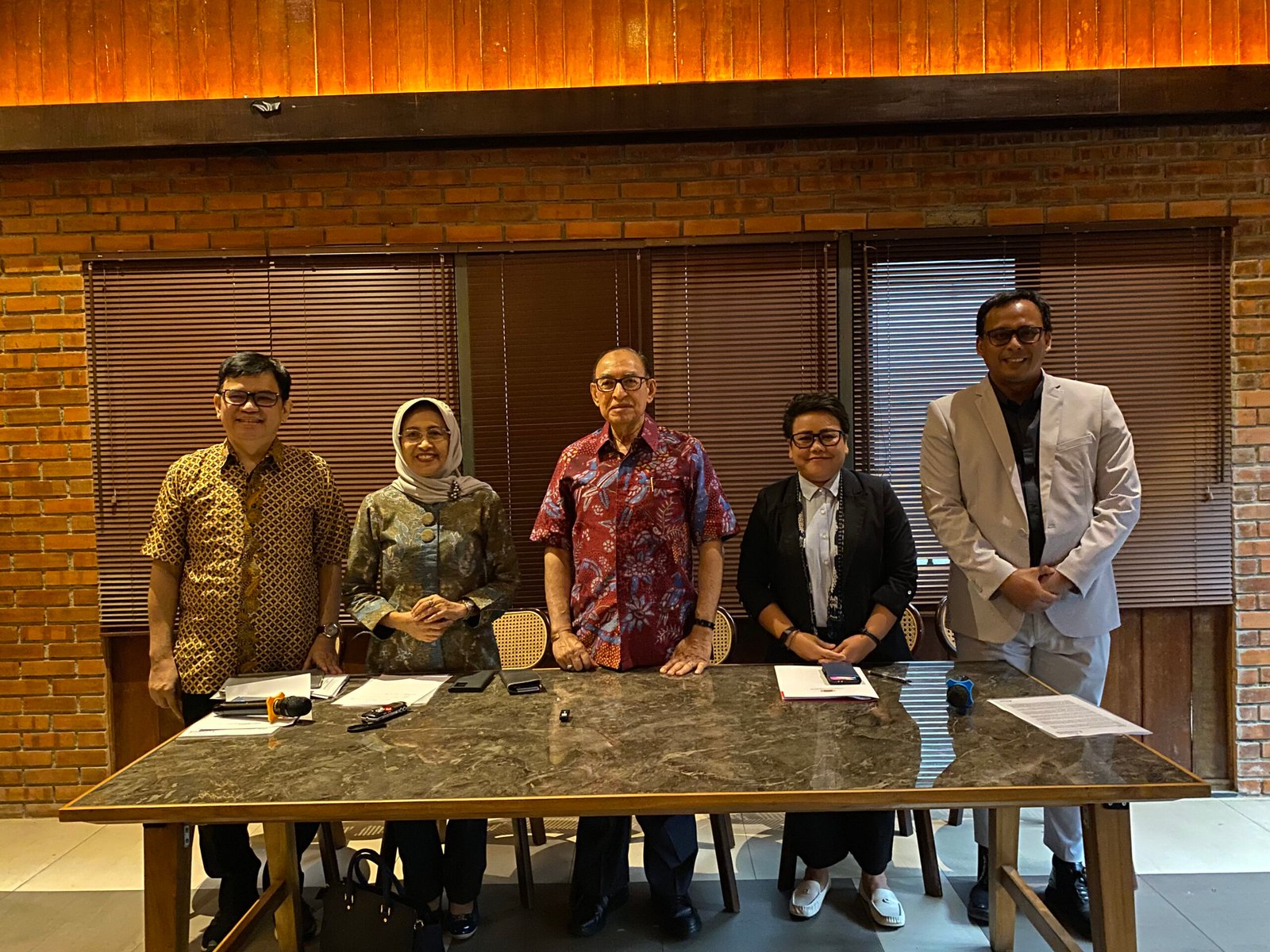
The speakers at the pre-event press conference for ICCRL 2024, organized in collaboration with the Ministry of Foreign Affairs of the Republic of Indonesia.
Alwi emphasized that the participants of the CCRL program are teachers from across Indonesia. They are equipped with three competencies: personal, comparative, and collaborative. The CCRL program aims to prepare teachers with these three essential competencies for relating with people of different faiths.
“There is no doubt that all efforts to create a plural yet inclusive society must be pursued through education. Without education, we will lag far behind in achieving this goal,” explained Alwi Shihab.
He recalled that after the September 11, 2001 (9/11) attacks in the United States, the government there felt compelled to take concrete measures against extremism and radicalism. Education became the only solution, including efforts by the United States to approach Islamic countries through education in order to change the attitudes of Muslims influenced by rigid and hardline Wahhabism.
Alwi expressed his appreciation for the CCRL program initiated by the Leimena Institute, which has been running for two and a half years, as it has encouraged teachers to adopt more open attitudes, to listen and accept differences, and to foster better interreligious community relations. A survey by the Center for the Study of Islam and Society (PPIM) at Syarif Hidayatullah State Islamic University reported that 57 percent of teachers expressed intolerant views toward people of other faiths, and 37.77 percent expressed a willingness to engage in intolerant acts.
“This is very dangerous. If religious teachers are intolerant, while they are the ones who will shape future leaders, what will become of Indonesia if we do not take collective responsibility to address this problem?” said Alwi.
Alwi stressed the importance of all parties taking responsibility for the nation’s welfare. “The welfare of the nation must be built on mutual respect, acceptance of differences, and not self-righteous judgment. All of this must be achieved through education,” he said.