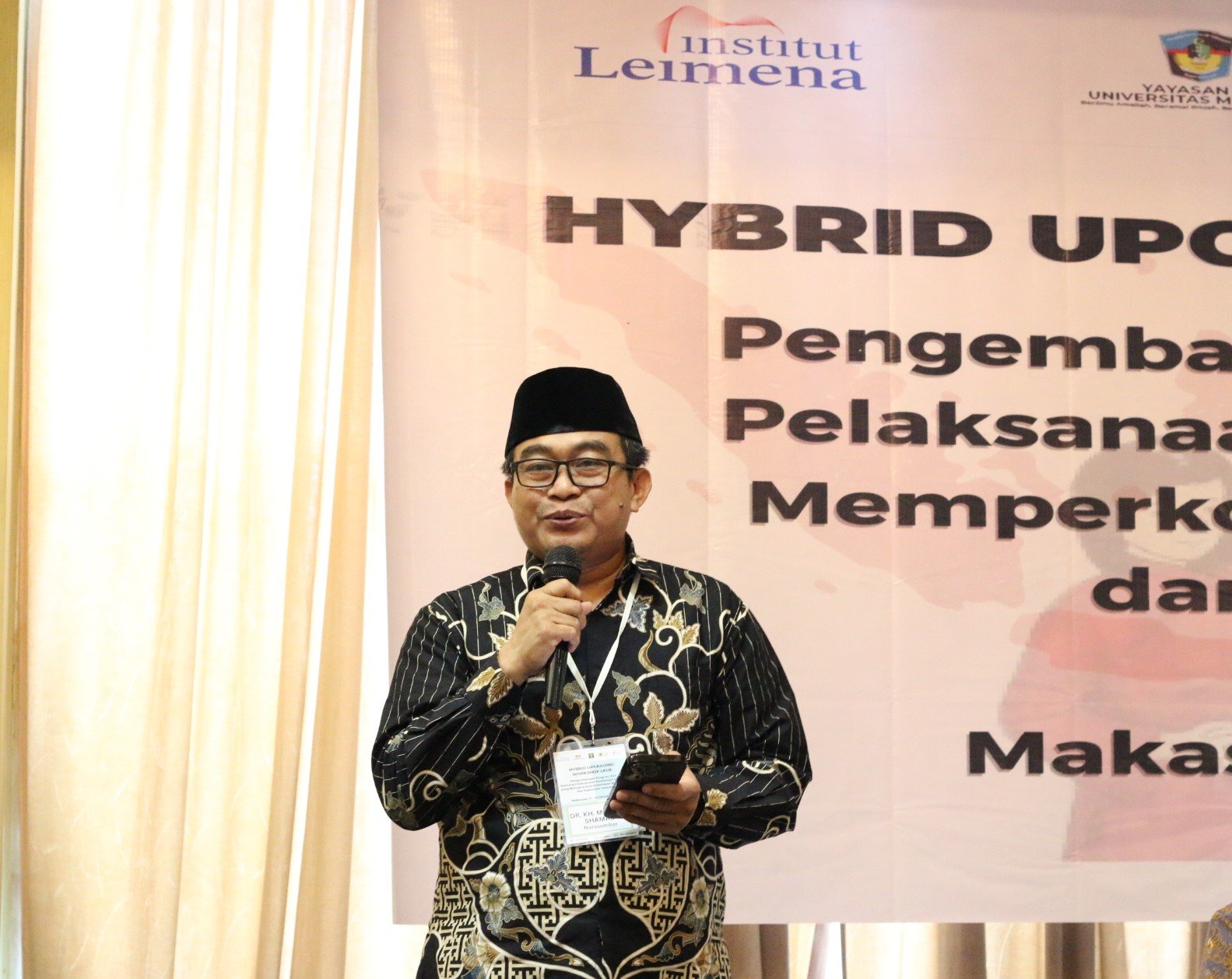
Dr. Ishaq Shamad, Vice Rector IV for Islamic Campus Governance and Education Development at Universitas Muslim Indonesia (UMI), was one of the speakers at the Hybrid Upgrading Workshop on Cross-Cultural Religious Literacy in Makassar, October 11–13, 2024.
Jakarta, LKLB News – Tolerance and the right to religious freedom must always be safeguarded in Indonesia’s plural society. Islam itself strongly supports tolerance and freedom of religion, as written in Surah Al-Kafirun verse 6: lakum diinukum waliyadin — “For you is your religion, and for me is my religion.”
This was conveyed by Dr. Ishaq Shamad, Vice Rector IV for Islamic Campus Governance and Education Development at Universitas Muslim Indonesia (UMI), when presenting on Islamic Personal Competence with the topic “The Role of Teachers as Models in Building Interfaith Relations” during the Hybrid Upgrading Workshop (HUW) on Cross-Cultural Religious Literacy (CCRL) in Makassar, Saturday, October 12, 2024.
“Islam itself does not mix religions and encourages tolerance in building relationships with others of different faiths,” said Ishaq, who also serves as Chairman of the Central Board of the United Indonesian Mosque Preachers Association (DPP IMMIM).
Personal competence is one of three competencies in CCRL. Personal competence means the ability of an individual to understand their own religion, particularly in relation to others of different faiths.
Ishaq further explained that Surah Al-Hujurat verse 11 also states: “O you who have believed, let not a people ridicule another people; perhaps they may be better than them.”
“I have often shared a room with a pastor, spending two or three nights together in a hotel. At night I would say, ‘Pastor, may I excuse myself to perform the Isha prayer first?’ He would reply, ‘Please go ahead.’ Later around 8 or 9 p.m., he would say, ‘Ustadz, may I excuse myself to sing?’ and I replied, ‘Please do.’ So we respected each other,” Ishaq said with a smile.
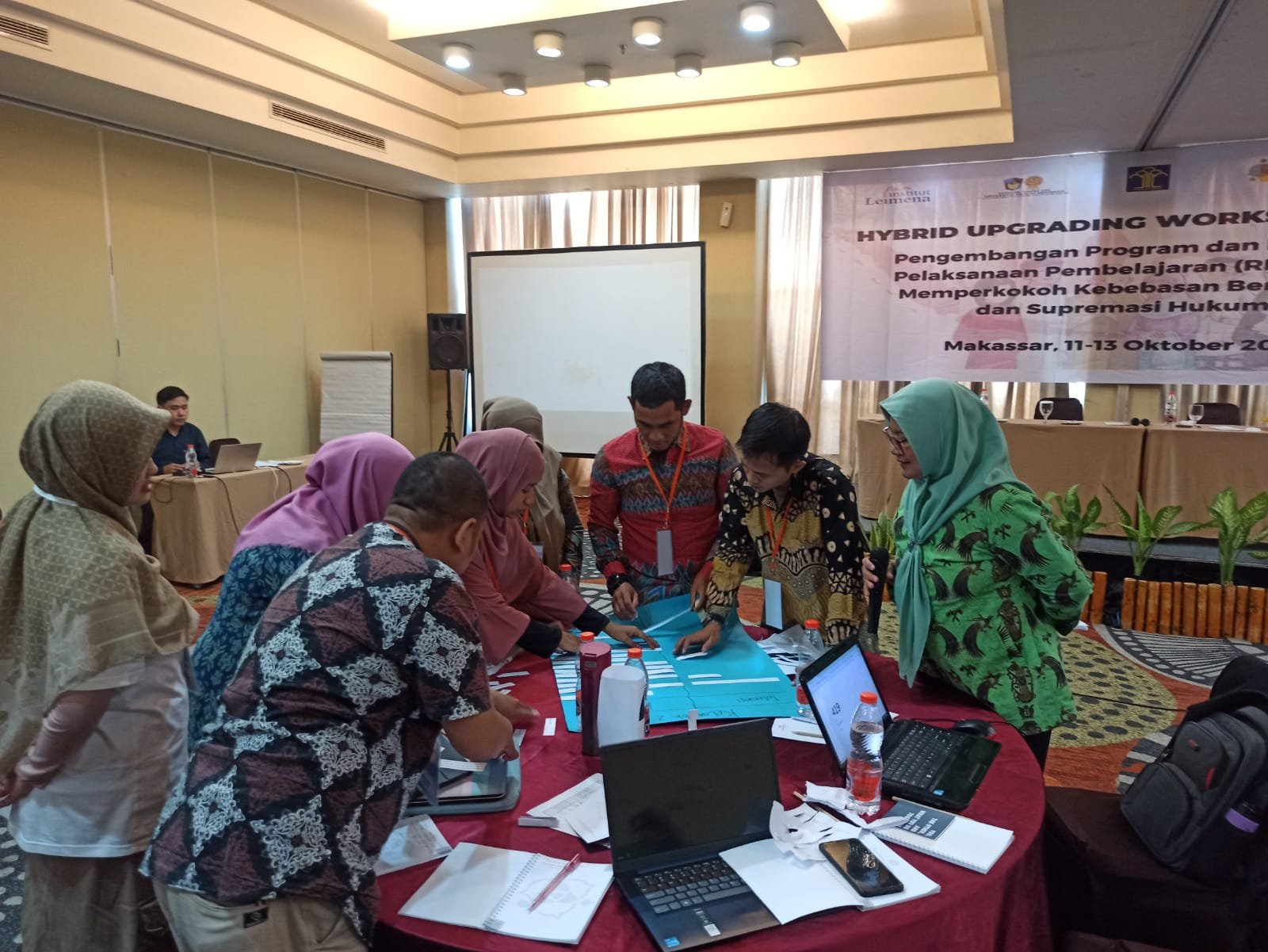
One group of participants in the Hybrid Upgrading Workshop in Makassar discussed identifying symptoms and behaviors of intolerance.
According to Ishaq, problems in interfaith relations usually do not arise among religious leaders, but more often within communities due to misconceptions. Social divisions may occur when one side considers themselves the only one right while others are wrong.
“Among religious leaders, there are no problems. The problem arises in society, among our children—even some mothers forbid their children from befriending those of other religions. Why? Because they were taught to believe they are absolutely right, and others are wrong,” he said.
Meanwhile, Senior Expert Staff at the Executive Office of the President of the Republic of Indonesia, Prof. Dr. Siti Ruhaini Dzuhayatin, stated that the CCRL program developed by Institut Leimena together with around 25 partner religious and educational institutions, including Universitas Muslim Indonesia, is a form of community responsibility to safeguard freedom of religion.
“Practicing religion in Indonesia’s public space means practicing religion that still manifests ethno-religious values, but within certain corridors bound by the supremacy of law that regulates freedom of religion and belief in Indonesia,” said Ruhaini, who is also a Senior Fellow at Institut Leimena.
This CCRL Hybrid Upgrading Workshop was organized by Institut Leimena in collaboration with the Ministry of Law and Human Rights of the Republic of Indonesia and UMI. The theme was “Developing Programs and Lesson Plans (RPP) that Strengthen Freedom of Religion and the Supremacy of Law,” aiming to increase teachers’ understanding of freedom of religion and belief from the perspective of the constitution and state law.
The workshop also equipped teachers in practical ways to develop lesson plans (RPP) or activity programs based on freedom of religion and the supremacy of law.