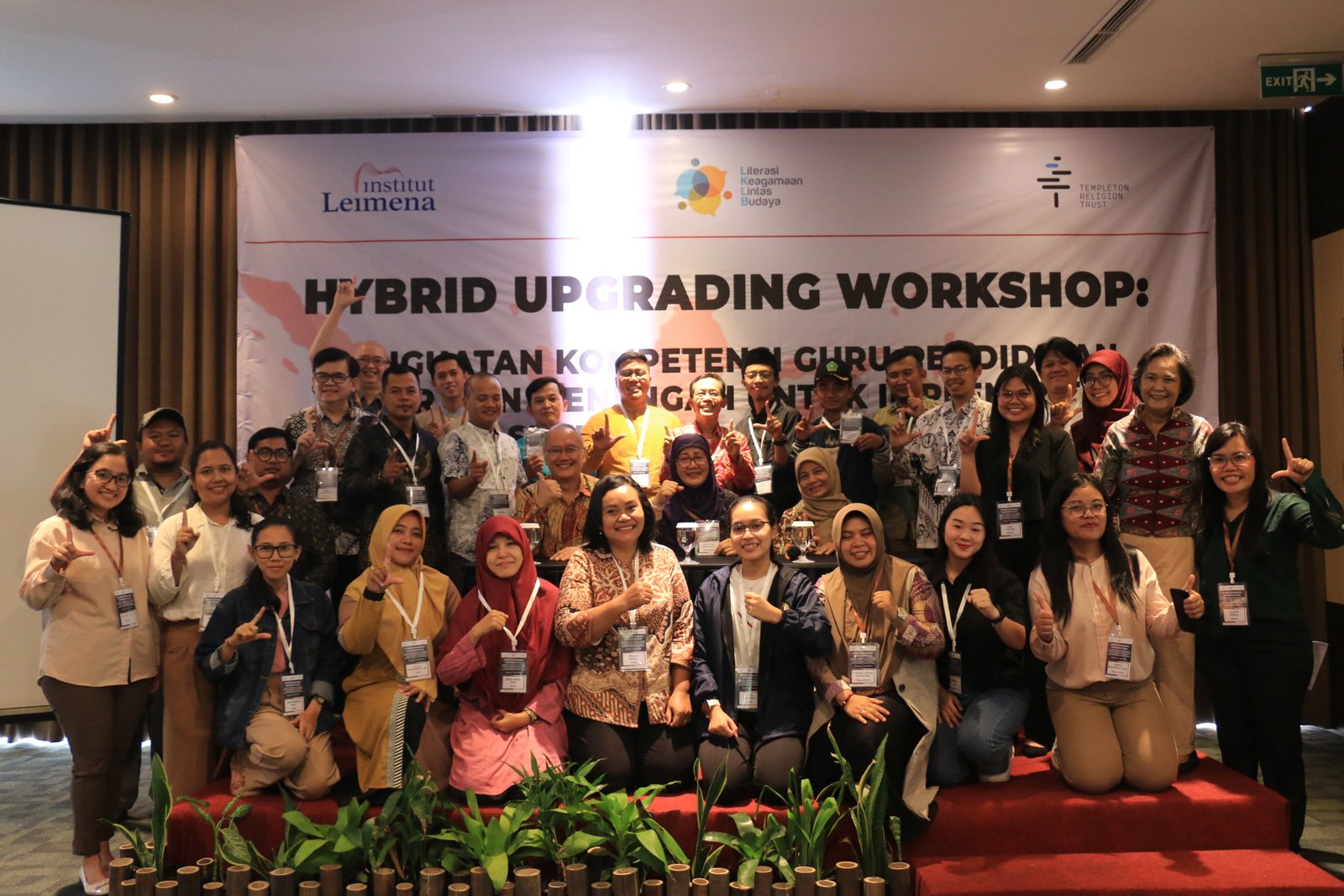
Teachers participating in the Hybrid Upgrading Workshop on Cross-Cultural Religious Literacy held in Bandung, February 21–23, 2025.
Bandung, LKLB News – Teachers are one of the key agents of change in fostering the spirit of diversity and reducing intolerance that still emerges within society. As educators, teachers need to be equipped with practical competencies to teach how to cultivate attitudes of respect and the willingness to collaborate with people of different religions.
This became the foundation for the implementation of the Hybrid Upgrading Workshop with the theme “Strengthening the Competence of Primary and Secondary School Teachers for the Implementation of Cross-Cultural Religious Literacy in the Merdeka Curriculum Learning” organized by Institut Leimena in Bandung, February 21–23, 2025. The workshop was attended by around 25 interfaith teachers from schools and madrasahs in West Java and DKI Jakarta.
“Cross-Cultural Religious Literacy (CCRL) has the advantage of strengthening teachers’ competencies. CCRL is innovative because it is very detailed in preparing the stages and processes that equip teachers with a set of competencies to implement values of tolerance, mutual respect, and cooperation,” said Associate Professor at Universitas Muhammadiyah Surakarta, Yayah Khisbiyah, during the opening of the CCRL workshop on Friday (21/2/2025).
Yayah noted that a 2018 survey by the Center for the Study of Islam and Society (PPIM) of UIN Syarif Hidayatullah, Jakarta, found that 57% of teachers in Indonesia were intolerant toward other religions. A similar survey in 2023 conducted by the Setara Institute and the Forum on Indonesian Development (INFID) recorded that 83.3 percent of high school students considered Pancasila not a permanent ideology and replaceable.
“Intolerance is a latent problem in the nation. That is why this CCRL program is important, so that we do not become a nation that is disintegrated and easily divided, but instead can collaborate with one another,” Yayah said.
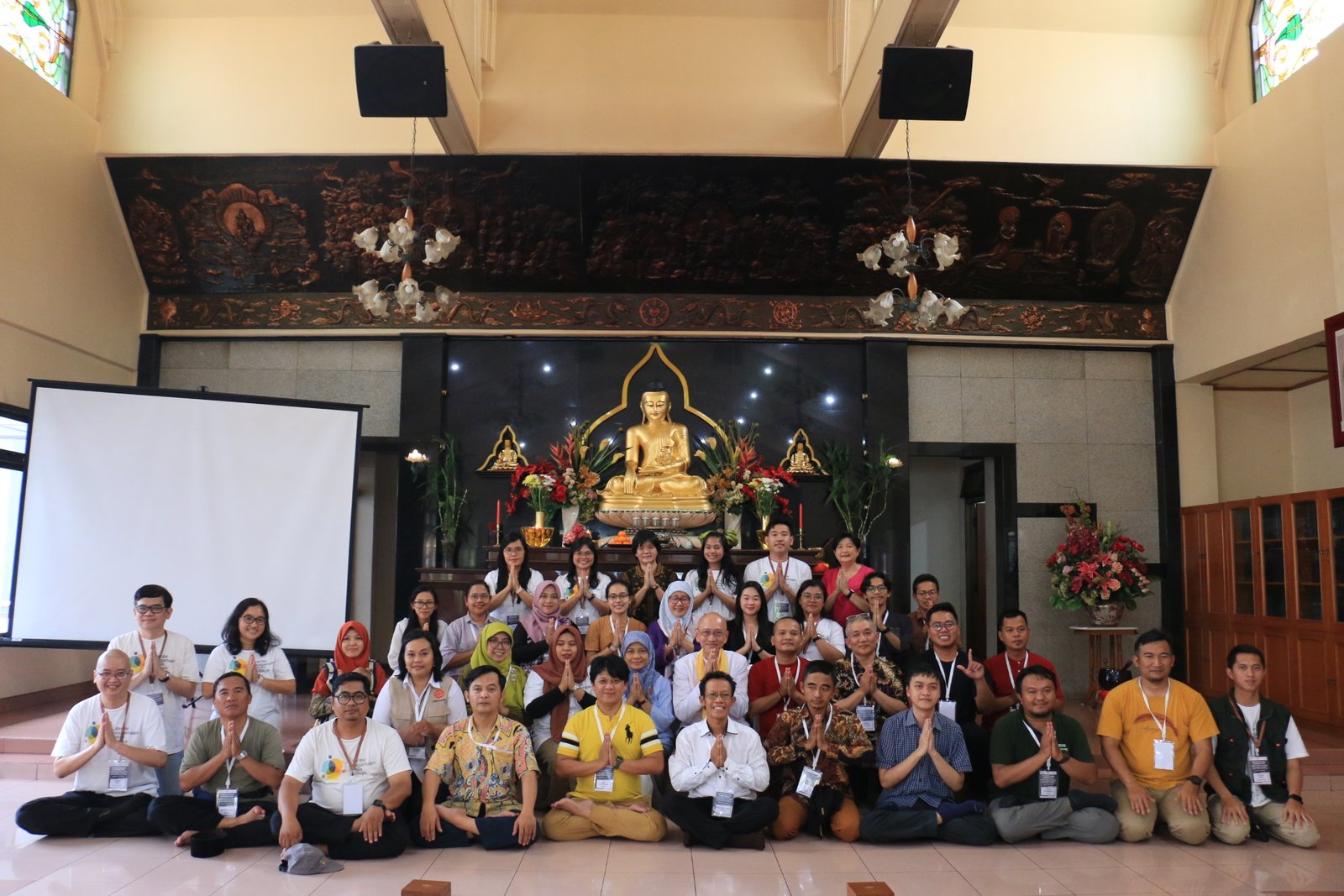
Teachers participating in the CCRL workshop visited the Vimala Dharma Vihara in Bandung.
Leimena Institute Program Advisor, Budi Setiamarga, stated that CCRL encourages people to practice a more mature religiosity. Tolerance is often only understood passively as not disturbing each other’s beliefs. In contrast, within CCRL, adherents of different religions are encouraged to engage with one another, to be open, and to be willing to cooperate for the common good.
“CCRL strengthens our faith while at the same time enabling us to understand others as they understand themselves. With that understanding, we can seek common ground for collaboration,” Budi said.
Education activist and observer from the Association for the Development of Interreligious Educators (PaPPIRus), Listia Suprobo, added that the insertion of CCRL values will become social capital for Indonesia, as it nurtures a generation that knows itself, understands those who are different, and is ready to cooperate for the sake of the nation, the people, and humanity.
“Through the CCRL workshop, teachers are invited to directly experience interreligious relations so that they can build empathy within their students when interacting with people of different religions,” said Listia.
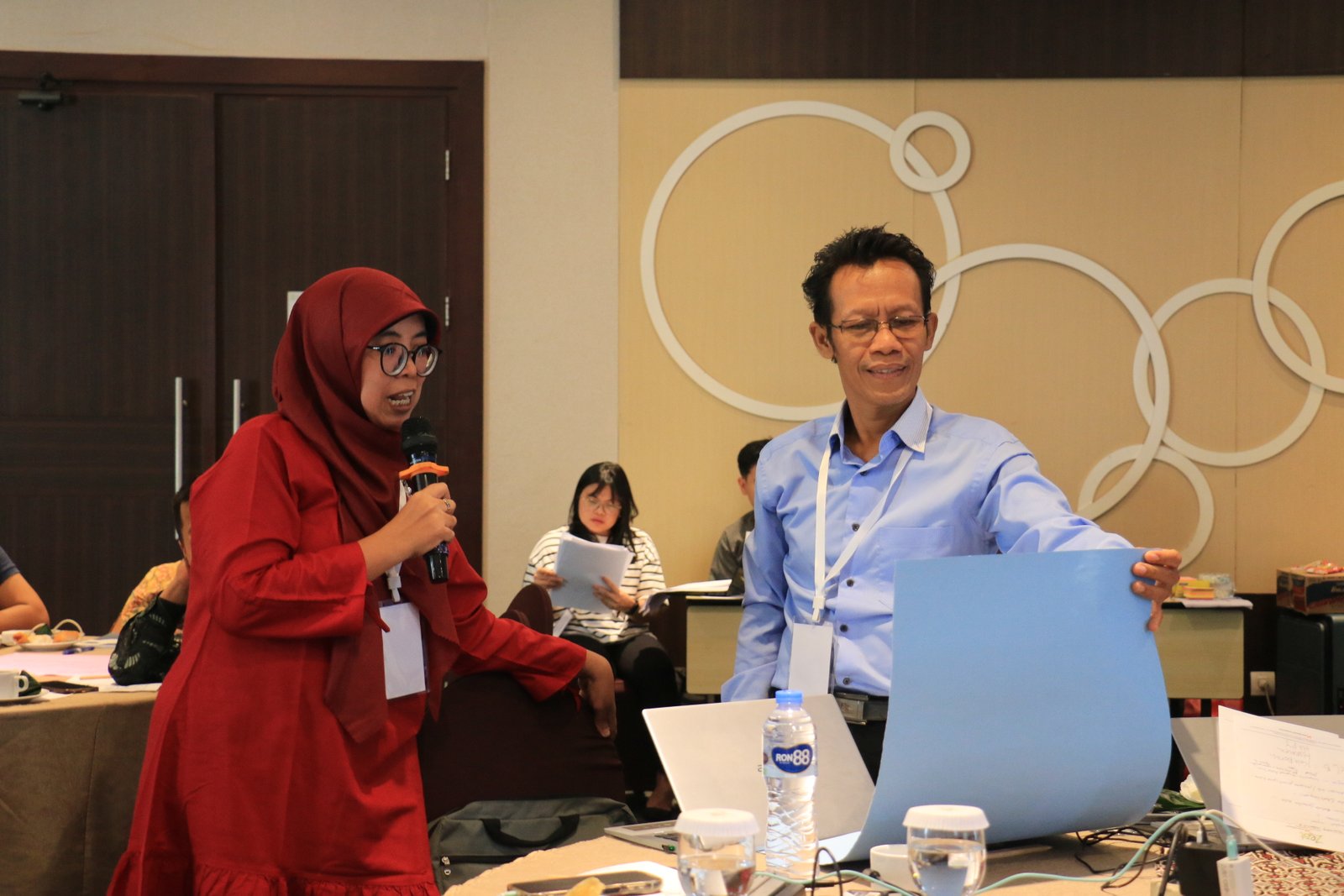
Discussion sessions formed an important part of the Hybrid Upgrading Workshop on CCRL.
Leimena Institute Program Director, Daniel Adipranata, said that CCRL teaches three main competencies for living in a plural society. First, personal competence, namely how one understands their own religion in viewing relations with fellow human beings, including those of different religions.
Second, comparative competence, namely understanding other religions from the perspective of their adherents. Third, collaborative competence, namely encouraging cooperation without religious barriers or mutual suspicion in addressing humanitarian issues that are shared challenges.
Daniel explained that the CCRL workshop was attended by teachers who had graduated from the introductory CCRL program held online for one week. In this workshop, teachers were taught to insert CCRL values into teaching modules and then apply them in the classroom.
“The CCRL program, which began in 2021, has been followed by 9,258 teachers from various schools and subjects across 37 provinces in Indonesia. The initiative was started by prominent religious leaders such as Buya Syafi’i Maarif, Prof. Amin Abdullah, and former Minister of Foreign Affairs of the Republic of Indonesia, Alwi Shihab,” Daniel said.