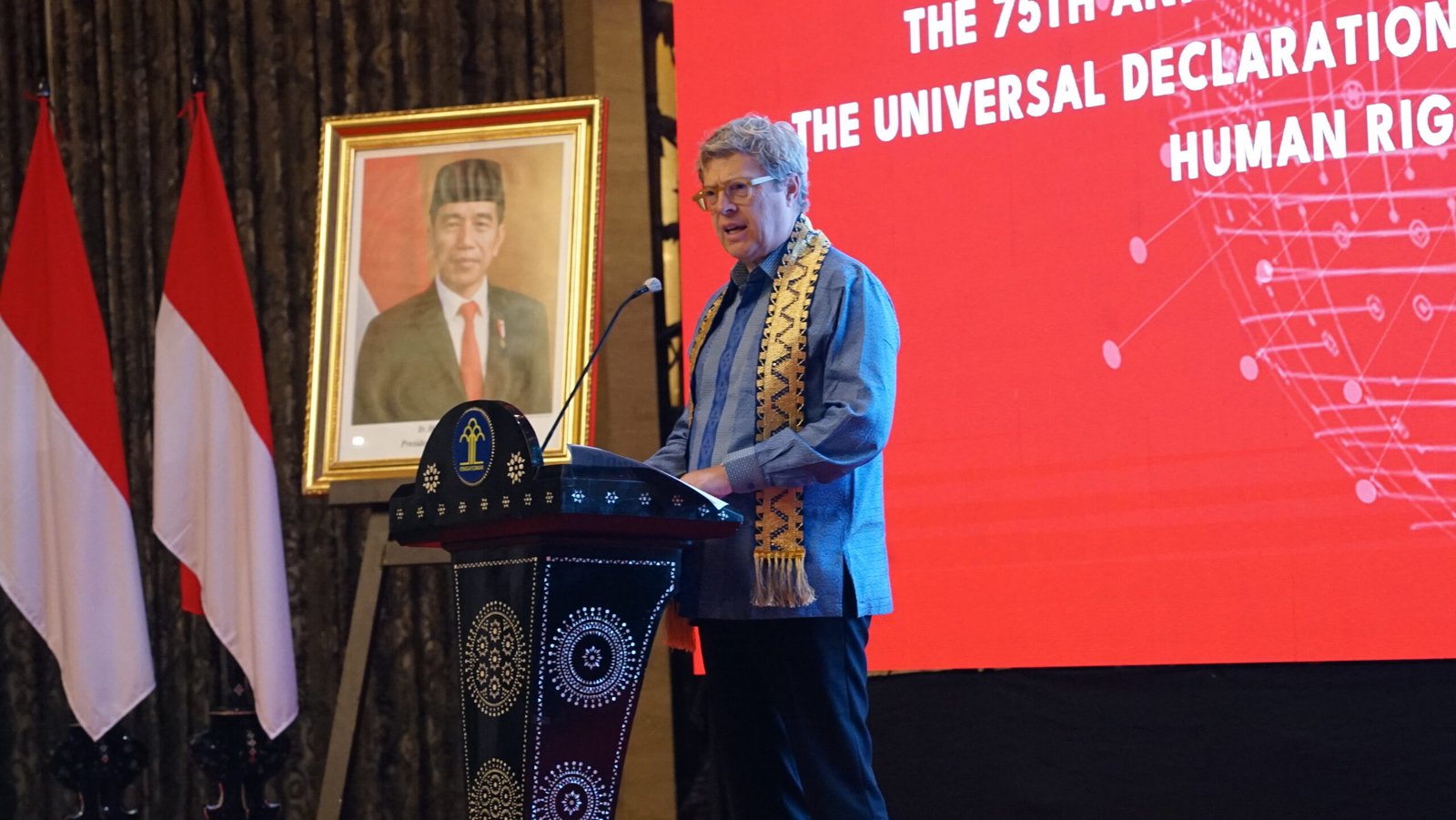
Director of the International Center for Law and Religion Studies, Brigham Young University, Brett Scharffs, delivered Formal Greetings at the opening of the International Conference on Cross-Cultural Religious Literacy at Hotel Kempinski, Jakarta, November 13, 2023.
Jakarta, LKLB News – The efforts of the Leimena Institute together with various partners from inside and outside the country to build religious literacy on a large scale in Indonesia have been positively received. Director of the International Center for Law and Religion Studies (ICLRS), Brigham Young University, Brett Scharffs, and President of the International Religious Freedom (IRF) Secretariat, Nadine Maenza, appreciated the role of the Leimena Institute in educating cross-cultural religious literacy among teachers and religious instructors from all over Indonesia.
According to Brett Scharffs, one of the lessons that can be learned from the Leimena Institute is the strength of efforts to build cross-cultural religious literacy. They have carried this out on a large scale, with a focus on training that has involved nearly 6,000 teachers.
“One of the remarkable things about their training is that they ask Muslims to share about Islam, Christians to share about Christianity, and likewise Jews to share about Judaism,” said Scharffs during the opening session of the International Conference on Cross-Cultural Religious Literacy (CCRL) at Hotel Kempinski, Jakarta, November 13, 2023.
Scharffs said the international conference is a great achievement, especially in difficult and challenging times. In a polarized world, it is significant to bring together such a broad and diverse group of people. In particular, in a world where religion is often weaponized rather than being a tool of peace, it is hard to overstate the importance of religious and cross-cultural literacy.
Furthermore, Scharffs said this conference is also held to commemorate the 75th Human Rights Day on December 10, when the Universal Declaration of Human Rights (UDHR) was adopted by the United Nations (UN). This is in line with the conference theme, which was carefully chosen and is highly important.
“Human dignity, which is not only the fundamental principle of the UDHR but also the principle of the human rights movement, makes it possible to open doors, build bridges, and find common ground in today’s world. By promoting the rule of law, we show that we care about the supremacy of law, and thus create peaceful and inclusive societies,” said Scharffs.
Scharffs added that Indonesia is a global leader in promoting peaceful and inclusive societies. “We all have much to learn, most importantly from Indonesia, which is a global leader in creating and sustaining ideals and mechanisms that help promote peaceful and inclusive societies,” stressed Brett Scharffs.
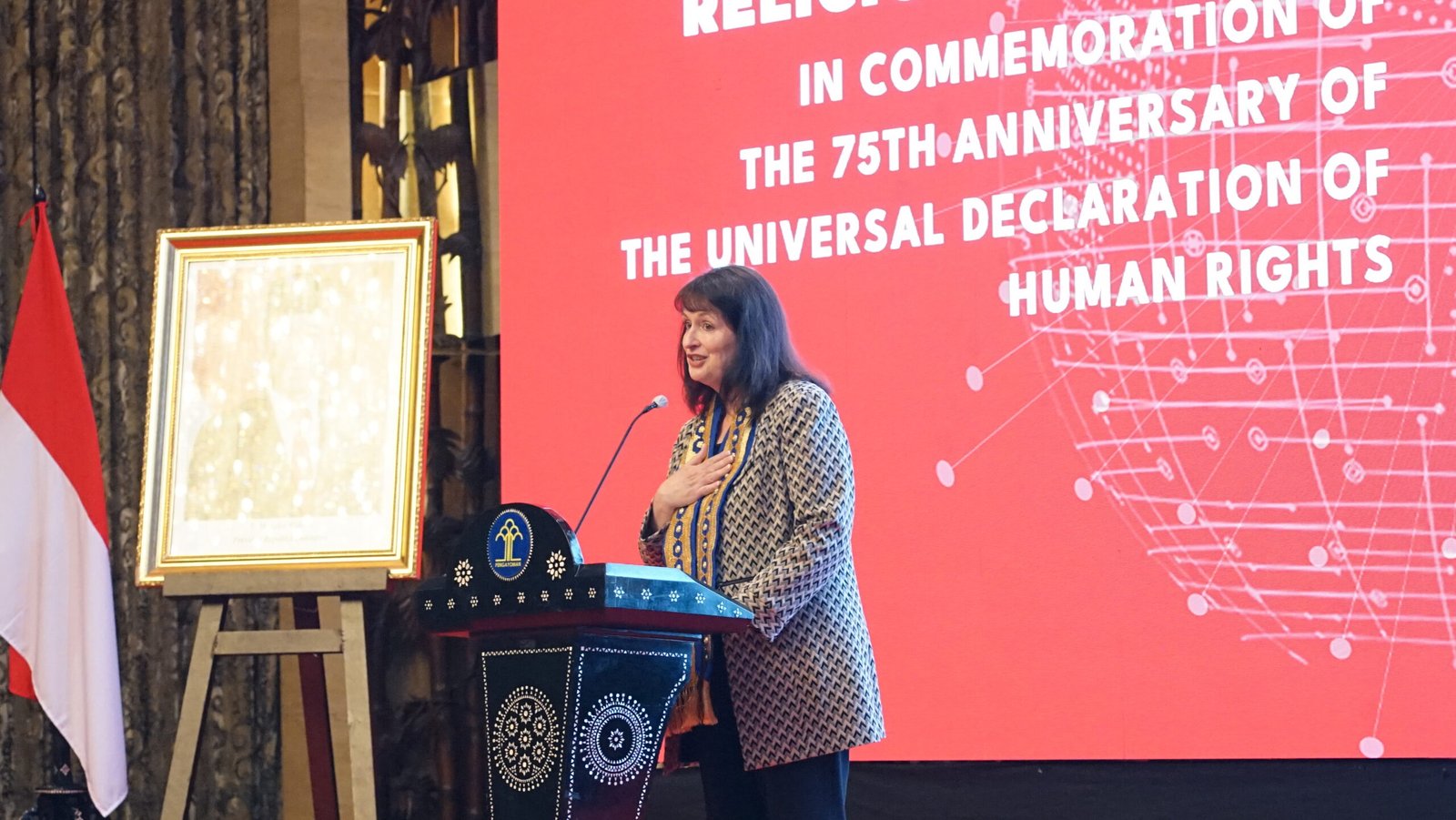
President of the International Religious Freedom (IRF) Secretariat, Nadine Maenza.
Impressed by the Success of the CCRL Program
In line with that, Nadine Maenza expressed that she was impressed with the success of the CCRL program organized by the Leimena Institute, as well as its engagement with the Ministry of Law and Human Rights of the Republic of Indonesia.
“How they are making a difference together. It is truly amazing to know that 6,000 teachers from 34 provinces have already been trained in cross-cultural religious literacy,” said Maenza.
Maenza stated that CCRL plays a key role in fostering mutual understanding and not being afraid of differences. “Equal and inclusive citizenship is the cure for so much instability and violence we see around the world today,” she asserted.
Maenza said she was inspired by the new approaches taken by the IRF Secretariat, Templeton Religion Trust, ICLRS Brigham Young University, the Leimena Institute, and others in bringing people together to engage and learn from one another, as well as to work together in building interfaith relations, social cohesion, security, peace, and prosperity.
She explained that the IRF Secretariat has organized the IRF Roundtable, a forum consisting of individuals from non-governmental organizations who gather regularly to discuss international religious freedom issues. The IRF Roundtable has become a safe space where participants can speak freely to share ideas and information, as well as propose joint advocacy actions in addressing specific international religious freedom issues and challenges.
Maenza mentioned that the most visible impact of the IRF Roundtable is that governments, religious communities, and civil society can work together to build societies that are aware of respecting human dignity regardless of religion, ethnicity, gender, or social status.
The IRF Roundtable in the United States (US) is held every three months at the Capitol (the US Congress building) and is also attended by staff from the State Department, the US Commission on International Religious Freedom, the Helsinki Commission, the Tom Lantos Human Rights Commission, the International Religious Freedom Caucus, members of Congress, and foreign embassies.
“This is how we enhance religious freedom globally and in the long term,” she said.
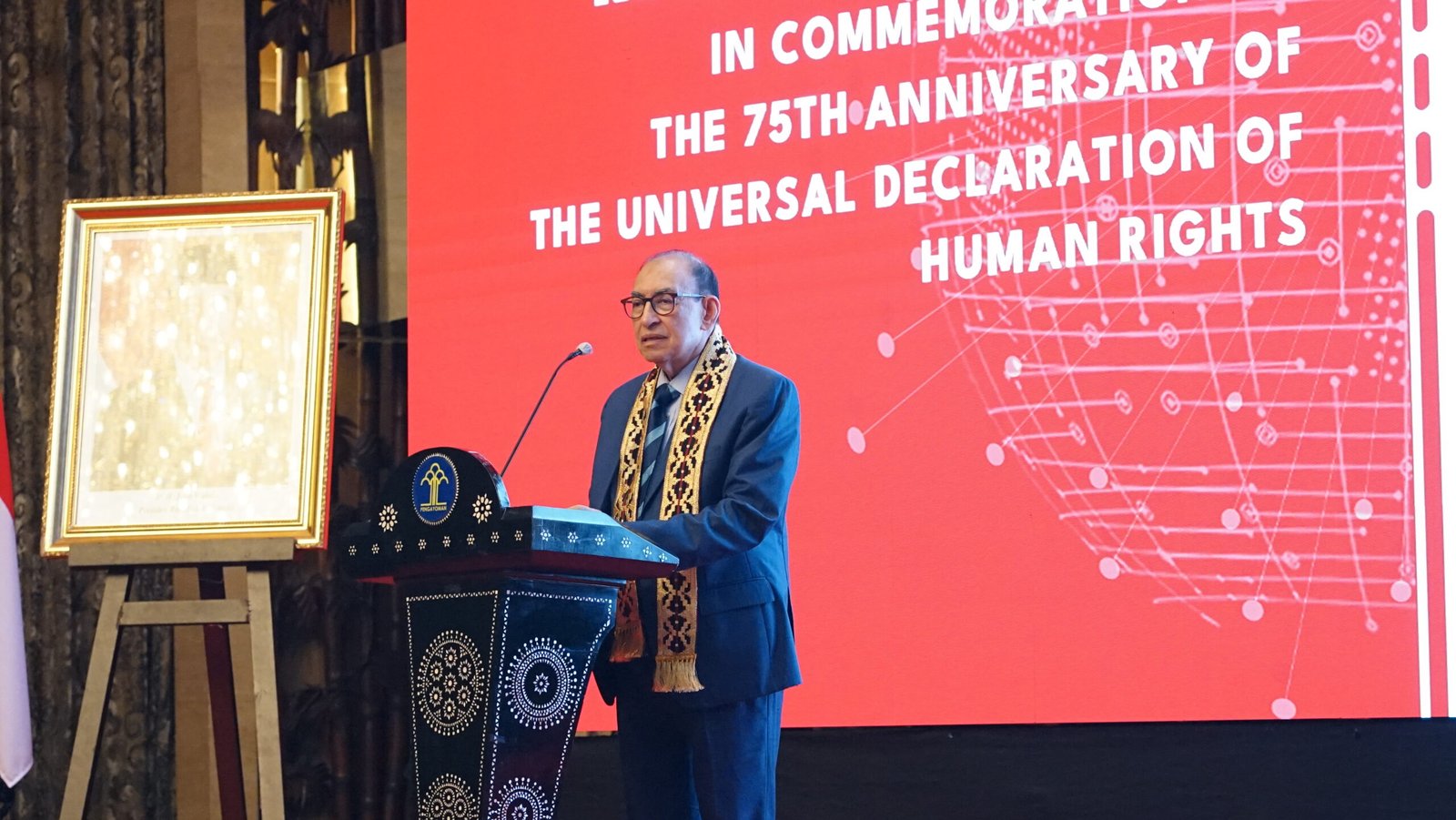
Senior Fellow of the Leimena Institute and Special Envoy of the President of Indonesia for the Middle East and the Organization of Islamic Cooperation (2016–2019), Alwi Shihab.
The Poison of Religious Extremism
Meanwhile, Senior Fellow of the Leimena Institute, Alwi Shihab, said diversity is part of God’s design that we must all respect and accept. Harmony in diversity within a nation or society reflects the maturity of thought and civil society.
“The farther we are from accepting diversity, the closer we are to an undesirable cancer, namely religious extremism, which has been proven time and again to be very poisonous and dangerous,” said Alwi.
However, Alwi said, this fact has recently been challenged by religious groups that ironically consider themselves the only pure and most correct. The presence of radicalism has sparked extremism in internal thought, which can nurture the seeds of conflict and violence.
“This unpleasant phenomenon is strongly at odds with the core values brought by major religions, namely concord and harmony,” he continued.
Alwi, who is also a main resource person for the CCRL program, mentioned that dialogue and tolerance are basic necessities for the harmony of humankind in today’s divided world. Major religions such as Islam, Christianity, Hinduism, Buddhism, Judaism, and other faith traditions, in terms of theology, share one commonality, namely teaching love, compassion, submission to the Almighty, and mutual respect.
Alwi emphasized that although long and winding, efforts to develop models of peace and interfaith understanding must continue to be pursued. “This is where cross-cultural dialogue can play a significant role. All that has been mentioned above are important pillars and essential ingredients of the program we are pursuing and working on, namely cross-cultural religious literacy,” he said.