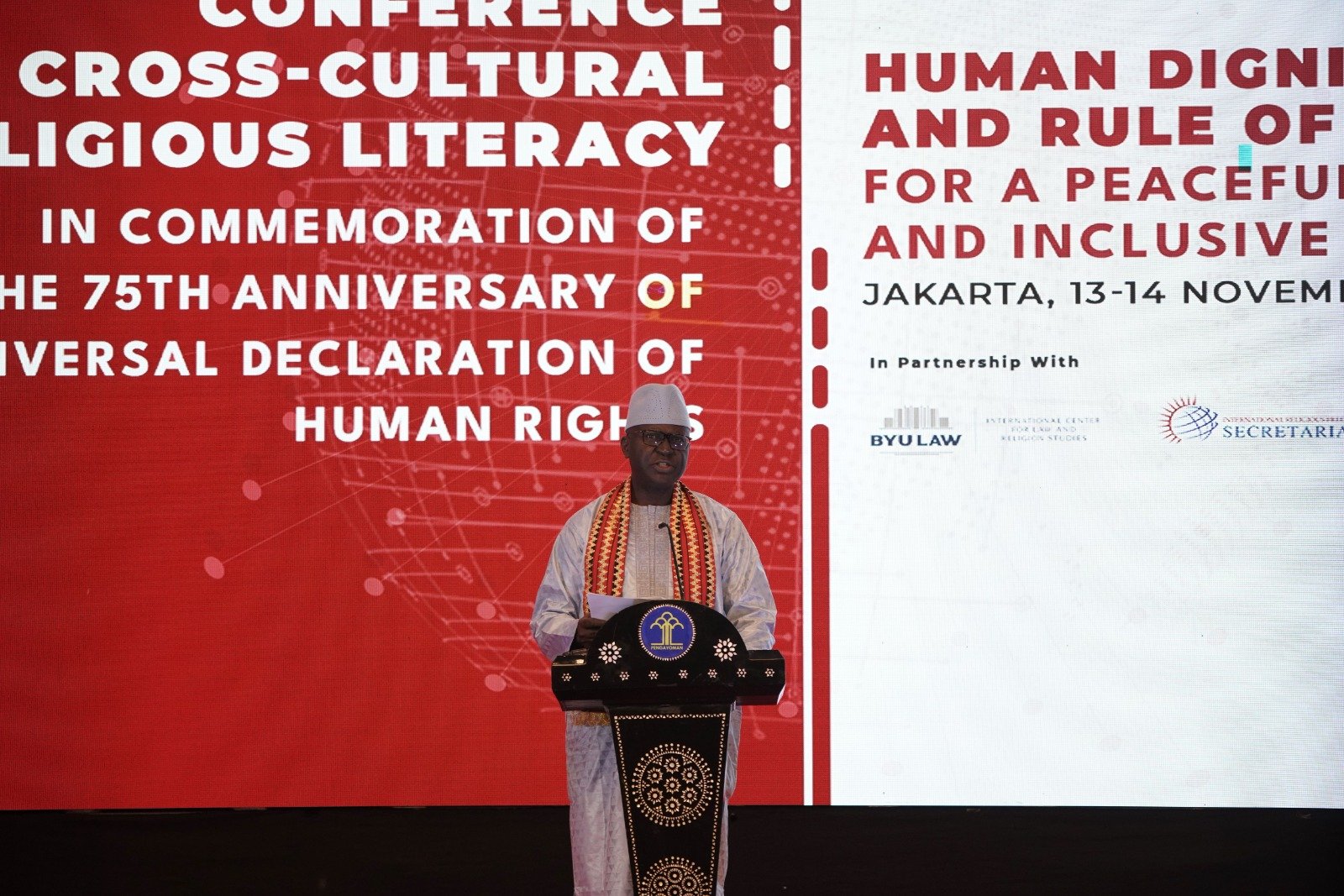
The International Conference on Cross-Cultural Religious Literacy (CCRL), held at the Kempinski Hotel Jakarta on 13–14 November 2023, featured international speakers, including Vice President of the United Nations Human Rights Council, Muhammadou Kah.
Jakarta, LKLB News – Vice President of the United Nations Human Rights Council (UNHRC), Muhammadou M.O. Kah, emphasized the importance of commitment to religious harmony in society. The challenge of strengthening coexistence is often difficult due to ideologies that threaten pluralism.
“The crises and hardships in various parts of the world, the shifting geopolitics, and the weakening of our conscience and humanity demand that we all stand for human rights and human dignity,” said Muhammadou at the Conference on Cross-Cultural Religious Literacy organized by the Ministry of Law and Human Rights of the Republic of Indonesia together with the Leimena Institute, at the Kempinski Hotel, Jakarta, 14 November 2023.
Muhammadou proposed several measures to reinforce the commitment to religious harmony, namely strengthening educational frameworks, dialogue forums, legal reform, community engagement, digital technology, artificial intelligence for tolerance and goodness, safeguarding vulnerable groups, and rapid response to hate-based crimes.
“A state governed by law requires adequate support, preparedness and capacity, skills including cross-cultural religious literacy, and the participation of youth and women,” he stated.
Muhammadou explained that religion should serve as an inspiration and a force to unite fellow human beings in shared humanity. The role of an accountable government and responsible educational institutions needs to be supported by religious institutions as well as civil society organizations to illuminate positive human rights values.
“Religion has the power to transform our narrative of the world. In general, religious diplomacy is vital, standing for human rights for all,” said Muhammadou, who is also the Permanent Representative of The Gambia to the United Nations Office, the World Trade Organization (WTO), and other international organizations in Geneva.
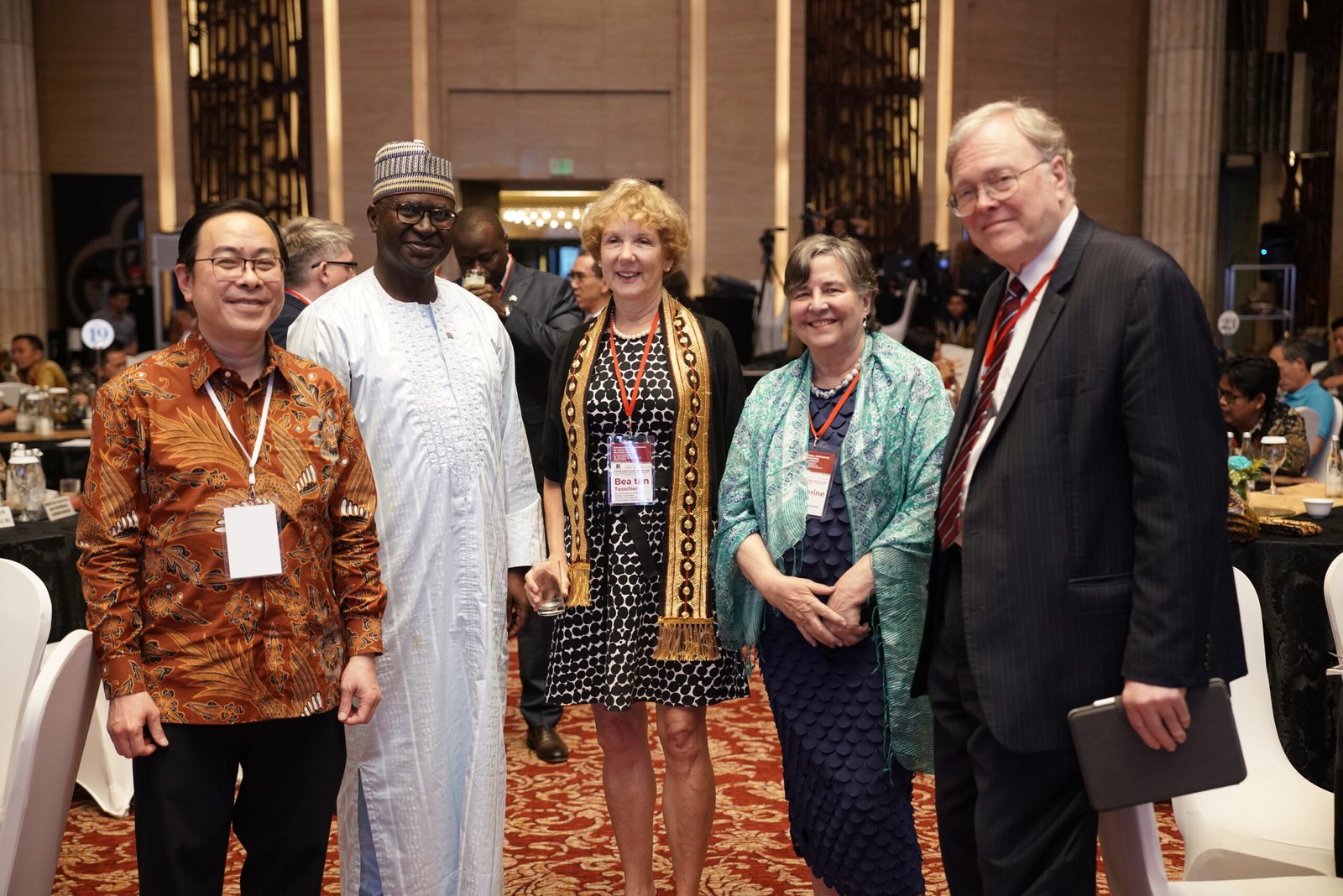
From left to right: Executive Director of the Leimena Institute, Matius Ho; Vice President of the UN Human Rights Council, Muhammadou M.O. Kah; Special Envoy for Freedom of Religion and Belief of the Ministry of Foreign Affairs of the Kingdom of the Netherlands, Bea ten Tusscher; Executive Director of the World Faiths Development Dialogue, Katherine Marshall; and President of the G20 Interfaith Forum Association, Cole Durham, Jr.
Muhammadou went on to say that religion plays a role in shaping a positive mindset to foster hospitality, hope, and love, as well as efforts to deepen human dignity. According to him, standing for human rights must be the common resolve of religious communities to advance the fulfillment of various socioeconomic rights, the right to live in peace, the eradication of human trafficking, and the building of a just world.
He added that efforts to strengthen coexistence are often difficult due to ideological challenges that threaten the fabric of society and the principle of tolerance.
“We all must stand for human rights and human dignity. The crises and hardships across continents, the constantly shifting geopolitics, and the weakening of our shared conscience and humanity demand such action,” Muhammadou continued.
He also stressed the importance of cross-cultural religious literacy skills supported by the participation of youth and women. According to him, civil society organizations require meaningful mentoring to illuminate positive human rights values.
According to Muhammadou, religious diplomacy is vital for building human dignity and human rights. He noted that interfaith communities must have a shared resolve to stand for human rights to ensure the rights of children, equality for women, economic development, and the prevention of conflict.
On the other hand, the International Conference on Cross-Cultural Religious Literacy was highly appropriate as it preceded the commemoration of the 75th anniversary of the UDHR on 10 December 2023. The declaration holds the ambition to uphold the values of fundamental freedoms and human rights, as well as to build the universality of human rights.
“Religion is meant to inspire, with the power to unite us as fellow human beings in humanity,” Muhammadou concluded.