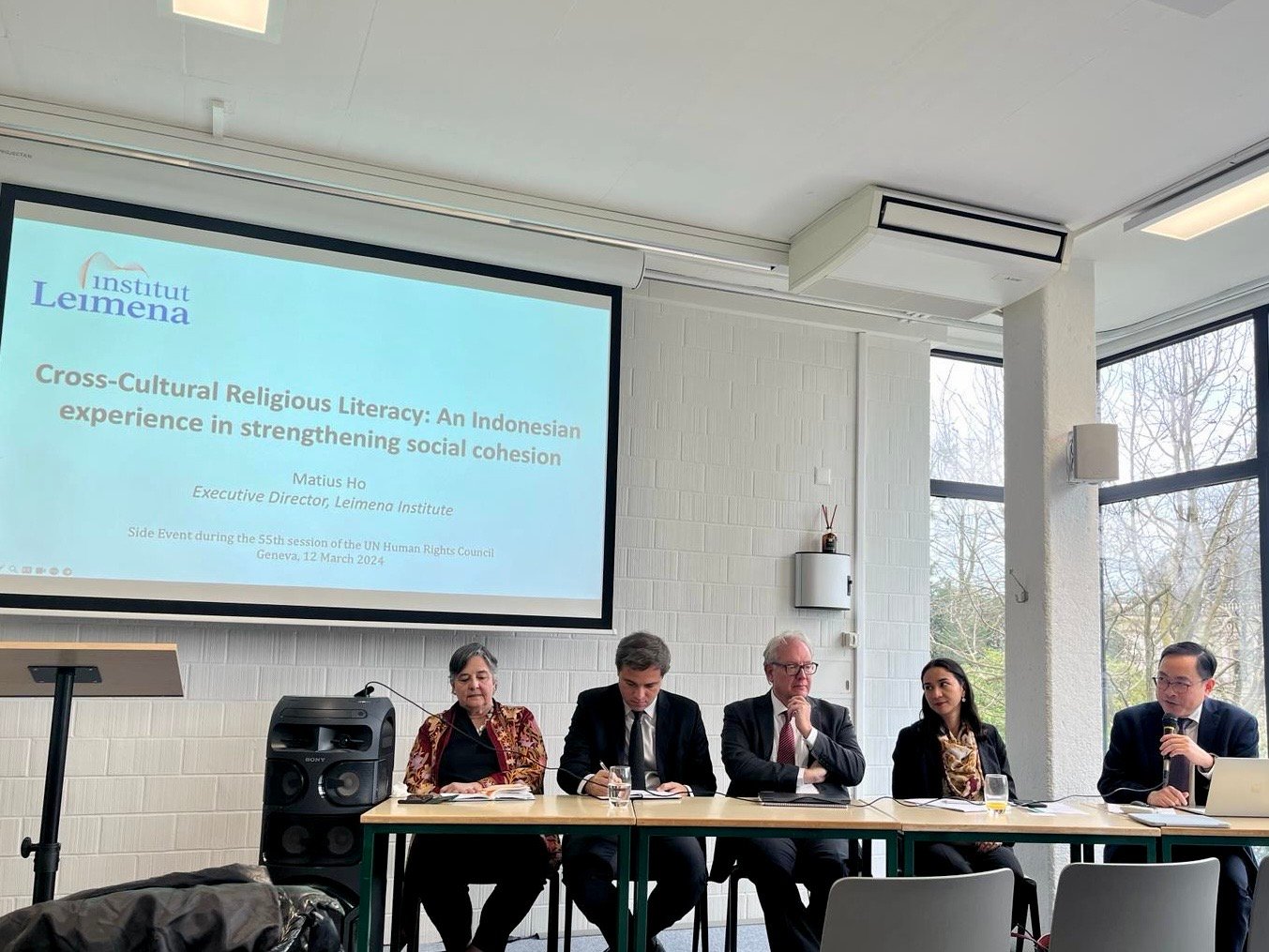
Executive Director of the Leimena Institute, Matius Ho (far right), presented the Cross-Cultural Religious Literacy program during a side event at the UN Human Rights Council in Geneva, March 12, 2024.
Geneva, LKLB News – The Deputy Permanent Representative of Indonesia to the United Nations (UN), the World Trade Organization (WTO), and other organizations in Geneva, Ambassador Achsanul Habib, underscored the importance of cross-cultural religious literacy as an implementation of interfaith education to address intolerance and religious prejudice, which remain global challenges today.
He conveyed this in a side event on the margins of the 55th UN Human Rights Council session in Geneva, Switzerland, on Tuesday (12/3/2023). The theme was “The Role of Cross-Cultural Religious Literacy and Human Rights Education in Combating Intolerance, Negative Stereotyping, and Stigmatization of Persons Based on Religion and Belief”, in line with UNHRC Resolution 16/18.
“At present, strengthening cross-cultural religious literacy and human rights education plays an essential role in creating an environment that rejects all forms of intolerance and religious prejudice,” Ambassador Habib said in his opening remarks.
The side event was initiated by Ambassador Achsanul Habib together with the Permanent Representative of the Republic of The Gambia to the UN and other international organizations in Geneva, Ambassador Muhammadou M.O. Kah, who also delivered opening remarks. The event was moderated by Prof. W. Cole Durham, Jr., President of the G20 Interfaith Forum Association, and attended by representatives of foreign governments, international organizations, and civil society in Geneva.
Ambassador Habib emphasized that the chosen theme is highly relevant given the increasing cases of human rights violations against individuals based on religion or belief worldwide. In addition to intolerance, negative stereotyping, and stigmatization, members of religious groups and faith communities across the globe also face hatred, discrimination, and violence on a daily basis.
“Failure to address these urgent problems will lead us down an even more dangerous path toward insecurity and conflict, as history over the decades has already taught us,” he warned.
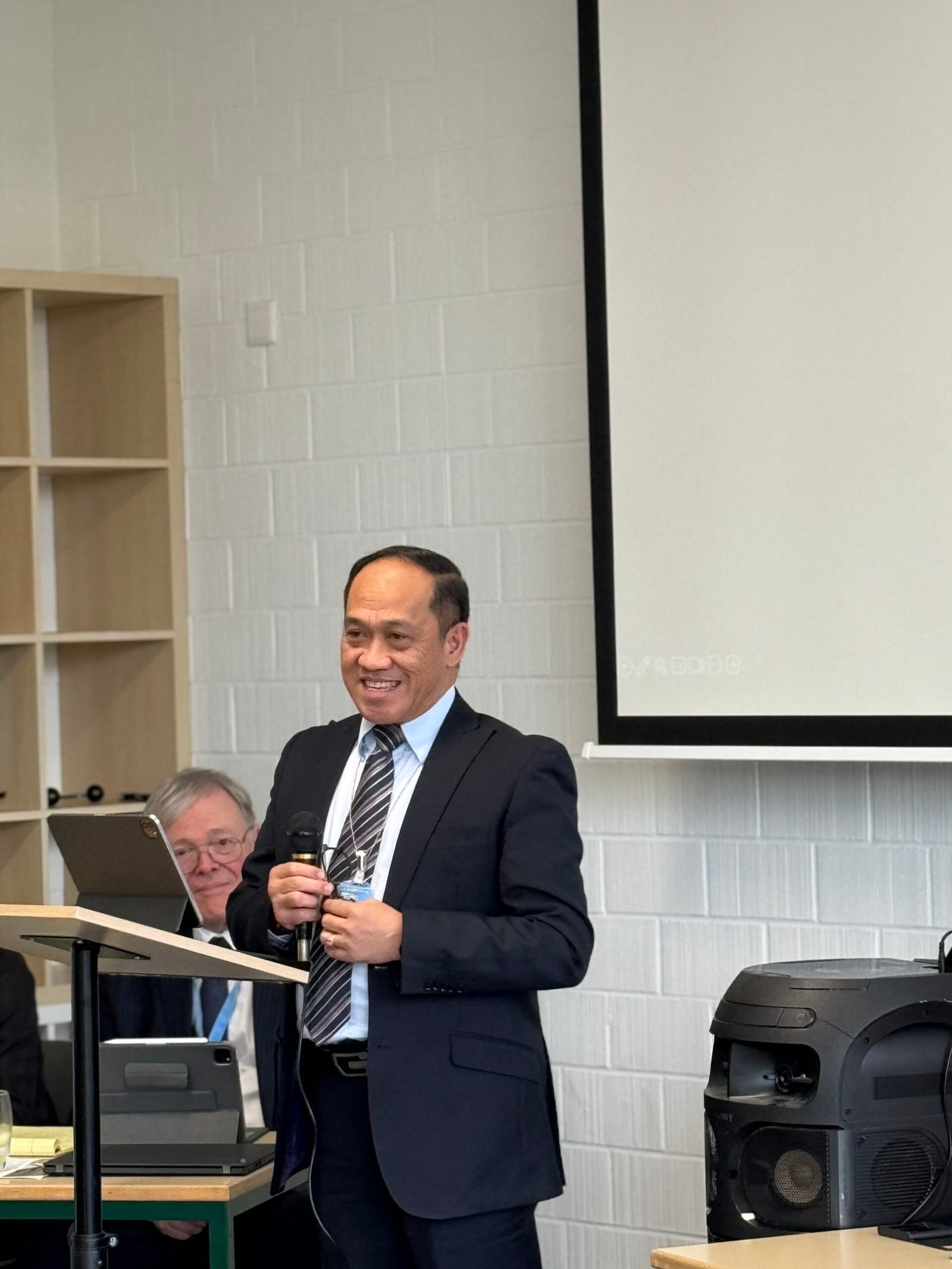
Deputy Permanent Representative of the Republic of Indonesia to the United Nations, the World Trade Organization (WTO), and other international organizations in Geneva, Switzerland, Ambassador Achsanul Habib, delivered the opening remarks.
Ambassador Habib stressed that cross-cultural religious literacy has become an integral part of Indonesia’s foreign policy, promoted through interfaith dialogues established bilaterally with 34 partner countries.
The Government of Indonesia initiated the Jakarta Plurilateral Dialogue (JPD) in August 2023 to mainstream global commitment in implementing UNHRC Resolution 16/18 on “Combating Intolerance, Negative Stereotyping, Stigmatization, Discrimination, and Incitement to Violence and Violence against Persons Based on Religion or Belief.”
Later, in November 2023, Indonesia’s Ministry of Law and Human Rights, together with the Leimena Institute, convened the International Conference on Cross-Cultural Religious Literacy to promote peaceful and inclusive societies.
Ambassador Habib explained that religious literacy means building knowledge and understanding of the importance of religious differences and beliefs, including one’s own faith. Its purpose is to foster mutual respect while overcoming indifference and misconceptions that fuel intolerance and prejudice.
“We are pleased that the Leimena Institute, as the key promoter of cross-cultural religious literacy in Indonesia, could join as one of the supporters of this important event,” said Ambassador Habib.
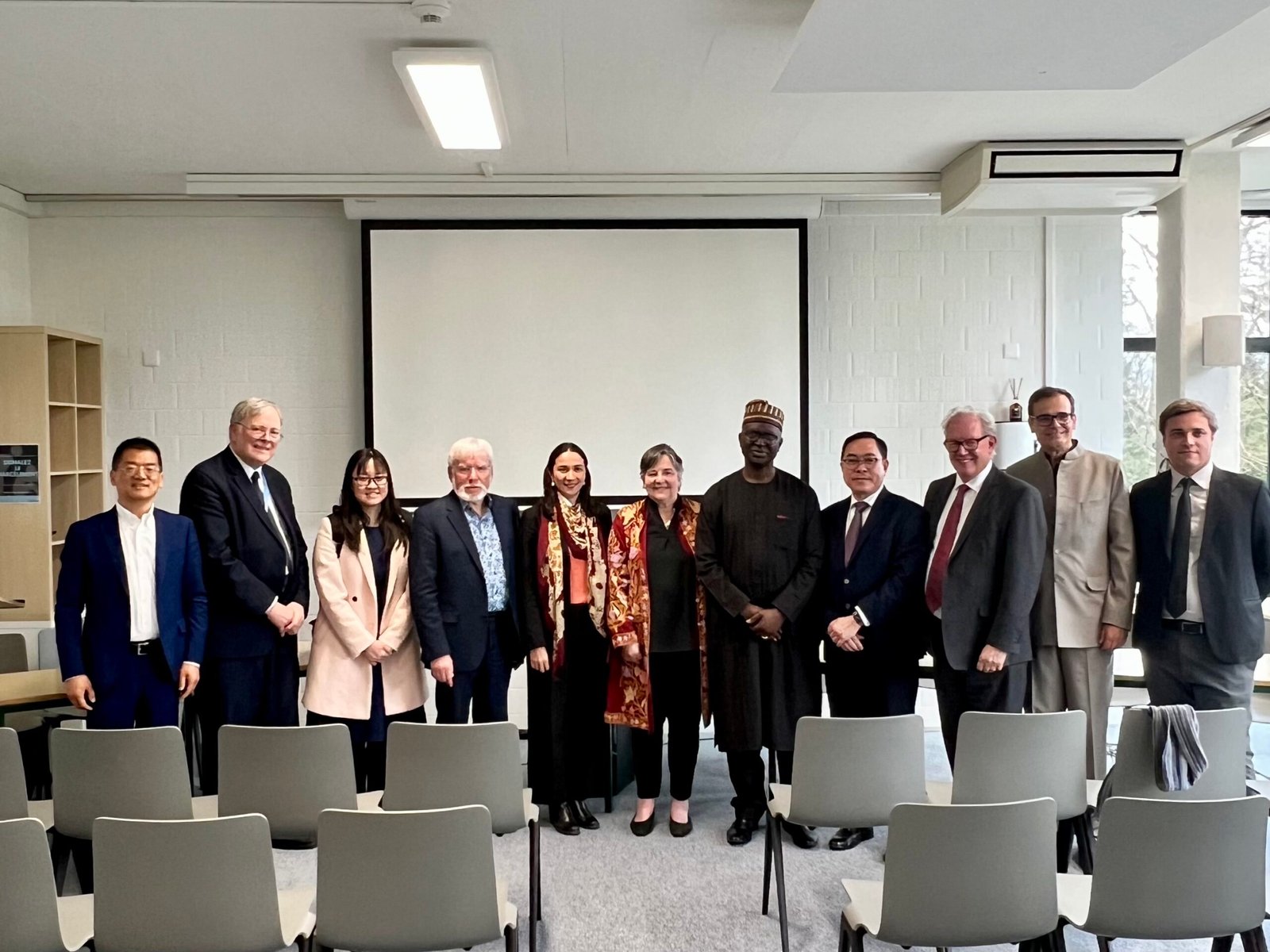
Speakers and several participants in the side event of the UN Human Rights Council session, which addressed the topic of Cross-Cultural Religious Literacy (CCRL).
Educational Approach
Meanwhile, Leimena Institute Executive Director, Matius Ho, said that Cross-Cultural Religious Literacy (CCRL) represents an Indonesian educational approach to addressing intolerance and building better relations among people of different faiths, in line with the objectives of UNHRC Resolution 16/18.
He noted that the panel discussion at the UN Human Rights Council side event highlighted the significance of Indonesia’s initiative through the CCRL training program, which focuses on teachers and educators. In collaboration with 25 partner institutions, the Leimena Institute has trained more than 7,000 educators in all 34 provinces of Indonesia in less than two and a half years.
“The CCRL program is receiving increasing attention from the international community amid the growing spread of hate speech, Islamophobia, and similar issues,” Matius said.
He added that Ambassador Muhammadou M.O. Kah, who served as Vice President of the Human Rights Council during the International CCRL Conference on November 13–14, 2023, had encouraged Indonesia’s CCRL initiative to be introduced more widely to the global community, recognizing its urgent necessity.
In addition to Matius Ho, other speakers at the side event included Prof. Katherine Marshall (Senior Fellow, Georgetown University, USA), Prof. Rodrigo Vitorino Souza Alves (Federal University of Uberlândia, Brazil), Prof. David M. Kirkham (Executive Director, GO-HRE, Switzerland), and Maria Lucia Uribe Torres (Director, Arigatou International, Switzerland).
“Other panelists responded very positively to the implementation of the CCRL program in Indonesia. Some also presented examples of initiatives from other countries—such as Maria Lucia Uribe Torres (Arigatou International) and David Kirkham (GO-HRE)—and expressed hopes for collaboration, recognizing strong complementarities with the CCRL program,” Matius said.