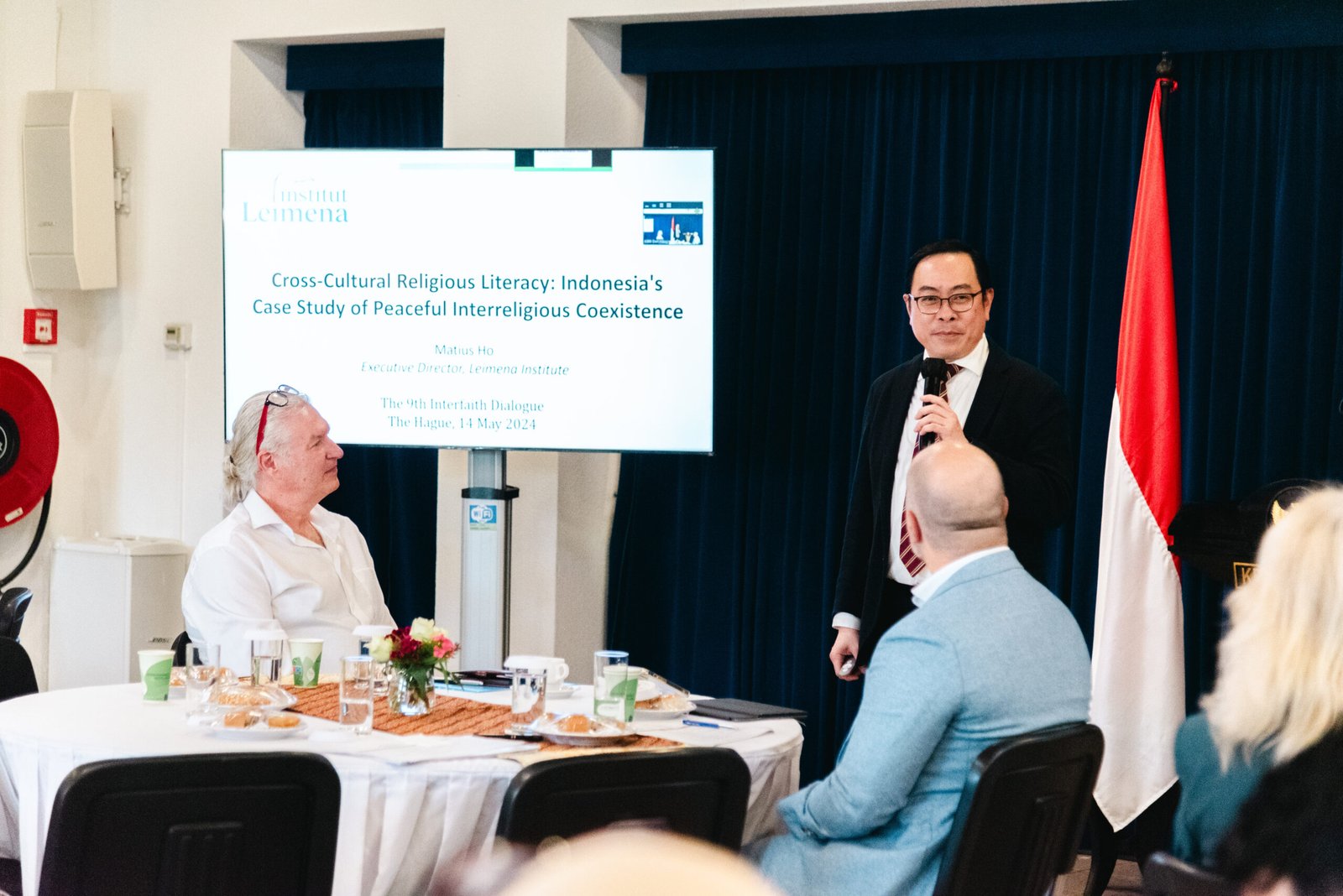
The Executive Director of the Leimena Institute, Matius Ho, explained about Cross-Cultural Religious Literacy (CCRL) currently being developed by Indonesia before a number of diplomats from Indonesia and the Netherlands, members of the Indonesian diaspora in the Netherlands, as well as the local community, during the Interfaith Dialogue organized by the Embassy of the Republic of Indonesia (KBRI) in Den Haag, the Netherlands.
Den Haag, LKLB News – The Embassy of the Republic of Indonesia (KBRI) in Den Haag, the Netherlands, held the 9th Interfaith Dialogue attended by government officials, institutional leaders, academics, as well as media and youth leaders from both the Netherlands and Indonesia. The dialogue, themed “Faith Literacy to Promote Mutual Trust, Tolerance, and Diversity: Youth Inclusion and the Vital Role of Media,” was opened by the Indonesian Ambassador to the Kingdom of the Netherlands, Mayerfas, and the Head of the South and Southeast Asia Division of the Ministry of Foreign Affairs of the Kingdom of the Netherlands, Annemarie van der Heijden.
In a keynote address delivered virtually, the Director General of Information and Public Diplomacy of the Ministry of Foreign Affairs of Indonesia, Siti Nugraha Mauludiah, stated that societies are facing the challenges of geopolitical dynamics where intolerance is on the rise, and excessive national politics are narrowing the space for tolerance. In certain parts of the world, nationalist movements and anti-migration sentiments are growing, while acceptance of differences is declining.
“We indeed need to build cross-cultural religious literacy and multi-faith collaboration based on inclusivity. Communication and cooperation with people of different religions and cultures have become more important than ever before,” said Siti to the audience present at the Interfaith Dialogue in the KBRI Den Haag Hall, Tuesday (14/5/2024).
This Interfaith Dialogue involved around 10 speakers, including the Executive Director of the Leimena Institute as the only speaker from Indonesia who was physically present at KBRI Den Haag, delivering a presentation entitled “Cross-Cultural Religious Literacy: Indonesia’s Case Study of Peaceful Interreligious Coexistence.” From the Dutch government, the keynote address was delivered by the Special Envoy for Freedom of Religion and Belief of the Ministry of Foreign Affairs of the Kingdom of the Netherlands, Bea ten Tusscher.
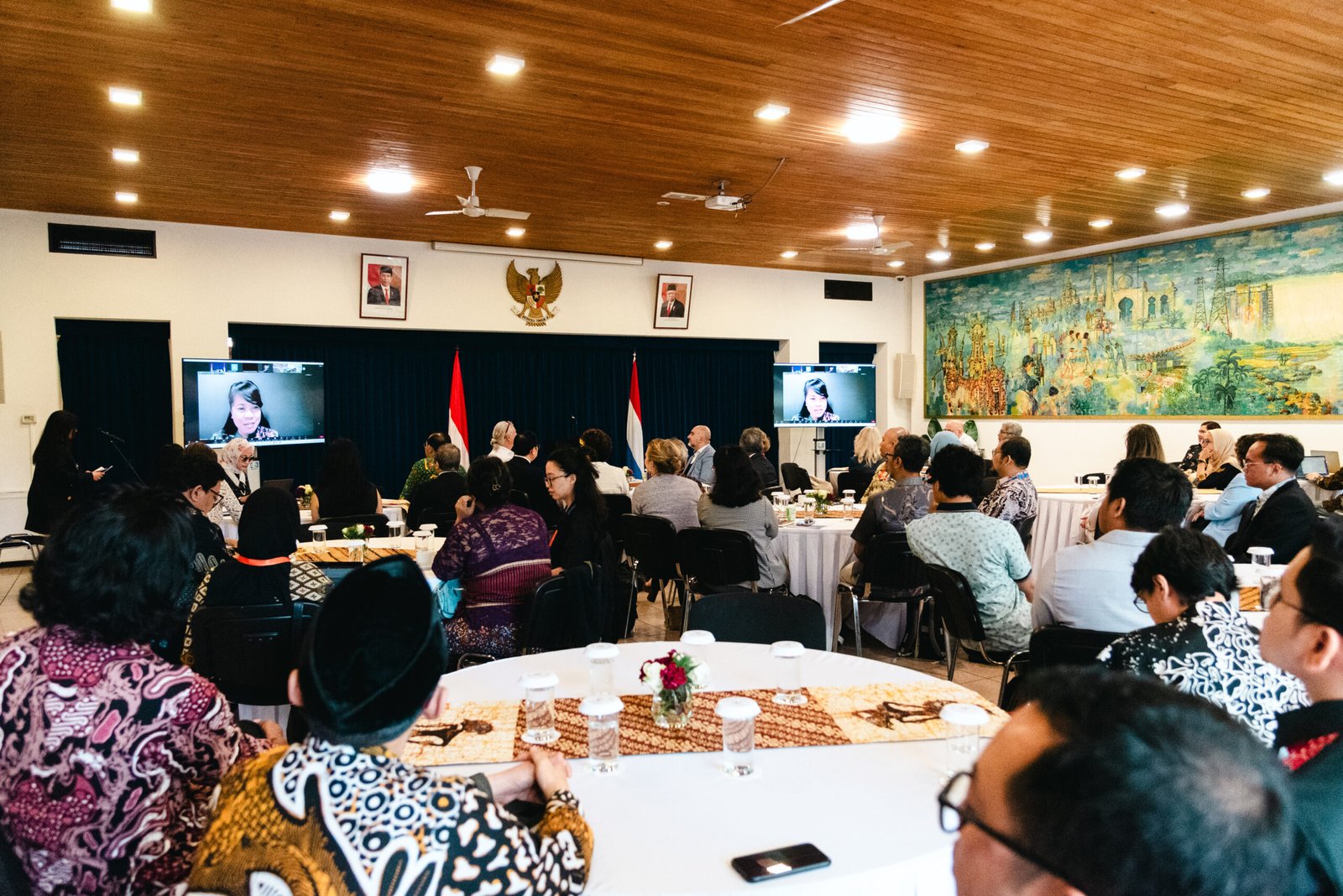
The Director General of Information and Public Diplomacy of the Indonesian Ministry of Foreign Affairs, Siti Nugraha Mauludiah, delivered her remarks via Zoom.
The Executive Director of the Leimena Institute, Matius Ho, as the first speaker in the dialogue, emphasized the crucial role of society in efforts to build tolerance. He quoted a statement by the United Nations High Commissioner for Human Rights, Volker Turk, in the 55th Session of the UN Human Rights Council on March 8, 2024, which strongly recommended effective community-based initiatives to build societies where hate speech has become socially unacceptable, thus requiring inclusive faith literacy.
“The Cross-Cultural Religious Literacy (CCRL) program in Indonesia is an example of a community-based initiative to promote inclusive faith literacy,” said Matius.
That is why, Matius explained, the Leimena Institute has partnered with various institutions in implementing the CCRL program, which currently involves at least 25 educational, religious, and even governmental institutions. He added that the CCRL program itself has become an example of multi-faith collaboration involving 20 Islamic institutions, 7 Christian institutions, with new partnerships in process with Buddhist, Hindu, and Confucian communities.
“This cross-cultural religious literacy program started at the end of 2021, initially for madrasah teachers, but has since expanded to teachers of other religions, with the number of training alumni reaching nearly 8,000 teachers from 37 provinces across Indonesia,” said Matius.
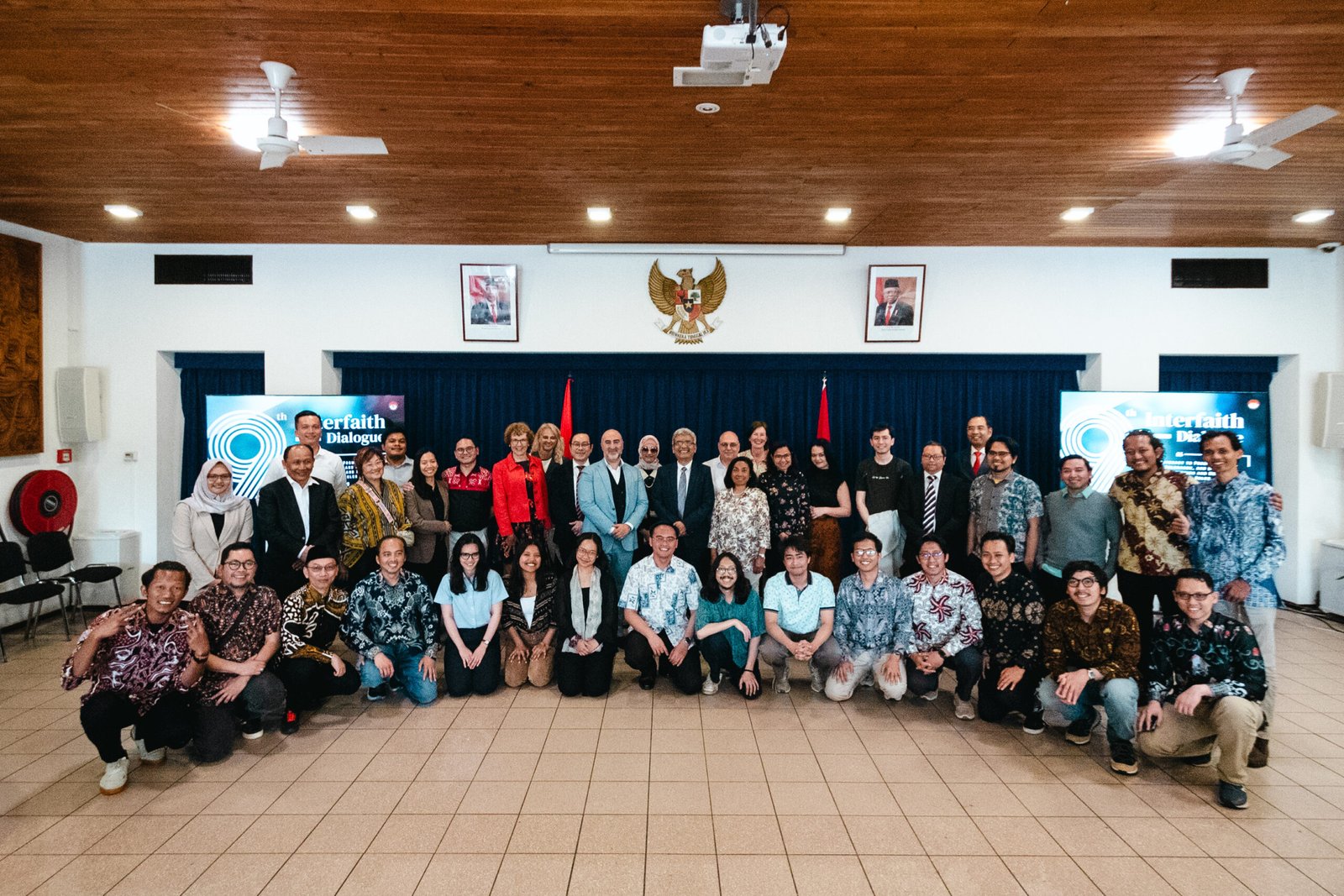
Participants and speakers of the 9th Interfaith Dialogue at KBRI Den Haag, the Netherlands.
The Role of Non-State Actors
The Director General of Information and Public Diplomacy of the Indonesian Ministry of Foreign Affairs, Siti Nugraha, further added that the Interfaith Dialogue between Indonesia and the Netherlands, which has taken place since 2006 or for the past 18 years, has evolved from a government-driven platform into a more community-based one. The forum also increasingly provides broader participation and a leading role for non-state actors in dialogue. On the other hand, she hoped that the Indonesia–Netherlands Interfaith Dialogue could lead to possible community-based projects, especially regarding religious moderation in Indonesia.
According to her, the main goal of the Interfaith Dialogue, when first introduced by the Indonesian Ministry of Foreign Affairs in 2004, was to enhance interreligious tolerance and mutual understanding about the importance of living harmoniously and peacefully. “This is not only the responsibility of the government, but the responsibility of everyone,” said Siti.
Siti stressed that the main players in the Interfaith Dialogue are non-state actors such as religious leaders, academics, youth, think tanks, media, and grassroots communities. Their role in bridging understanding, tolerance, and unity among people of different faiths is essential.
“The government is a facilitator that lays the foundation and path. The government must support it, but it is the people who are the actors, the players,” she said.
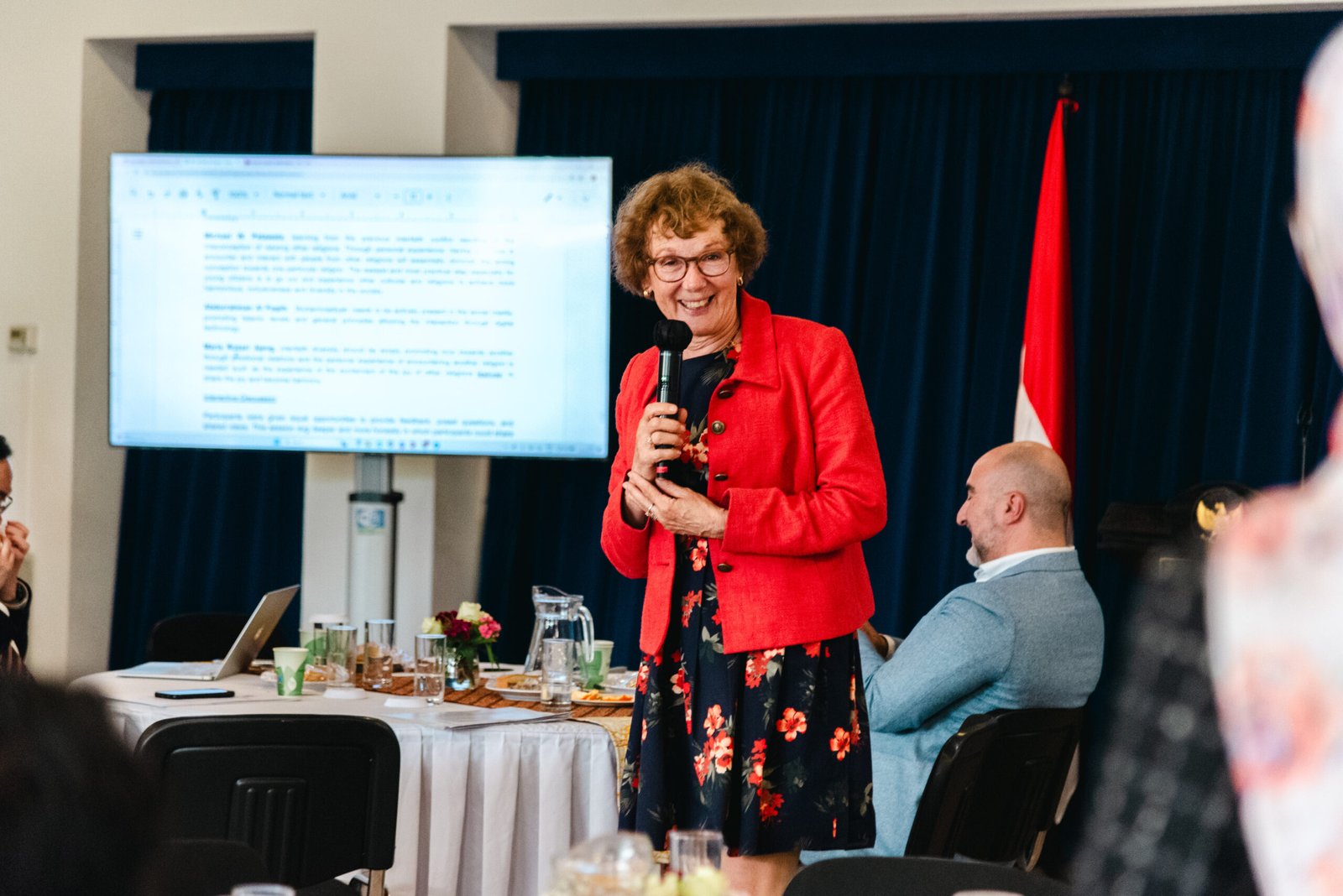
The Special Envoy for Freedom of Religion and Belief of the Dutch Ministry of Foreign Affairs, Bea ten Tusscher, praised Indonesia’s CCRL initiative.
The Special Envoy for Freedom of Religion and Belief of the Ministry of Foreign Affairs of the Kingdom of the Netherlands, Bea ten Tusscher, praised Indonesia for promoting interfaith dialogue at all levels, especially in Asia, but also within the Organization of Islamic Cooperation (OIC).
“I see Indonesia’s significant role in promoting interfaith dialogue around the world, because you have many lessons to share with other countries,” said Bea.
Ambassador Bea said she was deeply impressed when she attended the International Conference on Cross-Cultural Religious Literacy organized by the Leimena Institute together with the Ministry of Law and Human Rights in November 2023, which was attended by representatives of foreign countries, government officials, including ministers.
“Indonesia should be proud of what it has achieved and its willingness to share. We, as Dutch people, can still learn from you. This is increasingly needed in a world full of intolerance, provocation, and proliferation,” said Bea.
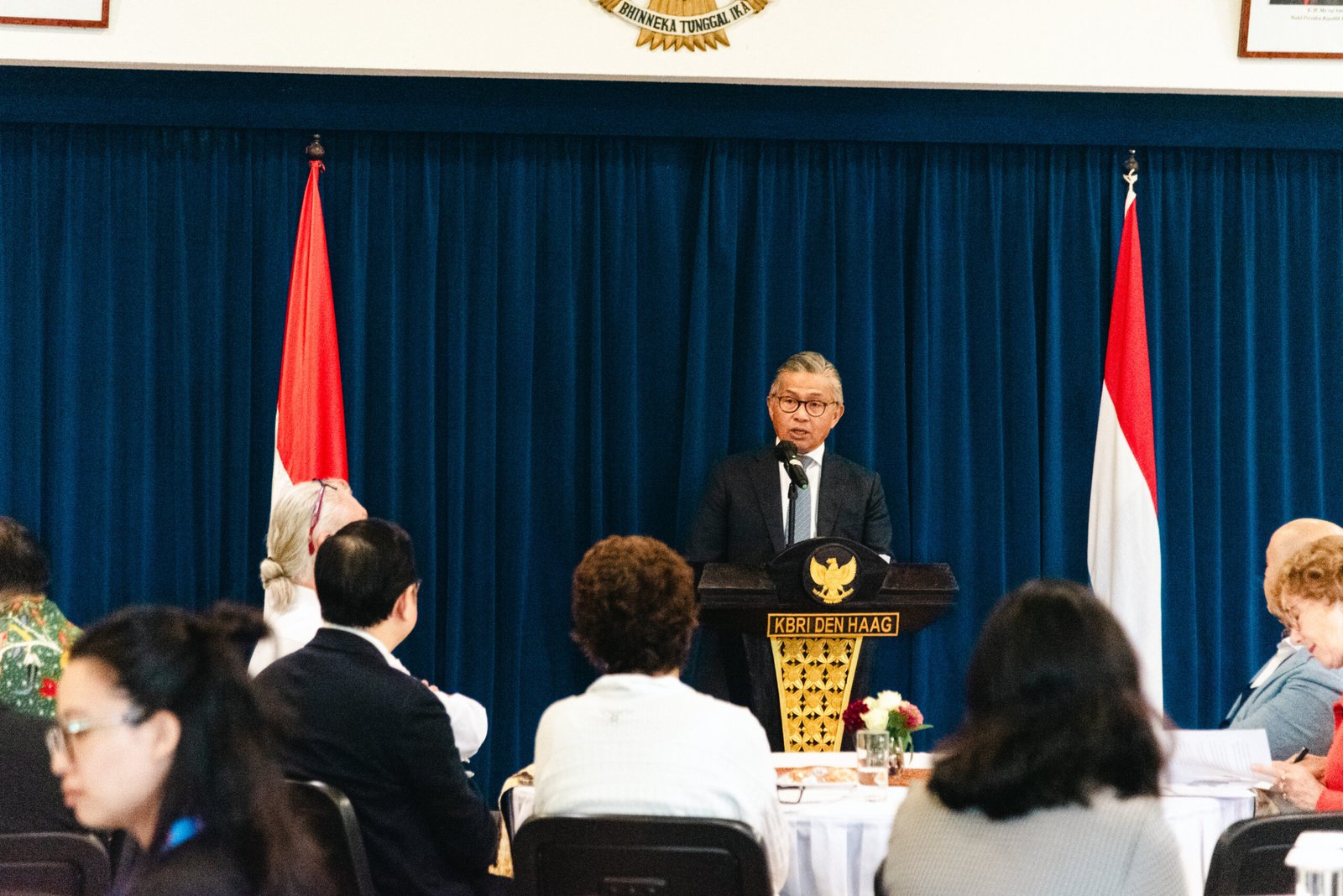
The Indonesian Ambassador to the Kingdom of the Netherlands, Mayerfas.
The Indonesian Ambassador to the Kingdom of the Netherlands, Mayerfas, conveyed that Indonesia’s religious and cultural diversity has been tested since its inception. Indonesia has practiced self-restraint or tolerance, cooperation, and peaceful coexistence.
“Often the root causes of misunderstanding and ignorance set aside the core principles of equality, solidarity, and most importantly, humanity,” said Mayerfas.