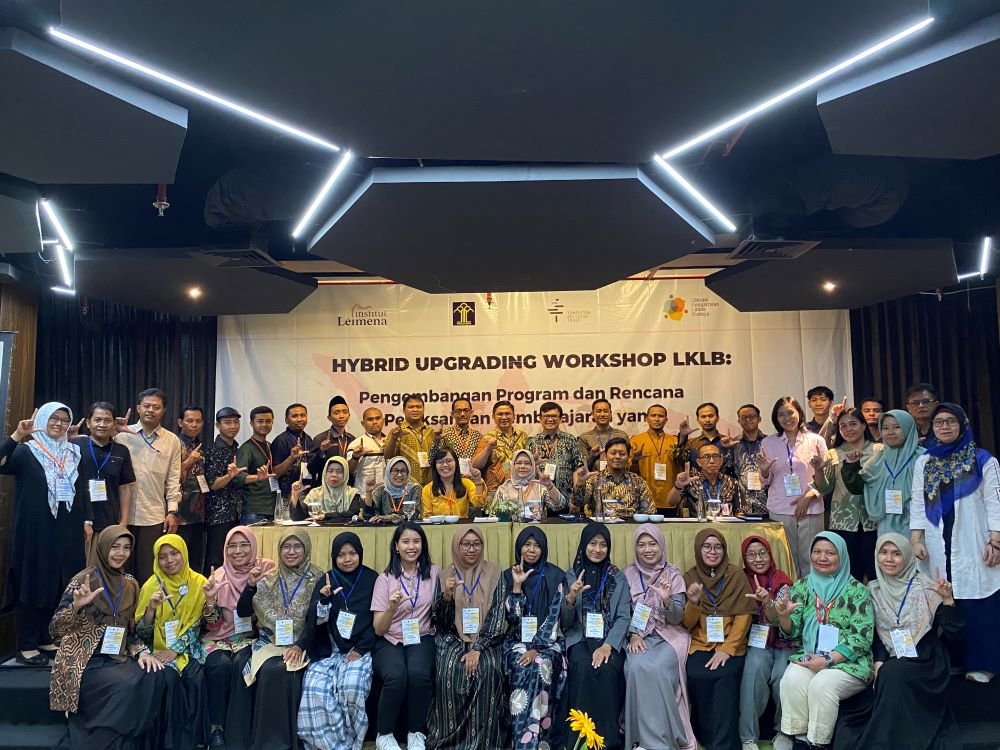
Participants of the Hybrid Upgrading Workshop on Cross-Cultural Religious Literacy (CCRL): Program Development and Learning Implementation Plan to Strengthen Freedom of Religion and the Rule of Law, organized by the Leimena Institute in collaboration with the Ministry of Law and Human Rights of the Republic of Indonesia, Surabaya, May 3–5, 2024.
Surabaya, LKLB News – The role of teachers as agents of change is crucial in sustaining Indonesia’s plural society. That is why teachers need to be equipped with direct experiences of interacting with people of different religions, so that they can truly live out the values of tolerance and religious moderation.
This was the foundation for holding the Hybrid Upgrading Workshop on Cross-Cultural Religious Literacy (CCRL): Program Development and Learning Implementation Plan to Strengthen Freedom of Religion and the Rule of Law, organized by the Ministry of Law and Human Rights of the Republic of Indonesia and the Leimena Institute in Surabaya, May 3–5, 2024. The workshop was attended by 35 teachers from various levels and subjects, coming from Surabaya and surrounding areas such as Bangkalan, Sidoarjo, Sampang, Trenggalek, Gresik, and Jombang.
Daniel Adipranata, Program Coordinator for Alumni of the Leimena Institute, explained that the CCRL program, which began in 2021, has already reached more than 8,000 teachers from 37 provinces in Indonesia. He emphasized that CCRL is not merely dialogue, but is designed to provide educators with direct interfaith relationship experiences.
“This program was indeed not designed merely as dialogue, but as contact theory: people must directly encounter those who are different to truly experience diversity. That is why this workshop also involves Muslim and Christian teachers,” Daniel said during the opening session in Surabaya, Friday (3/5/2024).
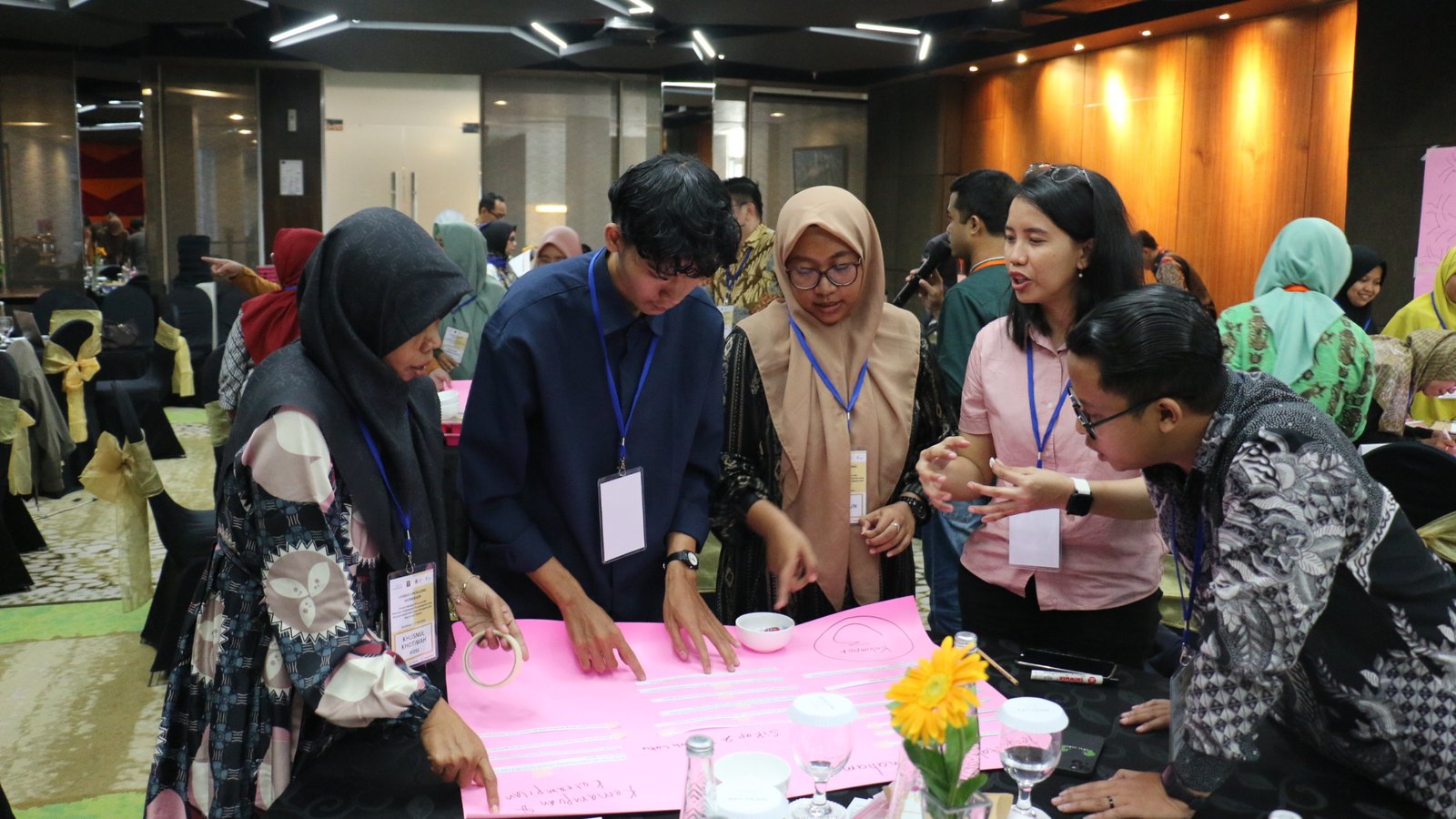
The teachers participating in the CCRL workshop engaged in group discussions.
Daniel stated that the workshop participants are teachers who have completed a one-week CCRL online training. The CCRL workshop is filled with activities that enrich teachers in preparing lesson plans (RPP), teaching modules, and school programs based on principles of tolerance and religious freedom.
Teachers participating come from madrasahs under Muhammadiyah East Java, public schools, and schools under the Gloria Christian Education Foundation in Surabaya.
On Saturday (4/5), participants visited Jenderal Sudirman Mosque and the Abdiel Christian Church (GKA Gloria) on Jalan Pacar, where they held direct dialogue with religious leaders.
“How can teachers introduce students to diversity or pluralism if they themselves have never experienced it? Our society, including teachers, generally grow up in very homogeneous environments. This workshop is intended to provide them with such experiences of diversity,” Daniel added.
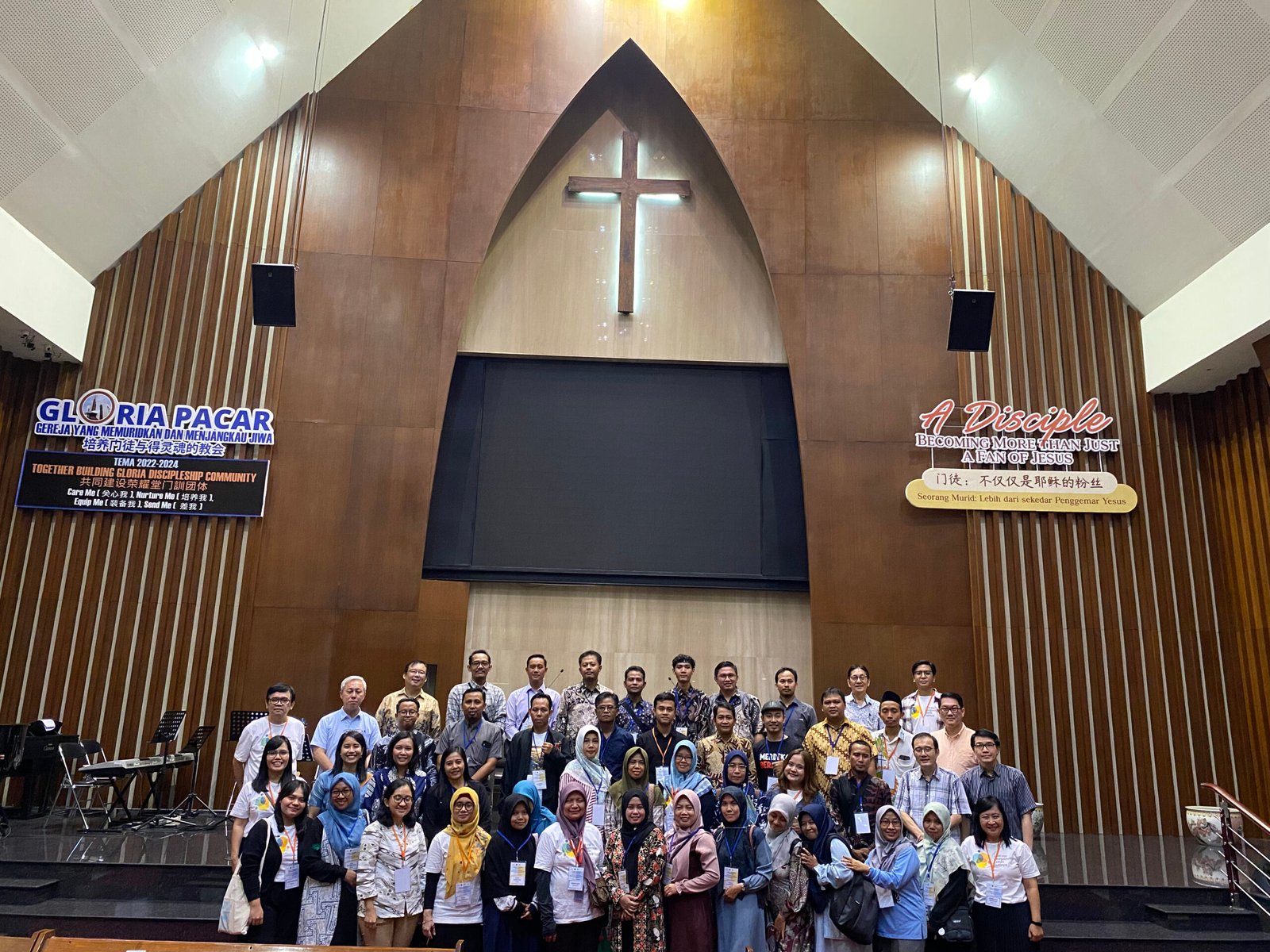
The participants carried out a field trip to two houses of worship, namely the Abdiel Christian Church in Surabaya, followed by a visit to the Jenderal Sudirman Mosque.
Meanwhile, Harniati, Director of Cooperation on Human Rights at the Directorate General of Human Rights, Ministry of Law and Human Rights of the Republic of Indonesia, stated that the CCRL workshop aims to strengthen educators’ understanding of freedom of religion and belief from the perspective of constitutional law and human rights.
She emphasized that freedom of religion is guaranteed by Article 18 of the Universal Declaration of Human Rights, in line with the 1945 Constitution of Indonesia as stated in Articles 28A through 28J and Article 29 paragraph 2, making it one of the duties of the state to protect the right to freedom of religion and worship.
“Public understanding of the crucial relationship between the rule of law and freedom of religion, as guaranteed by the Constitution, is an important foundation for the progress of Indonesia’s plural society amid the growing challenges of polarization worldwide,” said Harniati.
According to her, the CCRL program is an implementation of collaboration between the state and civil society in fostering a culture of tolerance, upholding the rule of law, and avoiding behaviors that may lead to division.
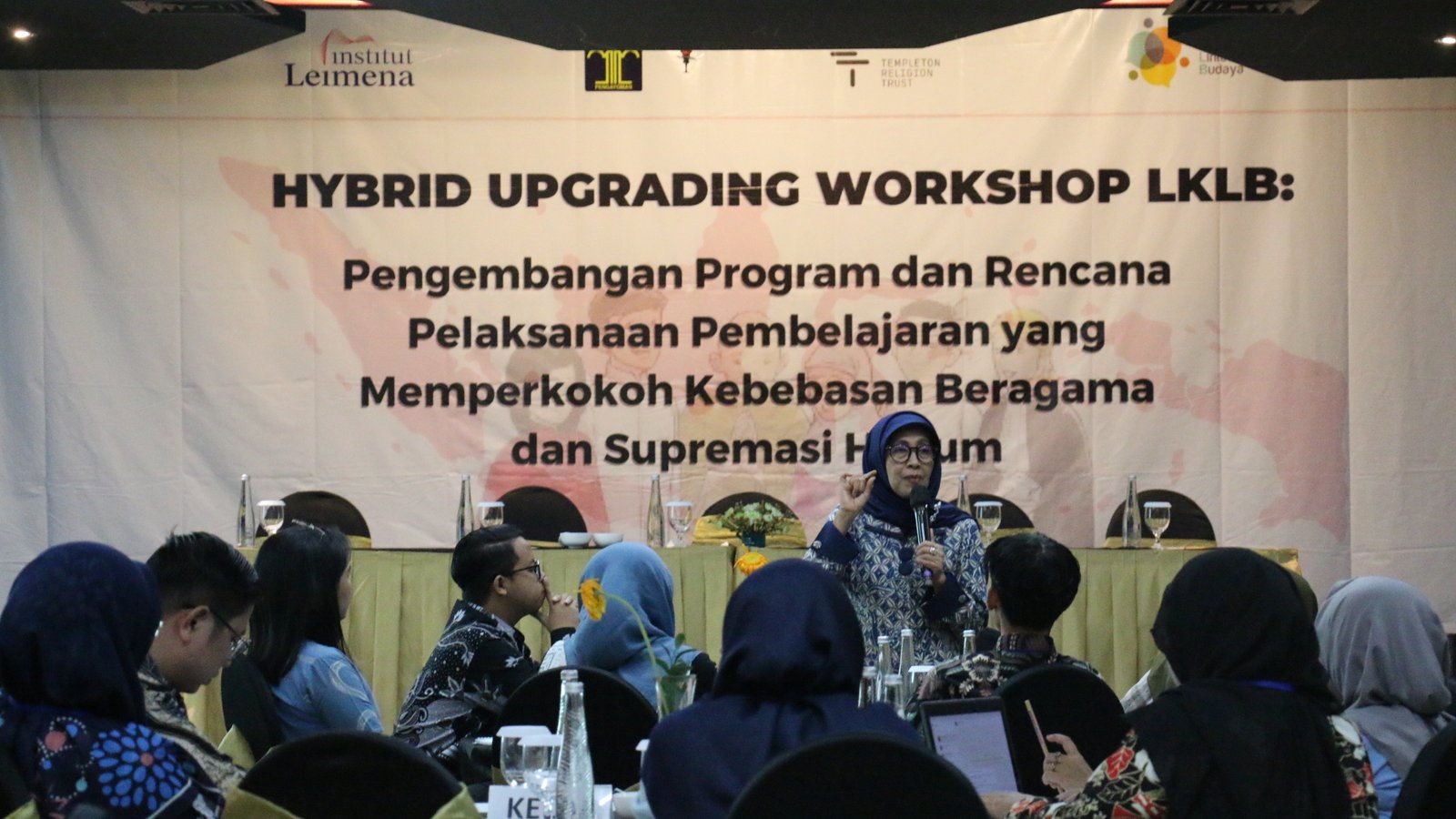
Prof. Dr. Siti Ruhaini Dzuhayatin, Senior Expert Staff at the Office of the Presidential Special Staff of the Republic of Indonesia and Senior Fellow at the Leimena Institute, delivering a session.
Echoing this, Ruhaini said that the Leimena Institute has a distinct strength in formulating pedagogy or teaching models from the concept of religious moderation. Through the three CCRL competencies, teachers can implement the concept of religious moderation in practical ways.
Ruhaini emphasized that not only religion teachers, but teachers of any subject can teach values of diversity.
“Usually, a Mathematics teacher simply says 5+3=8. This can be extended into a narrative: Ahmad has 5 books and Made has 3 books—so how many altogether? This invites children to understand the real diversity of our society,” Ruhaini explained.
She added that teachers must be able to bring the realities of Indonesian society into the classroom. “A Chemistry teacher can say: this church is painted white, that mosque is painted green—if mixed, what color would it make? These are real examples of the diversity around us, so it is not artificial,” she said.
The CCRL program is organized by the Leimena Institute together with 27 partners from government institutions, educational institutions, and religious organizations. This workshop in Surabaya is the 13th CCRL workshop held in various cities across Indonesia.