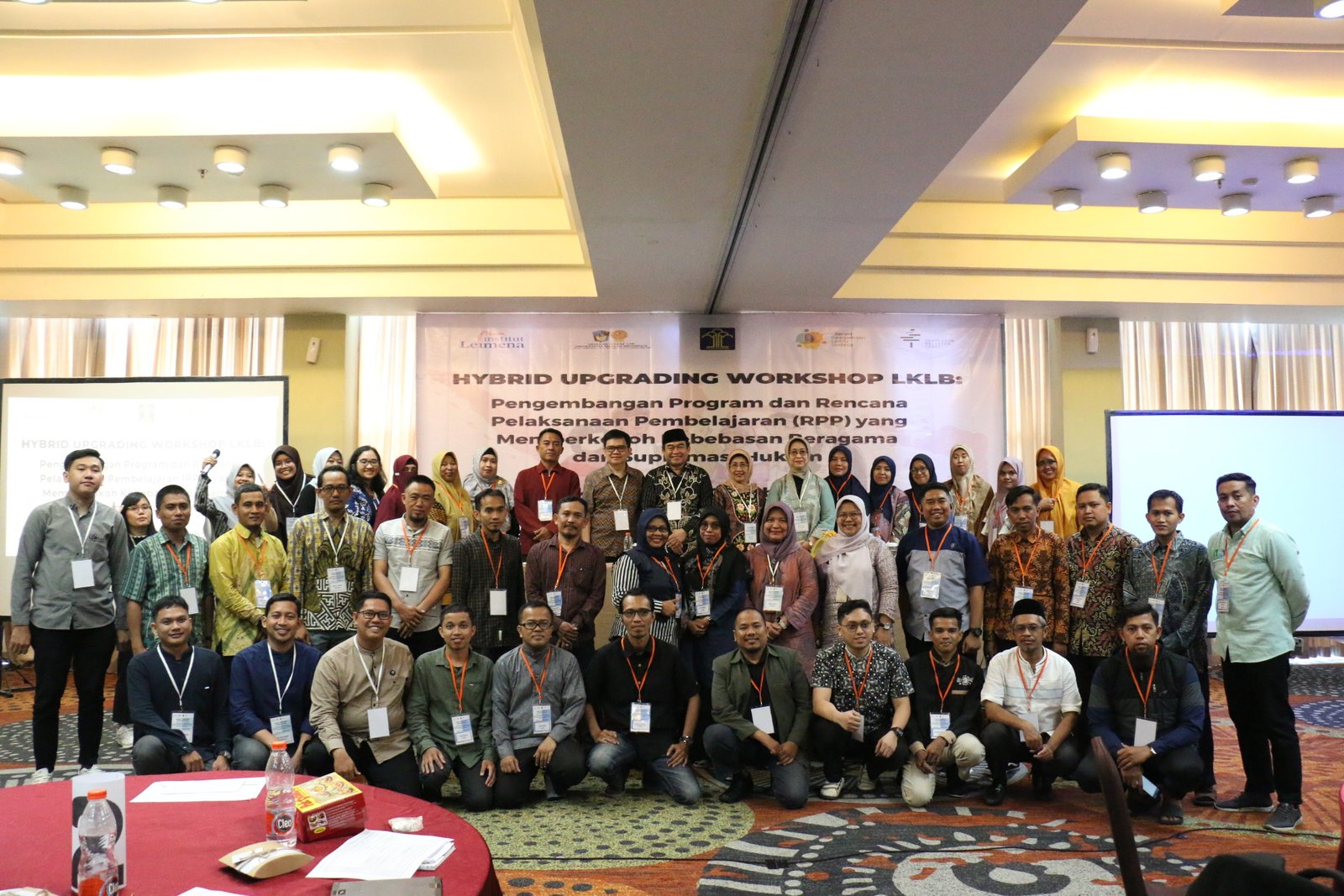
Participants of the Hybrid Upgrading Workshop on Cross-Cultural Religious Literacy (CCRL), held in Makassar on June 11–13, 2024, in collaboration between the Leimena Institute, the Ministry of Law and Human Rights of the Republic of Indonesia, and Universitas Muslim Indonesia.
Jakarta, LKLB News – Tensions in interfaith relations are often fueled by prejudice and stigma within society. In this context, teachers as educators play a vital role as pioneers in fostering understanding and openness toward others of different religions and beliefs.
“Teachers need to have both understanding and skills to nurture diversity, so that they can become pioneers in society to break down interfaith prejudices that may harm the fabric of the nation,” said Daniel Adipranata, Program Director of the Leimena Institute, during the closing of the Hybrid Upgrading Workshop (HUW) on Cross-Cultural Religious Literacy (CCRL) on Sunday, October 13, 2024.
The three-day HUW CCRL was held from October 11–13, 2024, in Makassar, South Sulawesi, as a collaboration between the Leimena Institute, the Ministry of Law and Human Rights of the Republic of Indonesia (MoLHR), and Universitas Muslim Indonesia. The workshop was attended by 34 teachers from Makassar and surrounding regencies such as Gowa, Bone, Bulukumba, Wajo, Maros, Sidenreng Rappang, Pangkajene and Islands, among others.
Daniel explained that the CCRL workshop carried the theme “Developing Programs and Lesson Plans (RPP) that Strengthen Freedom of Religion and the Rule of Law.” He noted that challenges to religious freedom still frequently arise, such as acts of discrimination, intolerance, or the imposition of religious interpretations that disrupt social harmony.
He further emphasized that the CCRL workshop was not merely about dialogue, but also about creating spaces of encounter that support the practice of religious freedom. At its core, cross-cultural religious literacy is a framework to help individuals develop competencies and skills for building relationships and working together with people of different religions and beliefs. The CCRL approach cultivates three key competencies: personal, comparative, and collaborative.
“Experiences that allow us to accept differences are deeply needed. We cannot simply memorize definitions of tolerance and diversity without truly experiencing them,” Daniel said.
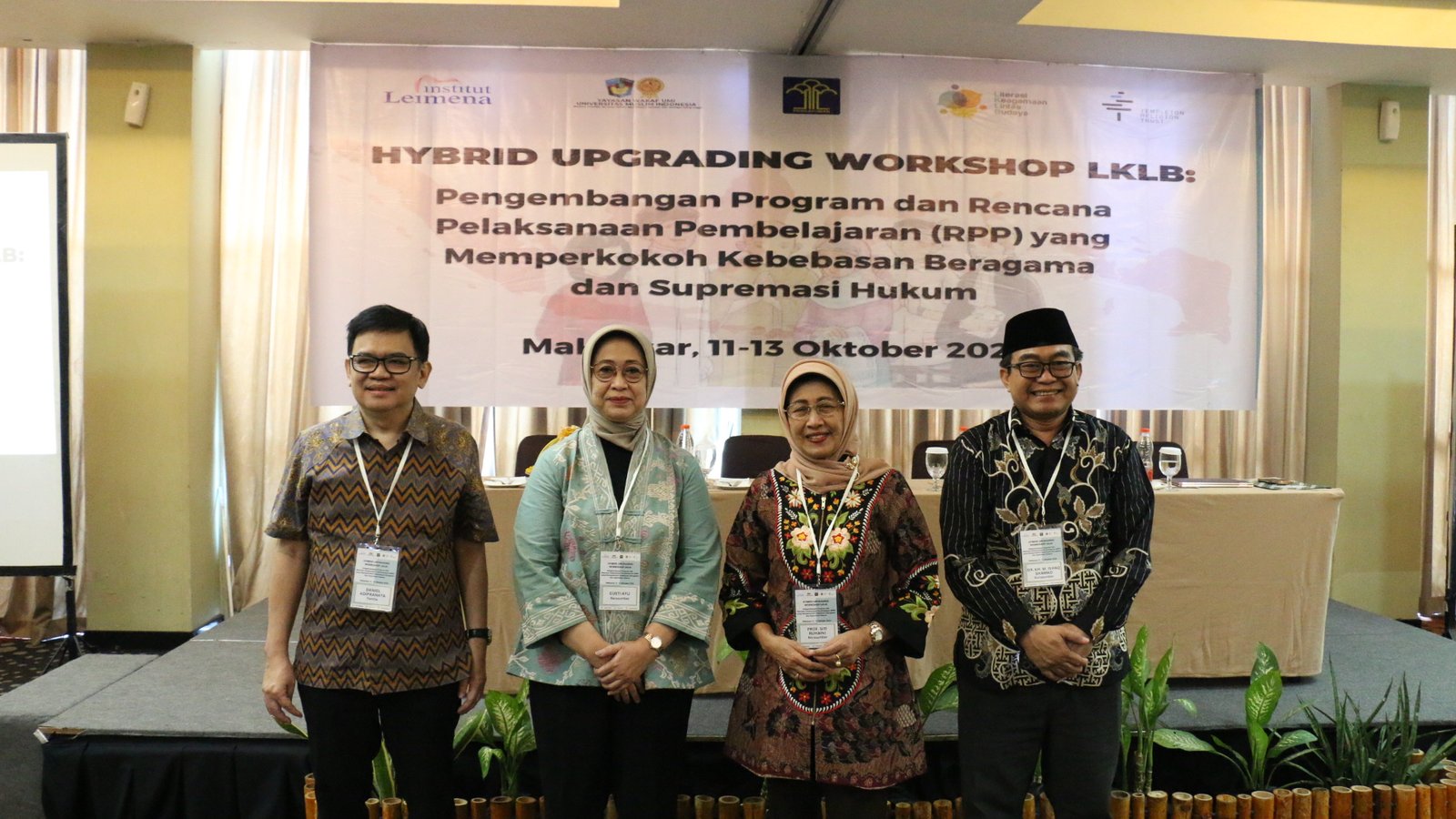
From left to right: Leimena Institute Program Director Daniel Adipranata; Director of Dissemination and Strengthening of Human Rights at MoLHR, Gusti Ayu Putu Suwardani; Senior Expert Staff at the Executive Office of the President, Prof. Dr. Siti Ruhaini Dzuhayatin; and Vice Rector IV for Islamic Campus Governance and Educational Development at Universitas Muslim Indonesia, Dr. Ishaq Shamad.
A Vital Asset for the Nation
Meanwhile, Gusti Ayu Putu Suwardani, Director of Dissemination and Strengthening of Human Rights at MoLHR, explained that the CCRL workshop combined theoretical and conceptual reinforcement with field visits. The workshop aimed to enhance teachers’ understanding of the rule of law, religious freedom, and CCRL.
Participants were equipped with skills to apply these principles in concrete and relevant programs or planning within their respective schools. This development and practice were expected to provide teachers with direct, lived experience related to the rule of law, religious freedom, and CCRL.
“Public understanding of the vital relationship between the rule of law and religious freedom as protected by the Constitution is an important asset for the progress of Indonesia’s plural society in the face of growing global polarization,” said Gusti Ayu.
The universal right to freedom of religion is enshrined in Article 18 of the Universal Declaration of Human Rights (UDHR), which states that everyone has the right to freedom of thought, conscience, and religion. This includes the freedom to change one’s religion or belief, as well as the freedom to practice one’s religion or belief. In Indonesia, the right to freedom of religion is guaranteed in the Constitution, the 1945 UUD.
“The state and civil society are expected to work hand in hand to build a culture of tolerance, uphold the rule of law, and avoid behaviors that have the potential to divide,” she added.
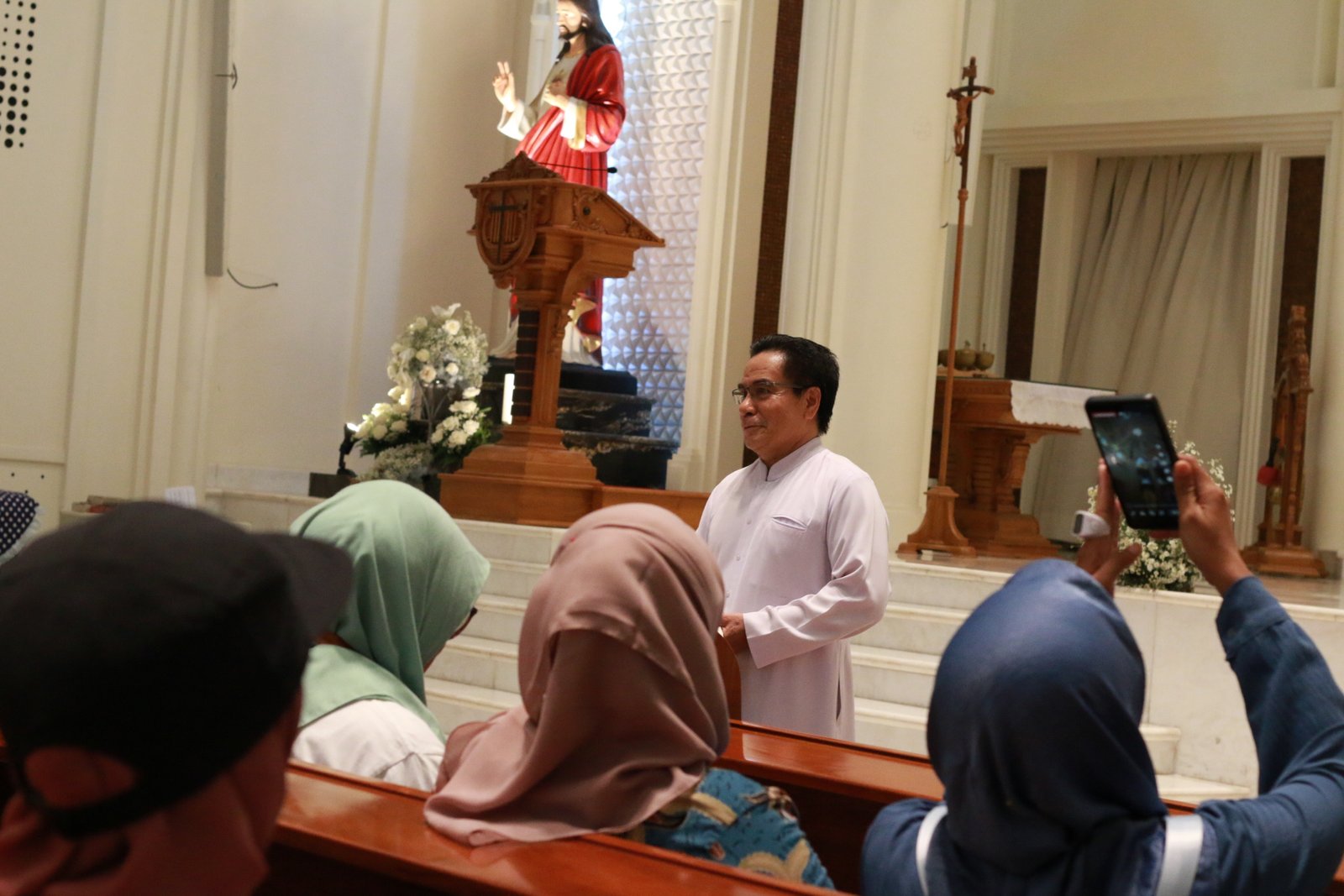
Father Agustinus Kale’pe’, of the Catholic Church of Kristus Raja in Makassar, engaged in dialogue with participants of the Hybrid Upgrading Workshop on CCRL to foster mutual understanding and dispel interfaith prejudice.
The CCRL program partnership between the Directorate General of Human Rights at the Ministry of Law and Human Rights of the Republic of Indonesia and the Leimena Institute has been ongoing since 2022, including the International Virtual Conference on “Religious Freedom, the Rule of Law, and Cross-Cultural Religious Literacy” (September 13–15, 2022), followed by the CCRL International Conference on “Human Dignity and the Rule of Law for a Peaceful and Inclusive Society” as part of the commemoration of the 75th anniversary of the UDHR.
Ministry of Law and Human Rights of the Republic of Indonesia has also supported the CCRL International Conference jointly organized by the Leimena Institute and the Ministry of Foreign Affairs of the Republic of Indonesia, themed “Multi-Faith Collaboration in an Inclusive Society” on June 10–11, 2024.