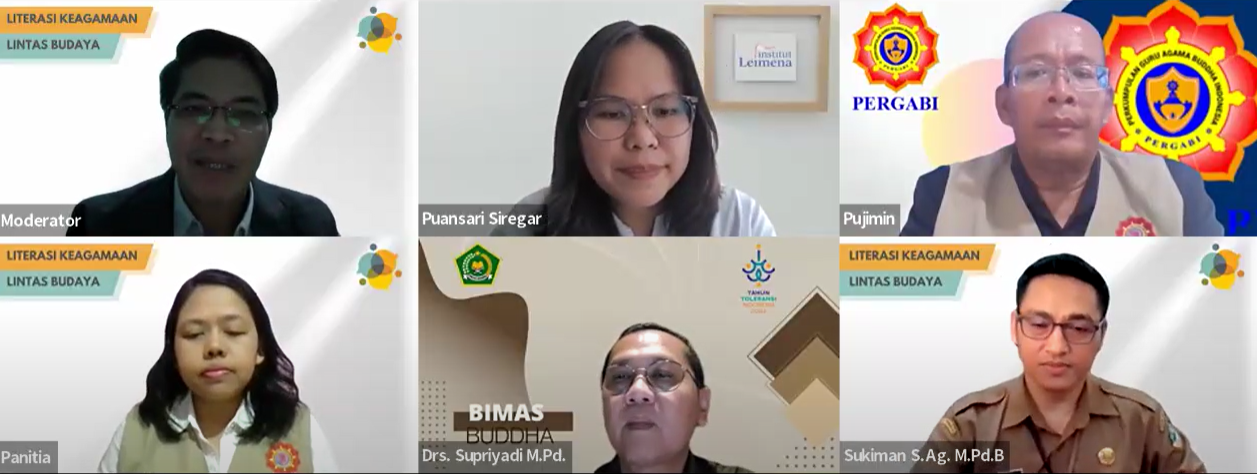
Opening Session of the Cross-Cultural Religious Literacy Training organized by the Indonesian Association of Buddhist Religion Teachers (Pergabi) and the Leimena Institute, September 30, 2024.
Jakarta, LKLB News – The Leimena Institute in collaboration with the Indonesian Association of Buddhist Religion Teachers (Pergabi) held for the first time a Cross-Cultural Religious Literacy (CCRL) training attended by hundreds of Buddhist religion teachers from various schools. This 57th CCRL class was held on September 30–October 4, 2024, with 240 teachers declared to have graduated.
The Director General of Buddhist Community Guidance at the Ministry of Religious Affairs of the Republic of Indonesia, Supriyadi, welcomed the implementation of the CCRL training. Supriyadi said that understanding CCRL can help society respect one another and encourage cooperation in solving common problems.
“The concept of cross-cultural religious literacy is an effort to build the ability to understand, appreciate, and engage with various different religious traditions and practices in the context of diverse cultures,” said Supriyadi.
The CCRL training for Buddhist religion teachers was opened with a number of remarks and prayers, as well as a recitation from one of the Buddhist scriptures, Dhammapada Chapter 5 Bala Vagga Verse 65, sung by Pergabi board member, Kuntari.
Participants of the CCRL training were Buddhist religion teachers teaching in public and private schools from various provinces in Indonesia such as DKI Jakarta, Bali, Central Java, West Java, East Kalimantan, West Kalimantan, Banten, North Sumatra, Jambi, Lampung, Riau Islands, South Sulawesi, and others. Some participants were school principals, vice principals, and Buddhist religious instructors.
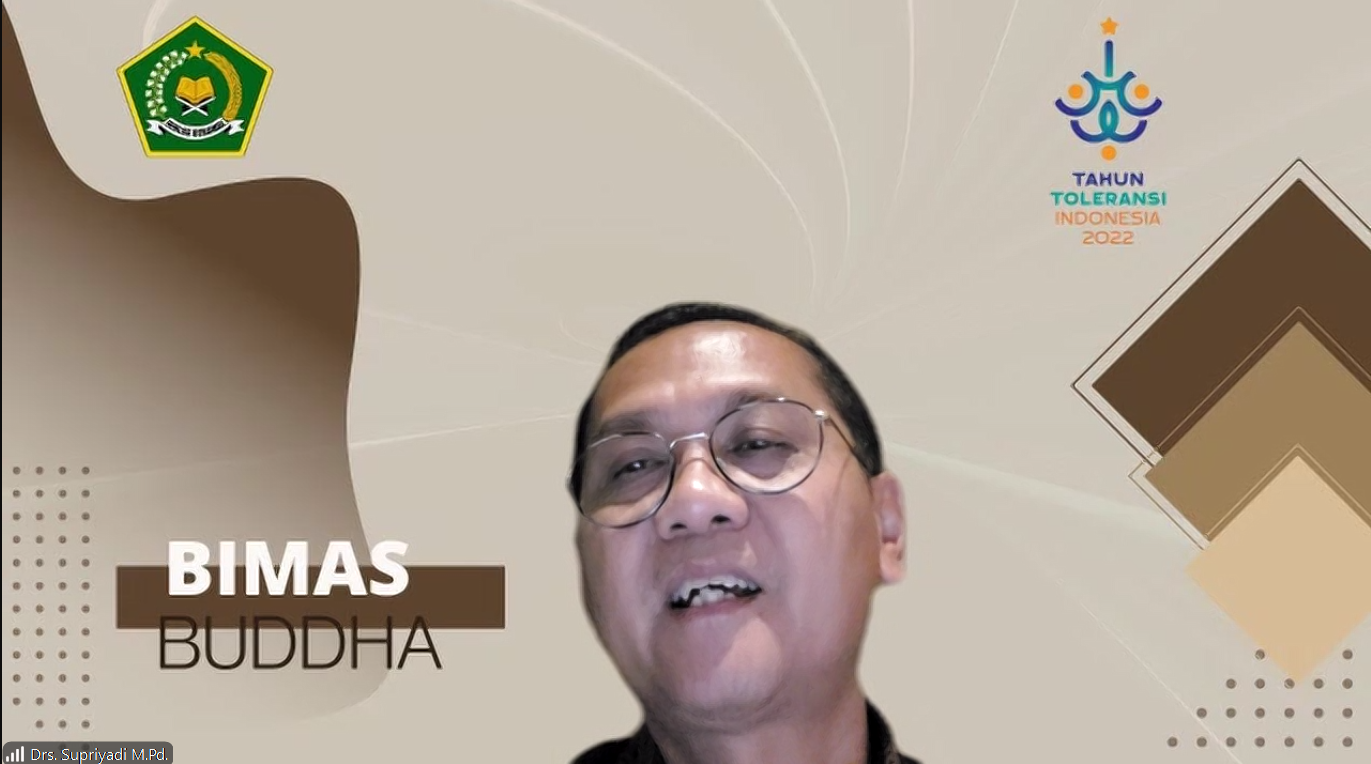
Director General of Buddhist Community Guidance, Ministry of Religious Affairs of the Republic of Indonesia, Supriyadi.
Supriyadi hoped that teachers would not only listen but also take practical benefit from the CCRL training. According to him, CCRL can encourage changes in mindset, attitude, and actions in viewing differences, including reducing prejudice against a particular religion or culture. On the other hand, CCRL trains individuals to build empathy in line with the teachings of the Great Teacher Buddha Gautama.
“Teachers can adopt an open attitude toward differences. This means understanding that each religion and culture has its own unique values and perspectives. If they are not the same, then they should not be forced to be the same, because differences are a reality that must be properly accepted,” Supriyadi emphasized.
Supriyadi also conveyed several opportunities for the CCRL concept to be applied in education, such as integrating it into the curriculum so that CCRL values can become part of the learning process.
“With this training, educators will understand how to teach tolerance and interreligious cooperation,” he said.
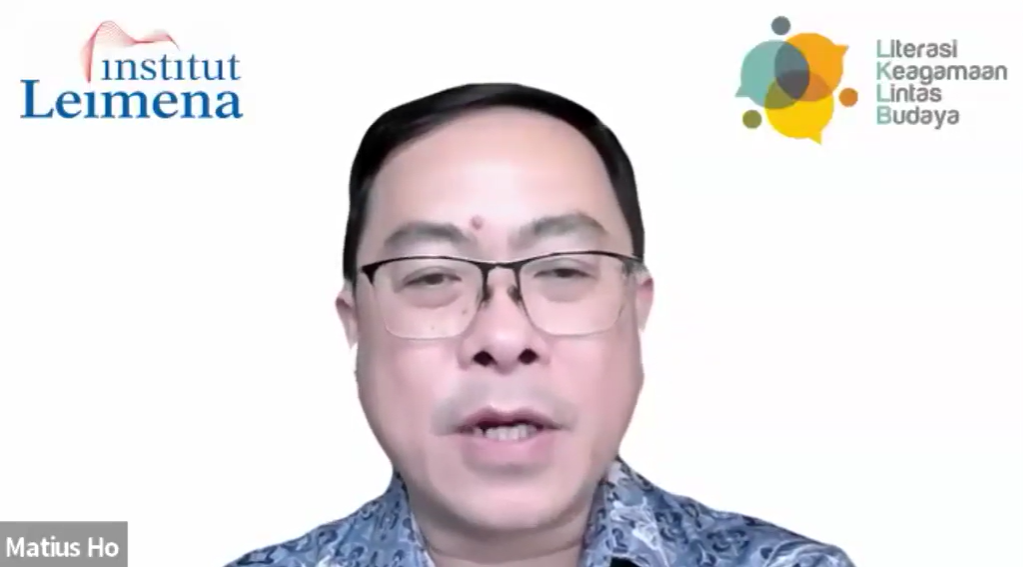
Executive Director of the Leimena Institute, Matius Ho, delivering his remarks.
CCRL Is Very Practical to Apply
Executive Director of the Leimena Institute, Matius Ho, expressed appreciation and gratitude to Pergabi and the Directorate General of Buddhist Community Guidance for their support in the CCRL program. Matius stated that the presence of the CCRL program is nothing other than due to the awareness of the importance of the role of teachers for the progress of the Indonesian nation.
Indonesian society, said Matius, is a religious society, so the views and attitudes of the next generation toward those who are different from them will be strongly influenced by the views and attitudes of teachers as educators.
“The collaboration between the Leimena Institute and Pergabi is a concrete example of CCRL implementation, namely that we are able to work together well for the common good while still respecting existing differences. This proves that CCRL is not just theory, but is very practical and applicable,” said Matius.
Chairman of Pergabi, Sukiman, said the CCRL training is expected to improve the competence of Buddhist religion teachers in understanding both their own religion and other religions or beliefs in their relations with others.
“So that this understanding will encourage a life of mutual respect, tolerance, and collaboration among people of different religions and cultures,” said Sukiman.
He encouraged training participants to be actively involved in CCRL activities, including after graduating from the training. This is because the CCRL program is held continuously, so teachers can continue to follow more in-depth development materials.
“There will be follow-up CCRL alumni activities, which will be even more beneficial for us,” said Sukiman.