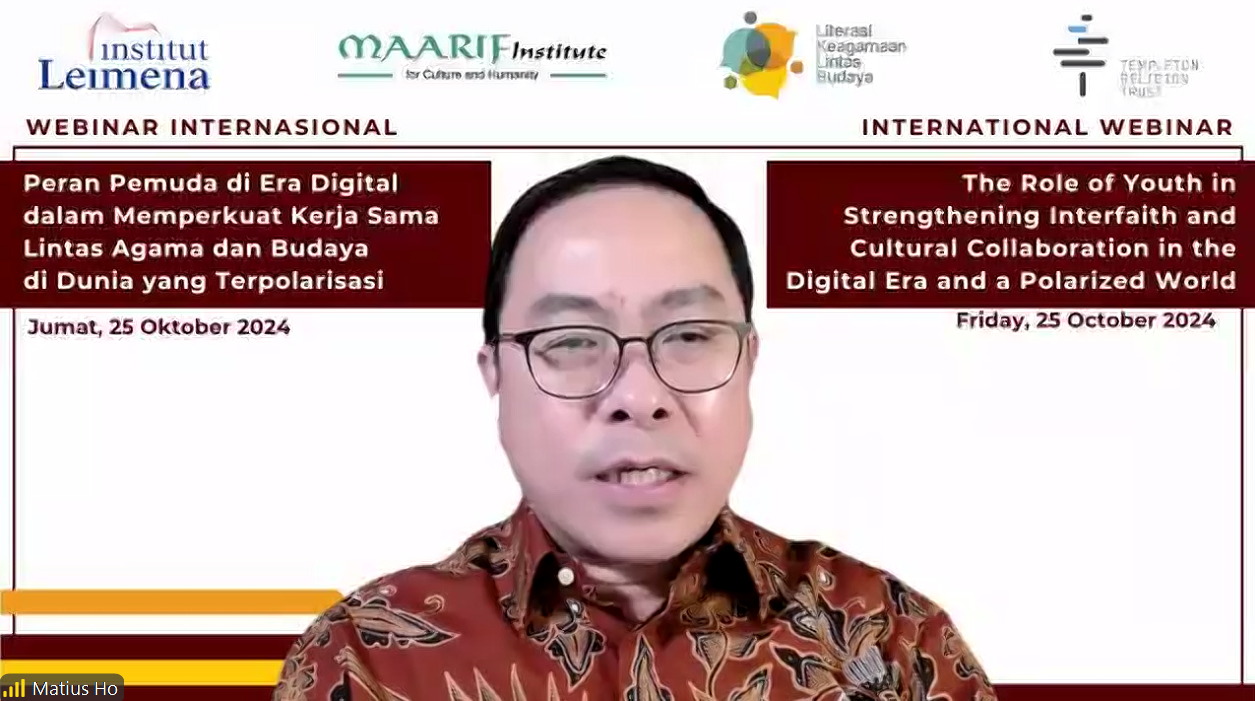
Executive Director of the Leimena Institute, Matius Ho.
Jakarta, LKLB News – The challenges in the digital era are growing, as information can be so easily spread and received as truth. That is why young people, as agents of change, need to develop high-order thinking skills, which include the ability to think analytically, evaluatively, and even creatively.
“The challenge in today’s digital era is becoming greater, as it is so easy to spread and swallow lies, hoaxes, and even slander, which can divide the nation and sow hatred among fellow human beings. With just a thumb, without using common sense, let alone critical reasoning,” said Executive Director of the Leimena Institute, Matius Ho, in the International Webinar Series on Cross-Cultural Religious Literacy held in commemoration of Youth Pledge Day by the Leimena Institute in collaboration with the Maarif Institute, on Friday evening (October 25, 2024).
In the webinar, which raised the theme “The Role of Youth in the Digital Era in Strengthening Interfaith and Intercultural Cooperation in a Polarized World” and was attended by keynote speaker, the Minister of Primary and Secondary Education, Prof. Dr. Abdul Mu’ti, Matius said that the youth of 1928 demonstrated extraordinary high-order thinking skills because they were able to analyze and produce a brilliant idea that was formulated in the Youth Pledge.
The Youth Pledge became an important milestone in Indonesia’s struggle for independence, at a time when the nation was easily divided and pitted against each other. Through the resolutions of the Youth Congress, young men and women across ethnicities, religions, and beliefs agreed to become one nation, one homeland, and uphold one unifying language—Indonesian.
“After almost a hundred years, have we become better at high-order thinking? Or instead have we declined, becoming easily provoked and divided? Or even joined in spreading hoaxes and sowing hatred?” Matius asked.
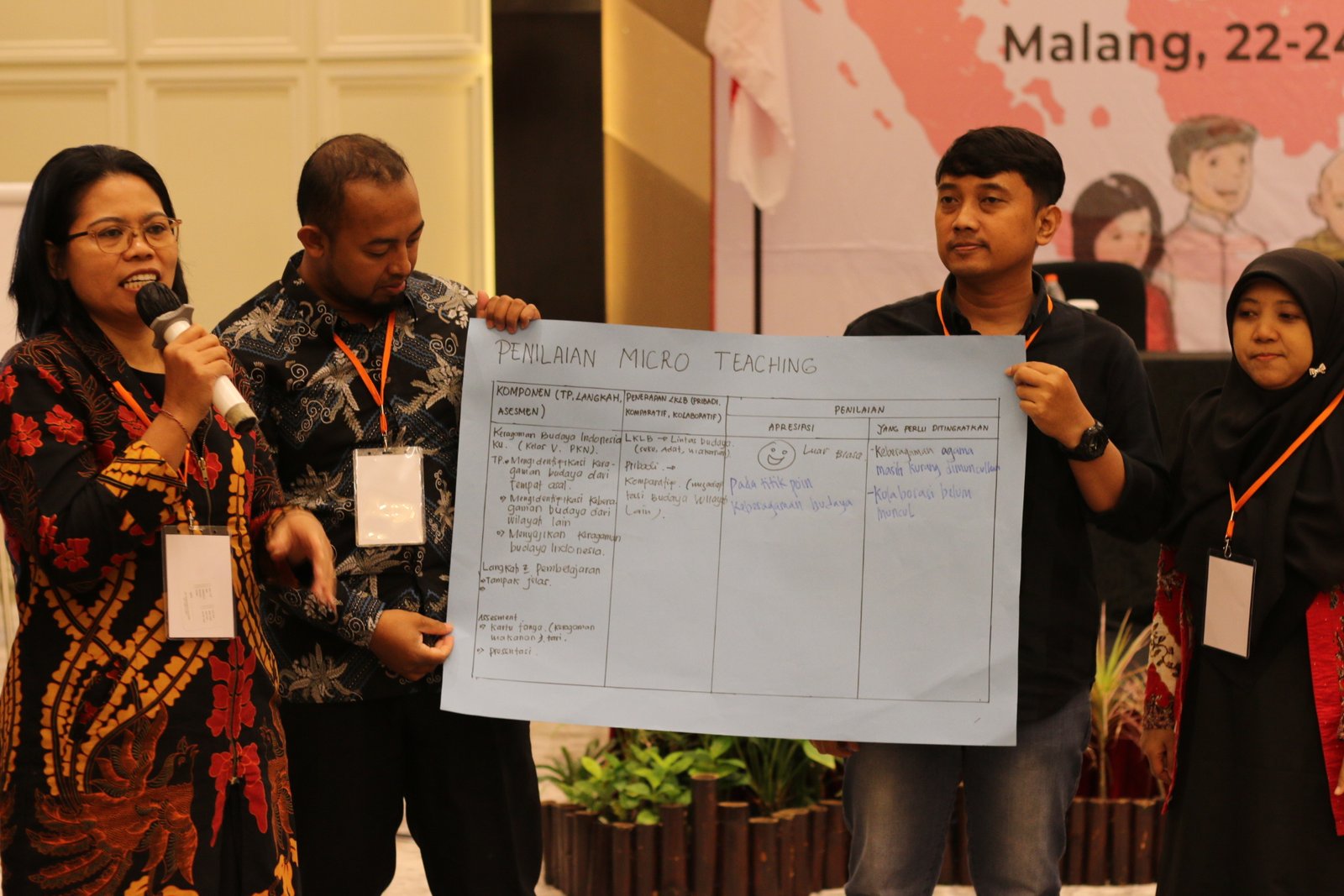
The CCRL program as an effort to develop high-order thinking skill among educators. Teachers presented in the Hybrid CCRL Upgrading Workshop.
Matius stressed that the role of education is crucial in shaping high-order thinking skills. The Leimena Institute, together with the Maarif Institute and 30 other institutions, has implemented the Cross-Cultural Religious Literacy program prioritizing teachers and other educators to strengthen their competencies so they may enhance their analytical, evaluative, and creative thinking abilities.
The Cross-Cultural Religious Literacy program emphasizes developing competencies to overcome prejudice and negative stereotypes toward people of different religions, beliefs, or even cultures. In the end, we are encouraged and enabled to build cooperation with those who are different, without fearing that we will lose our unique individual identities.
“This is the true meaning of Bhinneka Tunggal Ika—unity in diversity. Different but still one. One but still different,” said Matius.
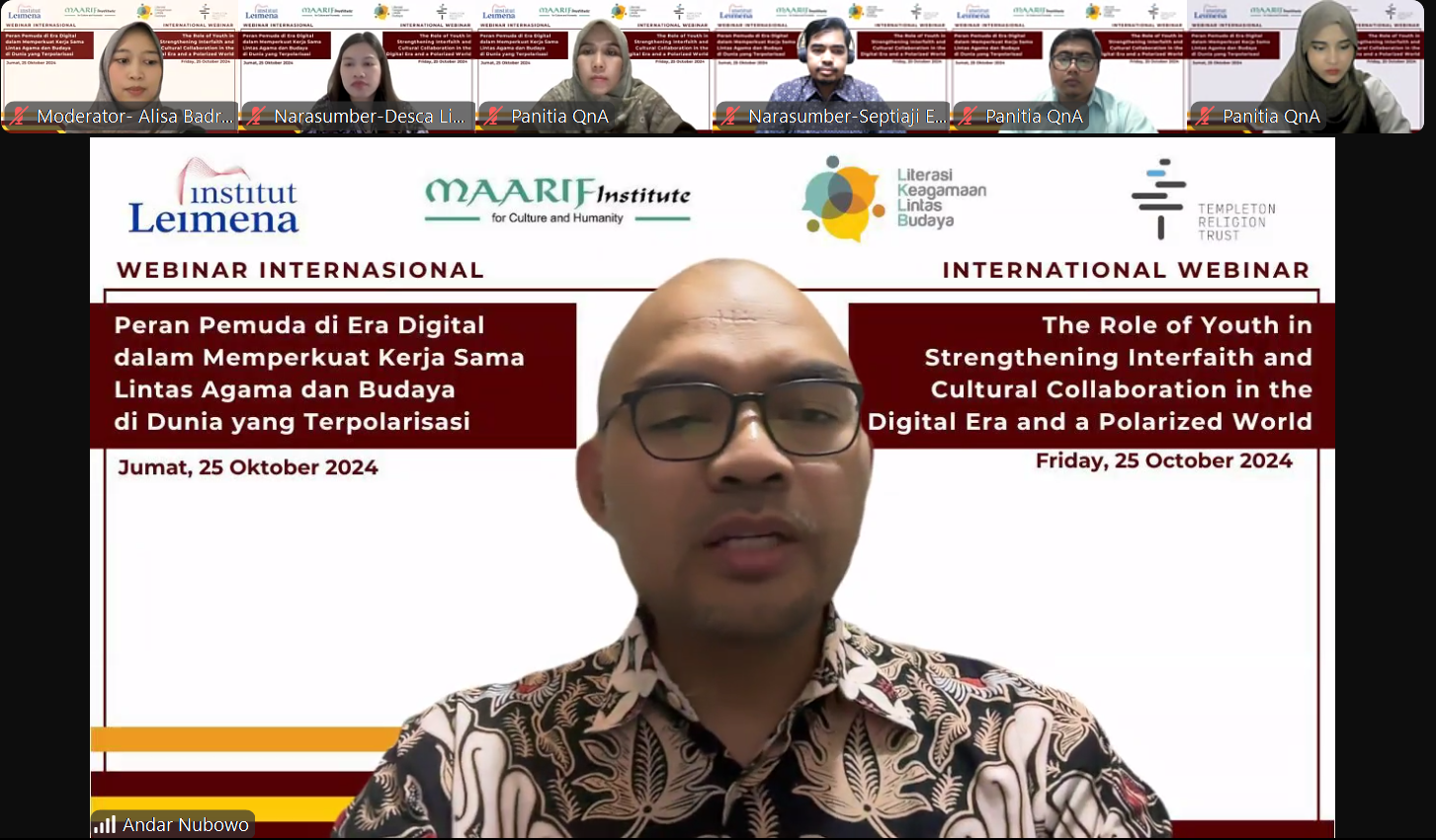
Executive Director of the Maarif Institute, Andar Nubowo.
In the same spirit, Executive Director of the Maarif Institute, Andar Nubowo, said that the example of the Youth Pledge remains relevant to be continuously echoed and realized in today’s polarized world. The digital invasion and internet technology have become vehicles for irresponsible parties to spread hate speech, false information, and hoaxes to divide the sense of nationality and humanity.
Andar emphasized that Indonesia’s independence would never have been realized if Indonesians had remained trapped in their primordial and cultural identities. The Youth Pledge was the first consensus in Indonesia’s history to unite and work together in building and realizing the imagination of independence and nationhood.
“Fortunately, Indonesia’s diversity did not hinder collaboration and synergy, but instead became intellectual, social, and political capital to build and realize our shared aspiration of an independent, just, prosperous, and peaceful Indonesia,” said Andar.
Andar added that the event nearly a century ago provides noble guidance for all—sons and daughters of Indonesia as well as the global community—that unity and togetherness can move good initiatives to confront humanity’s challenges.
“The digital world must be filled and reclaimed with positive energy and good initiatives, such as in our webinar tonight, which was attended by more than 2,200 people, to continue voicing and promoting synergy and collaboration in advancing cross-cultural religious literacy,” said Andar.