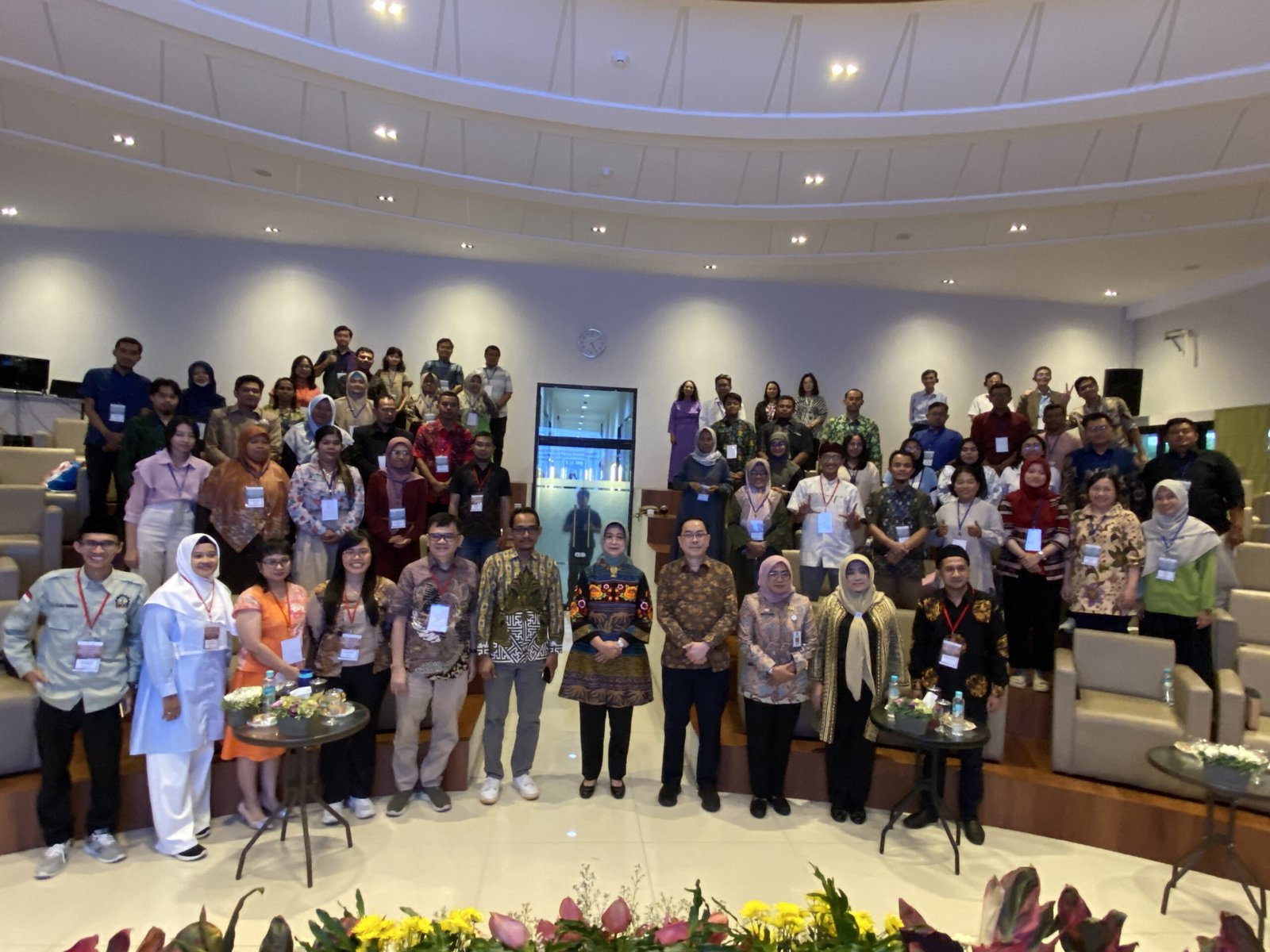
Speakers and participants of the Hybrid Upgrading Workshop (HUW) on Cross-Cultural Religious Literacy (CCRL) entitled “Developing Programs and Teaching Modules that Strengthen Religious Freedom and the Rule of Law” at the Legal Education and Training Agency (Badiklat Hukum), Ministry of Law, in Semarang, Central Java, on May 2–4, 2025.
Jakarta, LKLB News – The Human Resources Development Agency for Law (BPSDM Hukum) of the Ministry of Law of the Republic of Indonesia (Kemenkum RI), in collaboration with the Leimena Institute, has agreed to work together to organize Cross-Cultural Religious Literacy (CCRL) training for civil servants (ASN) working in the legal field across Indonesia.
The collaboration between the two institutions is expected to strengthen the internalization of Pancasila values within civil servants in the legal sector, especially within Kemenkum RI, so that they can serve as unifying agents of the nation who uphold tolerance and respect for diversity.
“This is the first time we are conducting a CCRL program with the Leimena Institute, following the signing of our cooperation agreement, which is very much aligned with the programs under BPSDM Hukum Kemenkum RI,” said the Head of BPSDM Hukum Kemenkum RI, Gusti Ayu Putu Suwardani, at the opening of the Hybrid Upgrading Workshop (HUW) on CCRL entitled “Developing Programs and Teaching Modules that Strengthen Religious Freedom and the Rule of Law” at the Legal Education and Training Agency (Badiklat Hukum), Semarang, Central Java, on May 2–4, 2025.
HUW CCRL is an advanced training program for teachers and educators who have previously completed the CCRL basic training. The participants included 41 teachers and educators from Central Java, Yogyakarta, Kalimantan, and Ambon, representing diverse religious backgrounds including Islam, Christianity, Hinduism, Buddhism, and Confucianism. The involvement of BPSDM Hukum in this HUW was based on the cooperation agreement signed with the Leimena Institute on March 19, 2025.
Following this HUW, BPSDM Hukum and the Leimena Institute will also conduct CCRL training for civil servants within Kemenkum from June 16–19.
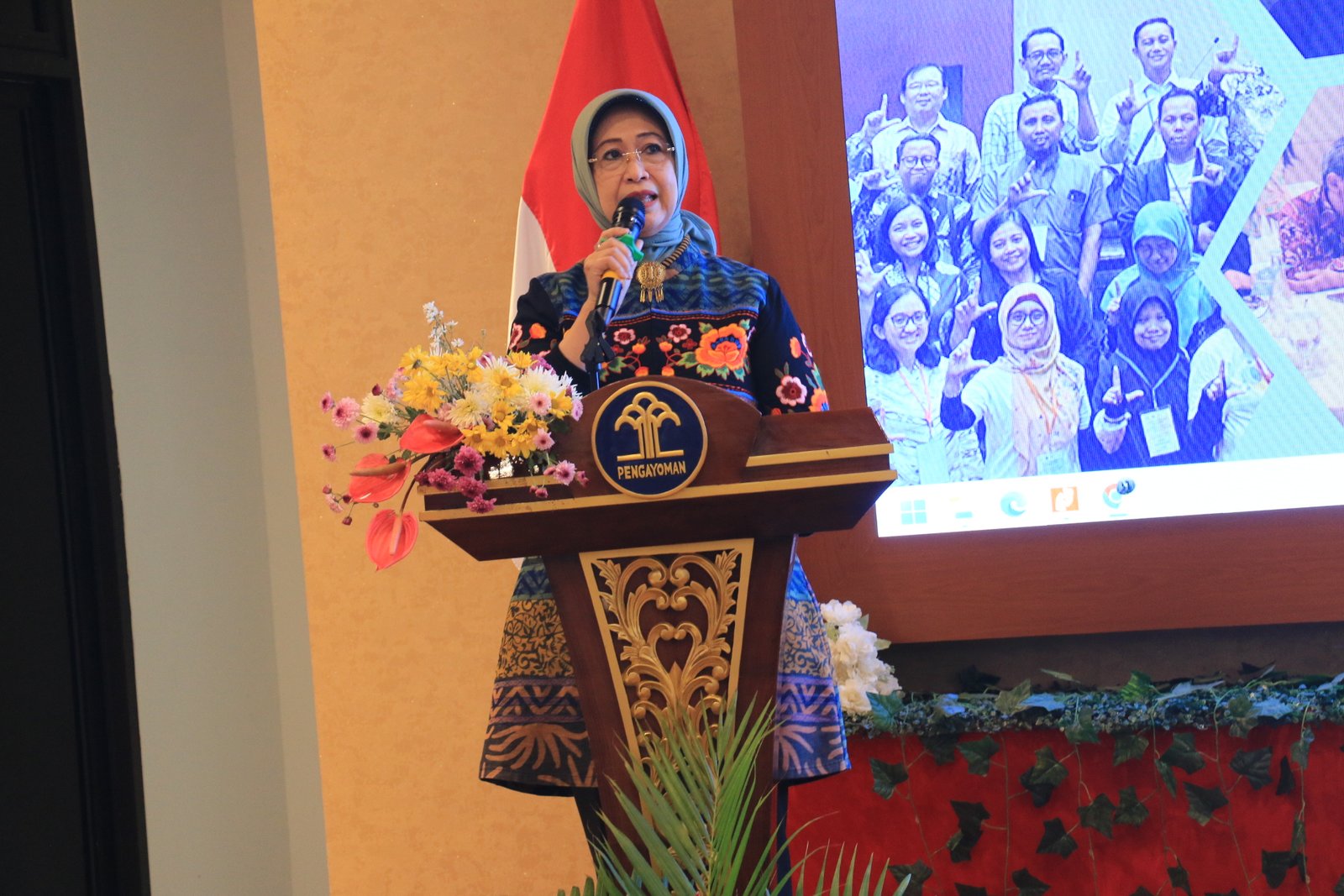
The Head of BPSDM Hukum Kemenkum RI, Gusti Ayu Putu Suwardani, served as the keynote speaker at the CCRL HUW in Semarang, Central Java.
Gusti Ayu explained that BPSDM Hukum has a major responsibility for the development of human resources, namely civil servants within Kemenkum and also civil servants from other ministries/agencies working in the legal sector. She added that Kemenkum is obliged to provide technical training for several functional positions in the field of lawmaking, such as legal analysts, legal extension officers, and officials in the field of intellectual property.
For this reason, Gusti Ayu welcomed the Leimena Institute’s invitation to collaborate through the CCRL program, which focuses on strengthening the competence of educators and others in promoting tolerance and collaboration in a pluralistic society. She stated that CCRL training will become one of the targets of BPSDM Hukum for officials in the legal sector, including cadets at the Polytechnic of Correctional Science (Politeknik Pengayoman Indonesia).
“Our target is the trainers (widyaiswara) and lecturers at the Polytechnic. This is very fitting because the participants of this training are not only within Kemenkum but also civil servants across the legal sector throughout Indonesia. There are an extraordinary number of legal analysts, legislative drafters, and legal extension officers across the country,” said Gusti Ayu.
According to her, the CCRL approach is highly in line with the programs of BPSDM Hukum to internalize the values of Pancasila, which also aligns with the first pillar of the government’s Asta Cita under President Prabowo Subianto and Vice President Gibran Rakabuming Raka, namely strengthening the ideology of Pancasila, democracy, and human rights.
“We want every program material to be in line and internalized with the values of Pancasila, especially the First Principle, Belief in One Almighty God. That is the essence of CCRL, and this is the direction we are taking. So, when we talk about Pancasila, we can already implement the First Principle through CCRL,” said Gusti Ayu.
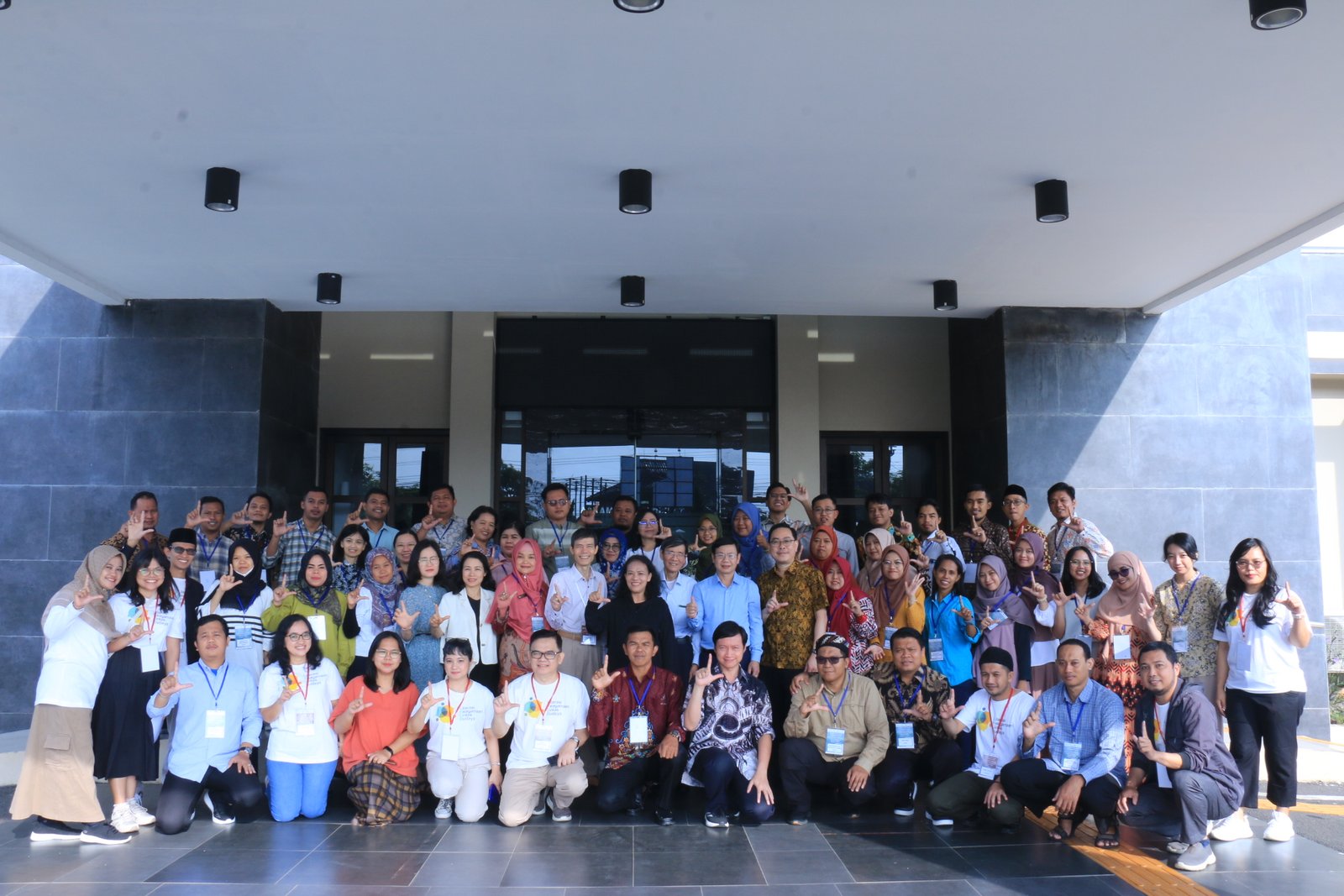
The implementation of the CCRL HUW in Semarang, Central Java, in early May was made special by the presence of academic observers from the Ho Chi Minh National Academy of Politics.
Presence of Vietnamese Academics
Julinar Sinaga, Program Manager of the Leimena Institute, said this CCRL HUW was special due to direct collaboration with the government through BPSDM Hukum. In addition, this HUW also attracted international attention with the presence of academics from the Ho Chi Minh National Academy of Politics, who came to observe the program.
She expressed her hope that through this activity, values of tolerance, diversity, and respect for differences will continue to be developed and passed on to students in schools.
“This is a matter of pride because the CCRL program has become a best practice that will be developed in other countries,” said Julinar.
Meanwhile, Executive Director of CENTRA Initiative and author of the CCRL HUW module, Muhammad Hafiz, in his remarks, invited participants to deepen mutual understanding in order to foster tolerance and collaboration.
“Cross-Cultural Religious Literacy cannot be separated from three things: head to head, heart to heart, and hand to hand. Head to head means the willingness to understand one another; once there is mutual understanding, empathy emerges—heart to heart—and from there, collaborative action will follow—hand to hand,” said Hafiz.