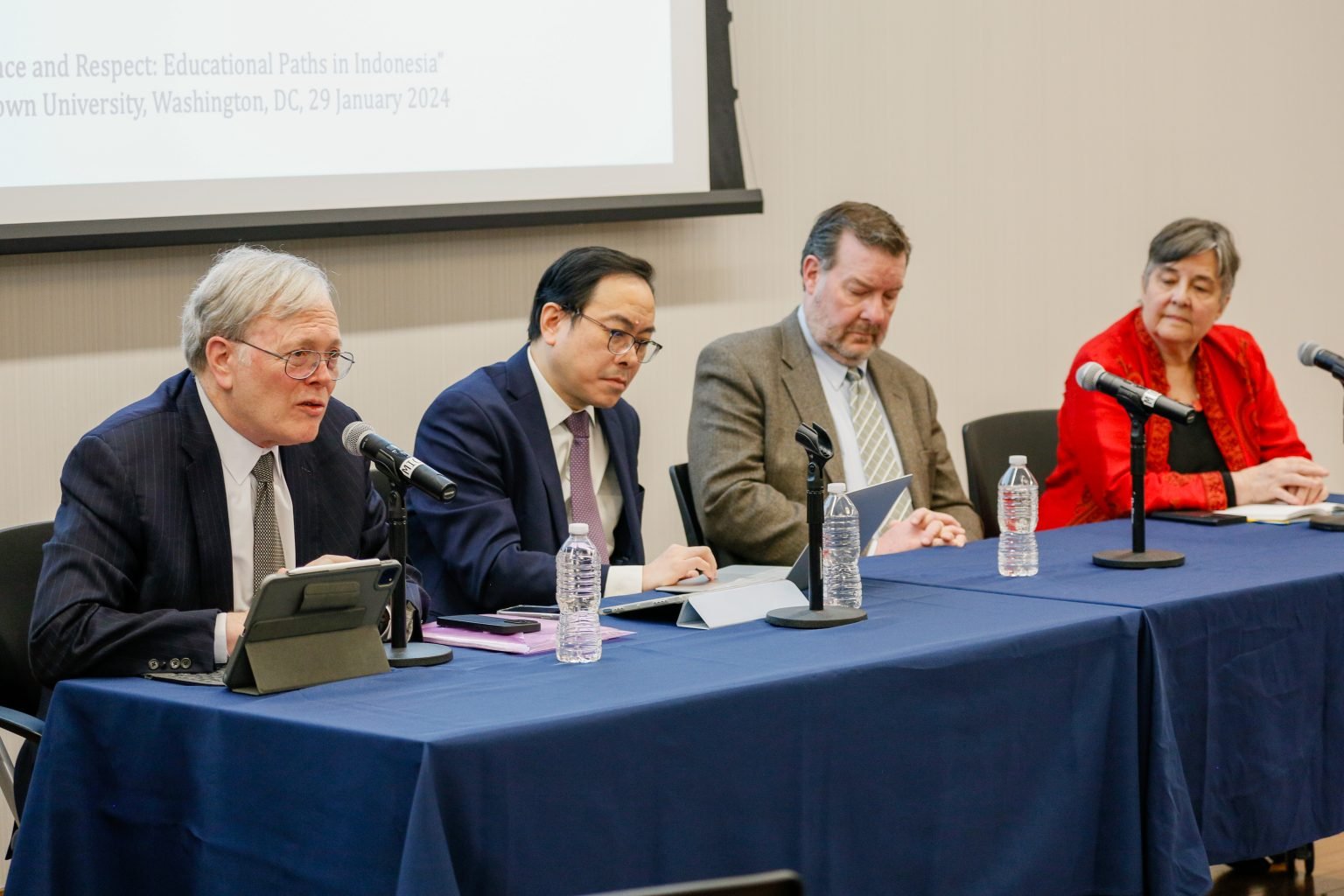
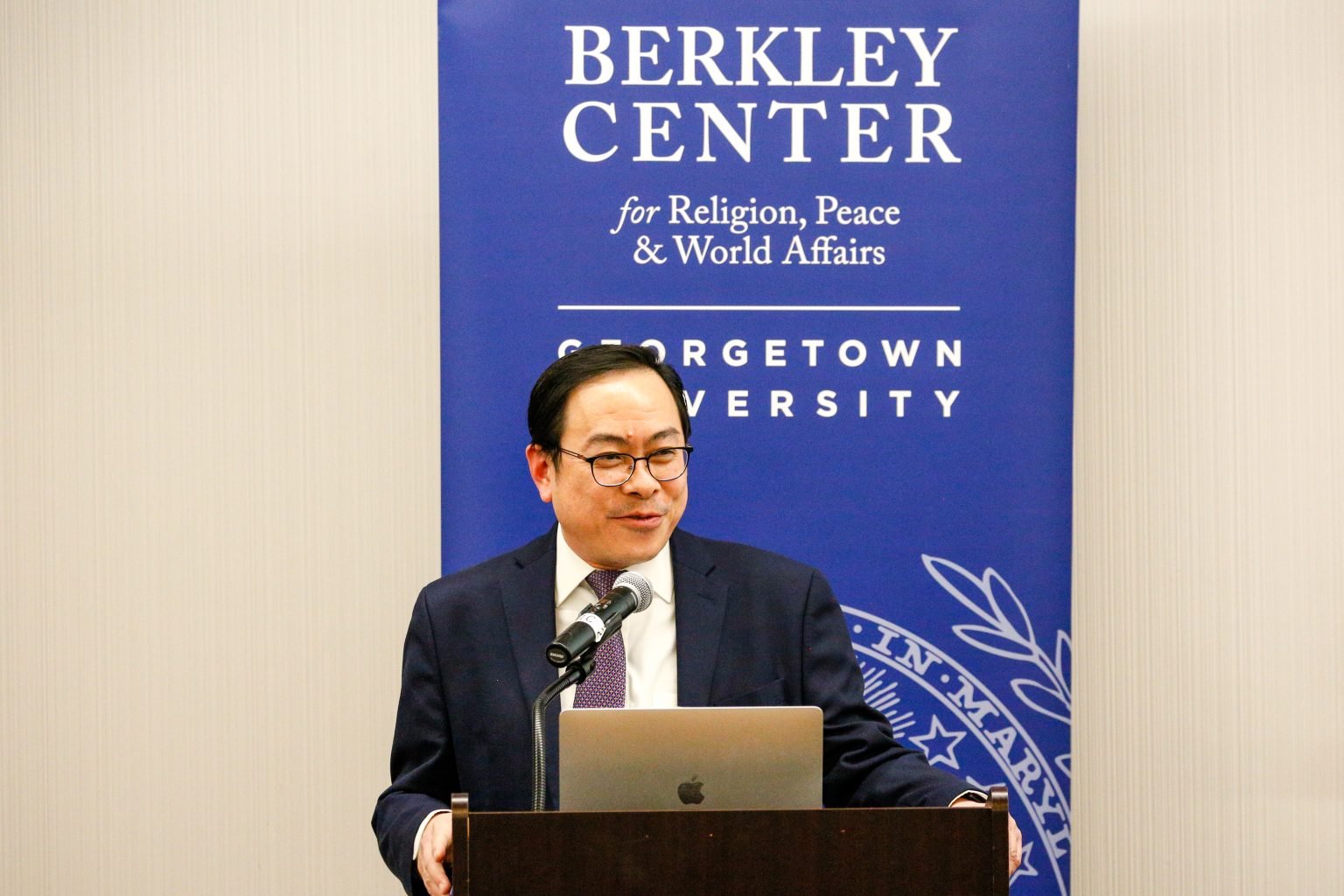
The academic panel discussion was organized by the Berkley Center for Religion, Peace, and World Affairs, Georgetown University, Washington DC, one of the leading universities in the United States.
Jakarta, LKLB News – The Cross-Cultural Religious Literacy (CCRL) program in Indonesia has become a best practice for many circles in building education for tolerance and mutual respect. The ideas that serve as both the strength and the key to the success of the CCRL program in Indonesia were raised as the main topic in an academic panel discussion at Georgetown University, one of the leading universities in Washington DC, United States.
The discussion was held on January 29, 2024, by the Berkley Center for Religion, Peace, and World Affairs at Georgetown University in collaboration with the G20 Interfaith Forum under the title “Tolerance and Respect: Educational Paths in Indonesia.” The focus of the discussion was the CCRL program in Indonesia, which was considered innovative and with the potential for broader implications.
The panelists included the Executive Director of the Leimena Institute, Matius Ho; President of the G20 Interfaith Forum, Prof. W. Cole Durham, Jr.; Senior Fellow in Comparative Religion at the University of Washington Henry M. Jackson School of International Studies, Dr. Chris Seiple; and Senior Fellow at the Berkley Center and Executive Director of the World Faiths Development Dialogue, Katherine Marshall.
Professor Durham opened the discussion by introducing the concept of CCRL, described as practical competencies and skills essential for engaging with religious and cultural differences. This differs from the view of religious literacy as merely gaining knowledge about other religions.
“CCRL has the potential not only for the Indonesian context but can also be an important tool to help address the UN Sustainable Development Goals, many of which align with concerns and objectives that religious communities have long upheld even before the nation-state was formed,” he said.
Georgetown University is the oldest Catholic and Jesuit institution of higher education in the United States. The Berkley Center for Religion, Peace, and World Affairs, established in 2006 under Georgetown University, combines research and teaching with international engagement to promote intercultural and interfaith understanding in service of the common good.
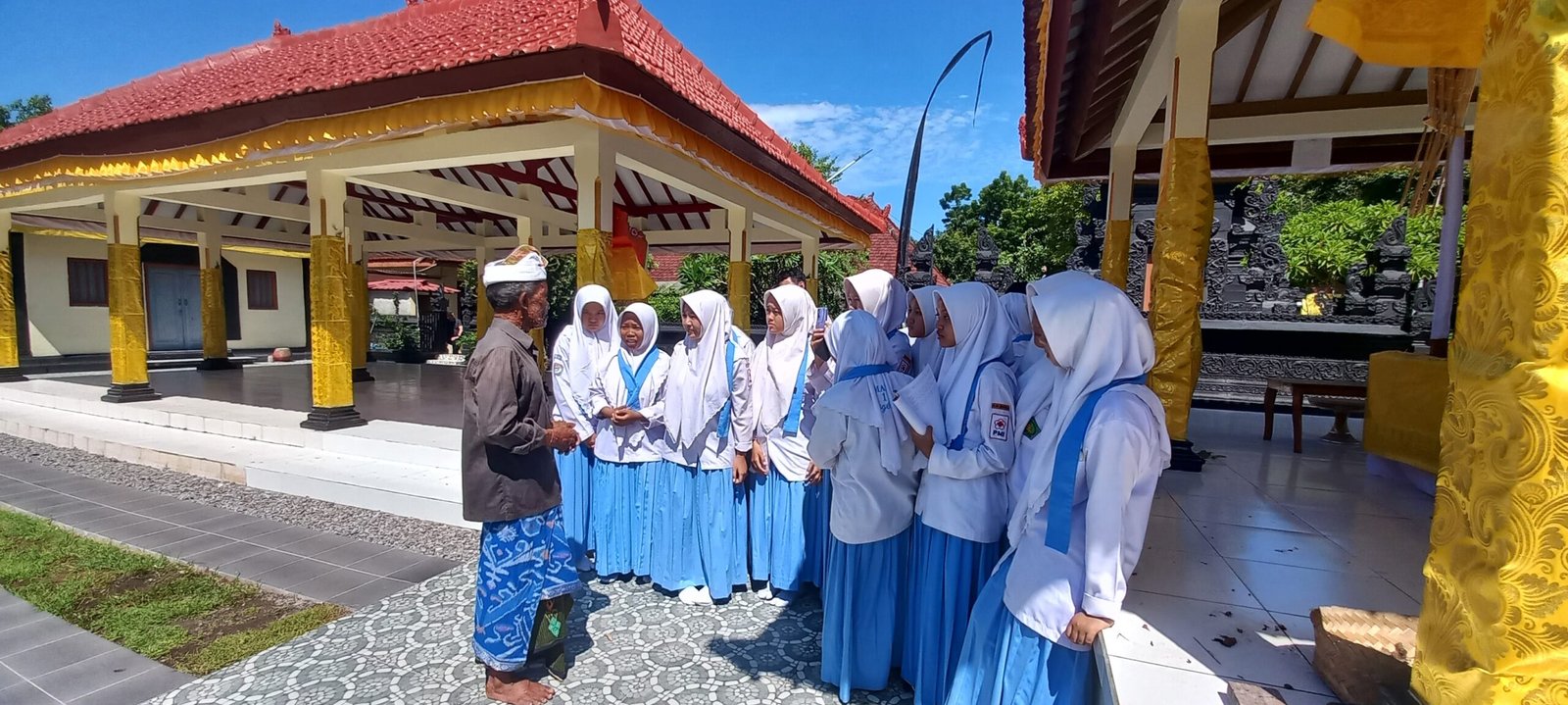
Students from Madrasah Aliyah Negeri (MAN) 1 Magetan visit a Hindu temple in Magetan as part of a teacher’s initiative for the implementation of the Cross-Cultural Religious Literacy program.
Beyond Politeness
Regarding the rapid and transformative impact of CCRL in Indonesia, Chris Seiple conveyed several key elements. First, CCRL enables people to fully express the substance of their faith identity without fear of unintentionally offending others, thereby enabling meaningful engagement. Second, CCRL is not imposed but embraced voluntarily by empowering local institutions and leadership. Third, the practical benefits of the CCRL program in Indonesia are very tangible in the form of professional development for teachers through certificates that serve as incentives for participants.
“Everyone has the desire to express their faith identity in full without offending anyone. This framework helps people express the full substance of their beliefs and engage in a safe way,” said Chris Seiple.
He added that CCRL teaches three core competencies: understanding one’s own teachings or beliefs, understanding what other traditions say about the liyan (the other), and building cross-religious collaboration skills. CCRL also teaches practical skills such as evaluation, negotiation, and communication.
“CCRL moves discussions beyond politeness or clichés toward nuanced shared understanding. It provides competencies and skills on how to engage with people who may not appear to act, choose, or pray like you,” said Chris Seiple.
The Executive Director of the Leimena Institute, Matius Ho, shared Indonesia’s experience in implementing the CCRL program, which is considered an innovative effort to build interfaith collaboration.
He explained that the CCRL program in Indonesia began in 2021, with the first step being a five-day online introductory training in CCRL with different modules for each religion, including modules for Muslim, Christian, and Buddhist teachers, with Hindu and Confucian modules currently in development.
The second step, the alumni program, involves organizing various activities for teachers who are alumni of the introductory training, forming a growing community. These include CCRL workshops for developing lesson plans (RPP) that integrate CCRL values, deepening CCRL materials, recording and submitting videos of their classroom CCRL practices, and more.
“In two years, the CCRL program in Indonesia has reached more than 7,000 teachers from 34 provinces and continues to grow,” said Matius Ho.
Meanwhile, Katherine Marshall emphasized that the remarkable religious literacy demonstrated in Indonesia’s CCRL program is urgently needed globally to enable effective communication and meaningful policy-making. She noted that the religious dimension is a real force, yet often unrecognized, shaping societies and geopolitics globally, with 85% of the world’s population affiliated with religion. Yet most diplomacy and public policy do not mention religion.
Marshall praised the CCRL program in Indonesia as an important part of Indonesian culture, politics, and society. She added that the program could make significant contributions to two specific issues currently being pursued by the G20 Interfaith Forum: first, social preparedness and recovery after the Covid-19 pandemic due to the failure of education systems to build citizenship, character, and social cohesion; second, the concept of strategic religious engagement to bring religious voices into the global agenda.