Written by Indira Noor Hasanah
“Indonesia is an archipelago with various tribes, religions, and cultures. To maintain the integrity of our beloved country, we must have an attitude of tolerance and mutual respect among tribes, religions, and cultures.”
That’s an excerpt from my teacher’s lecture during the Pancasila Moral Education class when I was in elementary school. To a nine-year-old, it sometimes felt like listening to a fairy tale, especially during afternoon classes.
Because it was repeated so often, the phrase stuck in my memory, even if I only remembered a little of what the teacher said. Still, I didn’t fully grasp its meaning. I lived in a homogenous village where my neighbors had the same religion and language as me, and I went to a school with students who shared my faith. For me, the expression was just a teacher’s saying that I was supposed to believe.
From Theory to Reality
I first experienced genuine diversity in high school, where the student body was more varied. I started getting to know friends from different religions and ethnic groups. Initially, I felt strange and a little awkward. But slowly, I began to understand, “Oh, this is what my teacher was talking about. So there really are people different from us!” Although we were generally similar, I became more careful not to hurt their feelings.
A truly heterogeneous world became even more real when I started my career outside Java. It was a new and distinct experience to be in a diverse environment in a foreign region after only experiencing diversity on a smaller scale in Java. In one dormitory, I met people from various tribes, languages, and religions.
For a year and a half, we lived together without any significant arguments. We were like siblings, strengthening, respecting, and helping each other in our daily lives. We felt we had one thing in common that made us family: we were all “migrants.”
This period felt like a real-life application of my old PMP lessons. I truly began to understand that despite our differences, we could live together and respect one another. We celebrated Eid al-Fitr together, preparing the food together even though some of us were Christian. As a Muslim, I also respected their religious activities in our dormitory. We became friends who could confide in each other and offer advice. It was a truly beautiful brotherhood, a stark contrast to the negative news I saw on TV or social media.
CCRL and Modern Education
Now I have a new chapter in my life as a teacher. I was introduced to Cross-Cultural Religious Literacy (CCRL) as a mandatory program from my school foundation. Although it wasn’t my own initial choice, I admit that the CCRL program has enriched my knowledge. It has opened my eyes and mind to the importance of tolerance toward others.
The various activities in CCRL play a role in preventing intolerance in our diverse nation. This indirectly contributes knowledge to educators. As CCRL alumni, we often receive invitations to webinars and training to improve our literacy. I’ve gained new experiences and knowledge that are very supportive of my current profession as a teacher. I’m sure that not only I but all CCRL alumni, whose numbers are hopefully growing, are experiencing the benefits of participating in this positive program. I hope future CCRL activities are even more varied so I can gain more knowledge.
Like a sacred trust to be passed on to the next generation, instilling the importance of tolerance is crucial for a teacher. This is especially true for elementary school teachers, where students need a strong foundation in character building. This aligns with the “Merdeka Curriculum” launched by the Minister of Education, Culture, Research, and Technology, Nadiem Makarim. Its goal is to create lifelong learners who have global competencies and behave according to the values of Pancasila: being faithful to God and having noble character, having global diversity, working together, being creative, thinking critically, and being independent.
The learning in the Merdeka Curriculum strongly supports character building, which is packaged in project-based learning. There’s even a Pancasila Student Profile Strengthening Project (P5) that encourages students to take real action in their learning.
As an educator, I don’t want my students to be like me, knowing tolerance only as a theory or a mere fairy tale. Their future challenges will be much greater because all kinds of positive and negative things are easily accessible with a touch of a finger. Smartphones are like double-edged swords that can boomerang on our next generation if they use them without parental guidance. Information from the internet can easily create problems of intolerance.
More Than a Fairy Tale
Intolerance must be thrown out of our culturally diverse country. The richness of Indonesian culture can also be seen in its cuisine. We can analogize diversity through a dish like rujak. If the sauce only had one ingredient, like sugar, without a little salt and sourness, the flavor would be less delicious. Even so, the taste of each fruit in the rujak—whether it’s cucumber, pineapple, guava, or young papaya—remains distinct despite being coated in the same sauce, which makes it even more enjoyable.
Living peacefully with tolerance is not just a fairy tale. Tolerance is beautiful and has a deep meaning in life. Without tolerance, there is no peace. If peace is beautiful, why seek conflict?
As an educator, I don’t want my students to share the same fate I had, knowing tolerance only as a theory or a mere fairy tale. The challenges of their future lives will be far more difficult because a wide variety of positive and negative things are so easily accessible with just a touch of a finger.
Writer’s Profile
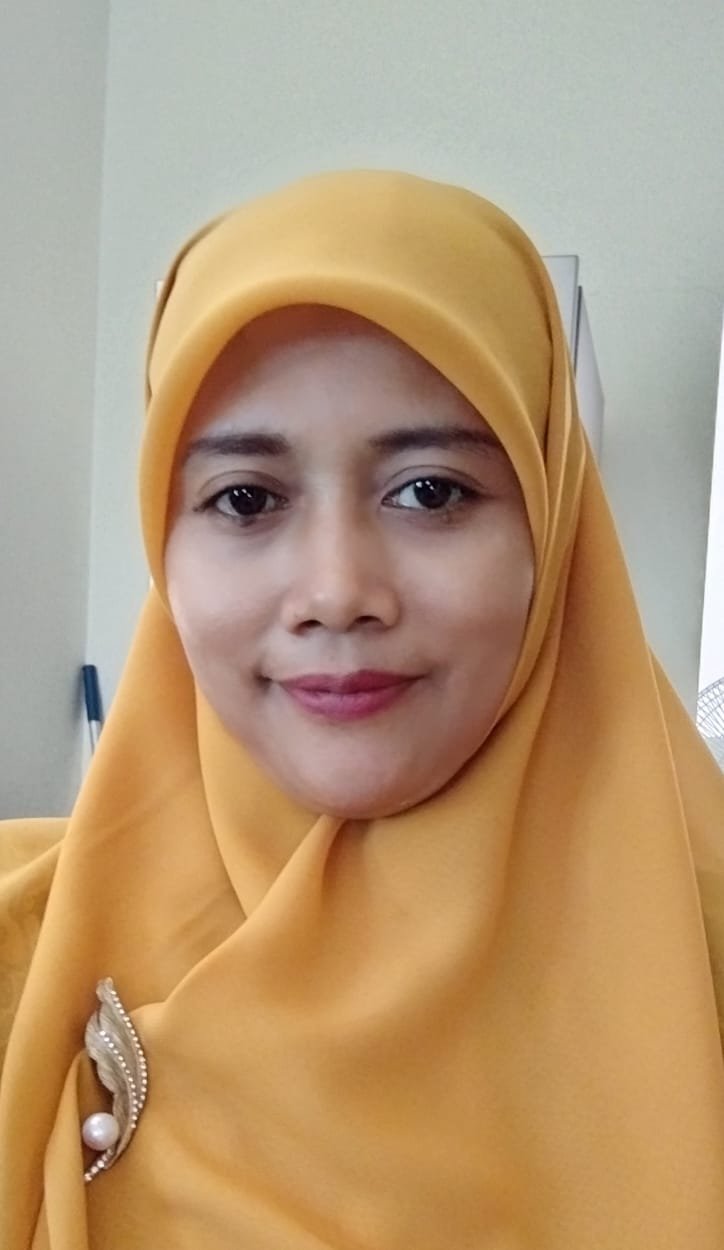
Indira Noor Hasanah
CCRL Alumni Batch 19
Teacher at SD Muhammadiyah 1 Kudus, Central Java
0 Comments