
Three Islamic scholars who are also Senior Fellows of the Leimena Institute and lecturers in the Cross-Cultural Religious Literacy (CCRL) program, from left to right: Prof. Amin Abdullah, Dr. Alwi Shihab, and Prof. Siti Ruhaini Dzuhayatin, served as speakers in a discussion with Vietnamese academics from the Institute of Ethnicity and Religion under the Ho Chi Minh National Academy of Politics.
Jakarta, LKLB News – A number of Indonesian Islamic scholars held a meeting with five Vietnamese academics from the leadership training institution, the Institute of Ethnicity and Religion under the Ho Chi Minh National Academy of Politics. One of the most interesting topics of discussion in the meeting was the characteristics of Islam in Indonesia, which differ from Islam in other countries such as those in the Arab world and the Middle East.
The experts present included Member of the Steering Committee of the Pancasila Ideology Development Agency (BPIP) Prof. Dr. Amin Abdullah, Minister of Foreign Affairs of Indonesia (1999–2001) Dr. Alwi Shihab, and Indonesian Ambassador to Uzbekistan and Kyrgyzstan Prof. Dr. Siti Ruhaini Dzuhayatin. The five Vietnamese academics visited Indonesia from May 1–3, 2025 to study the CCRL program organized by the Leimena Institute together with various educational, religious, and governmental institutions in Indonesia.
“When we talk about interfaith dialogue, interfaith harmony, interfaith cooperation, that is Indonesia. Indonesia cannot be called a secular country like those in the West because its tradition upholds religion, but the nation’s founder, Ir. Soekarno, said that divinity in Indonesia is divinity with culture and noble character,” said Amin Abdullah.
Amin, recipient of the 2024 Habibie Prize in philosophy, religion, and culture from the National Research and Innovation Agency (BRIN), explained that although 87 percent of Indonesia’s population is Muslim, the nation’s founders did not establish Indonesia as a religious state. According to him, the character of Islam in Indonesia is different from other countries, because Islam here has grown on the foundation of three national pillars: ethnoreligious communities, the Youth Pledge of 1928, and Pancasila as the unifying ideology of the nation.
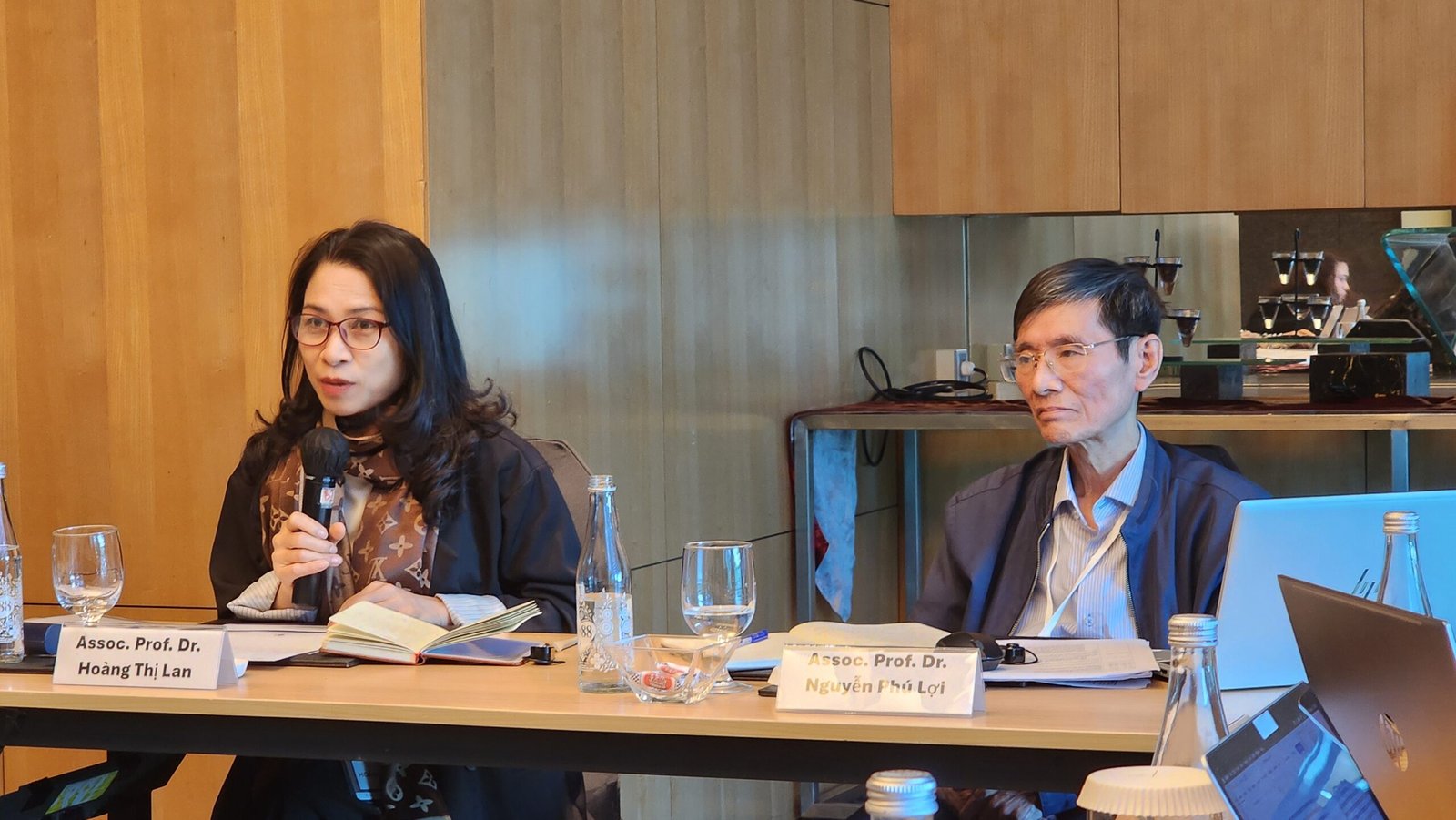
Prof. Dr. Hoang Thi Lan from the Institute of Ethnicity and Religion under the Ho Chi Minh National Academy of Politics, Vietnam, posed a question regarding the history of Islam in Indonesia and its development.
Amin explained that Indonesia originated from ethnoreligious communities that grew very strongly over the centuries. The fact that Indonesia consists of 17,000 islands with various languages, belief systems, and traditions has made its people accustomed to living in diversity. The culmination came in 1928 when Indonesian youth declared the Youth Pledge—one homeland, one nation, and one language—followed by the formulation of Pancasila.
“In Indonesia, socio-religious organizations such as Muhammadiyah and Nahdlatul Ulama are older than the country itself, yet when there was a proposal to remove the phrase ‘implementing Islamic law for its adherents’ in the first principle of Pancasila, consensus was still achieved,” said Amin.
“If at that time Indonesian Muslims had been rigid and exclusive, there would have been no Indonesia as a modern nation,” continued the former rector of Sunan Kalijaga State Islamic University Yogyakarta.
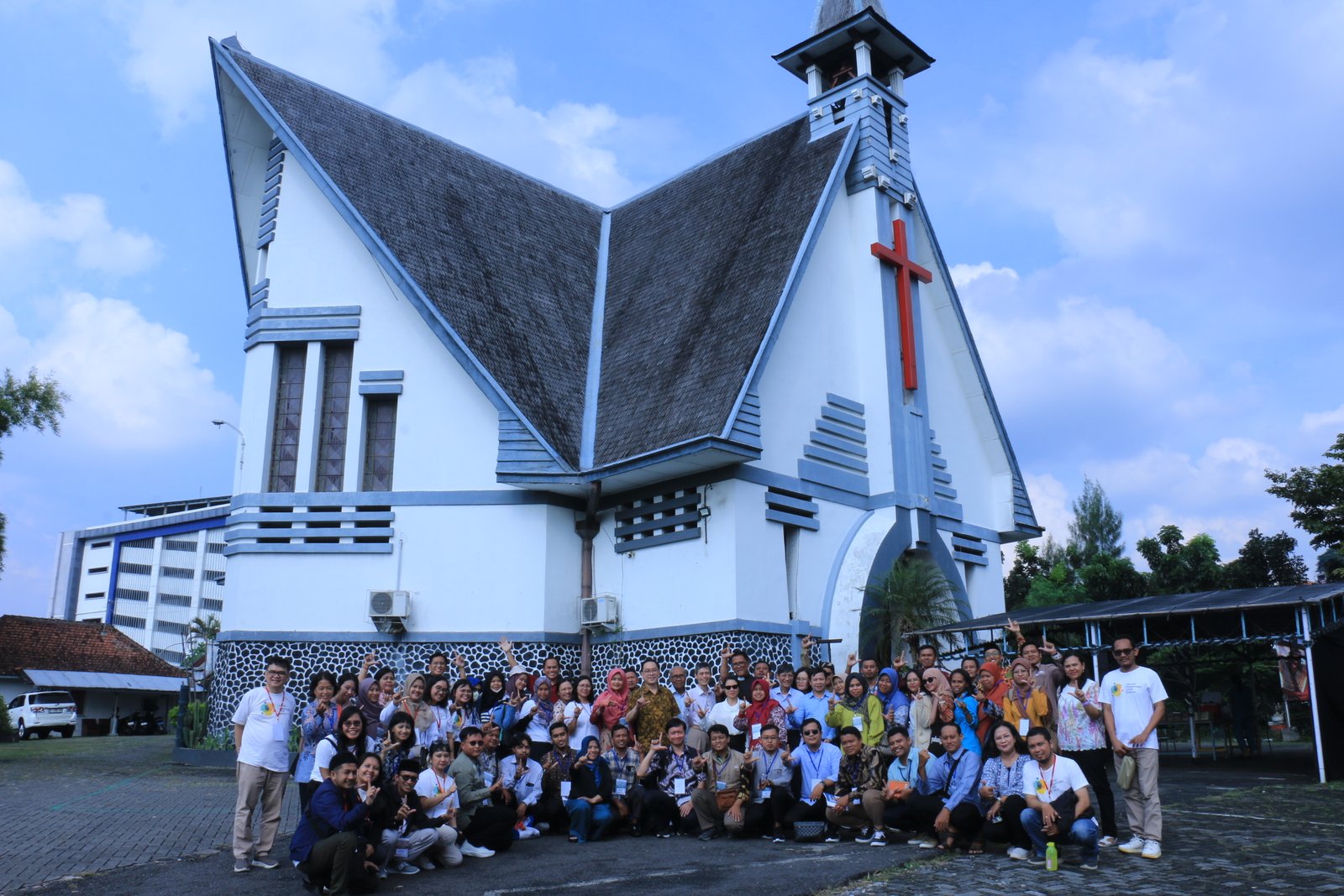
A visit to houses of worship during a CCRL workshop in Semarang, Central Java, on Saturday (May 3, 2025) became one of the observation activities for the Vietnamese academics in Indonesia.
The Issue of Interpretation
Former Minister of Foreign Affairs, Dr. Alwi Shihab, said that in essence, Islam is one because it has the same holy book and Prophet. However, differences arise from varying interpretations, which at times can lead to bloody conflicts. He cited as an example the war between Iraq and Iran that lasted eight years. Similar conflicts have also occurred between different religions, such as the Crusades between Muslims and Christians.
“If we trace history, we will see that no religion justifies bloody conflict. Yet it continues to happen because of differences in interpretation, and what makes the conflict even harder to resolve is political affiliation,” said Alwi.
Alwi explained that the CCRL program organized by the Leimena Institute seeks to provide enlightenment that above all, one must not be hostile to any religion. He added that there are three competencies taught in the CCRL program.
First, personal competence, meaning that every religious adherent must truly understand and internalize the teachings of their own religion.
Second, comparative competence, which is finding common ground in religious differences by fostering empathy for one another.
Third, collaborative competence, which means that the common ground that exists must serve as a foundation for working together.
“Many CCRL participants have given feedback that they feel more comfortable engaging with other groups after understanding these three competencies,” said Alwi, who also served as the former Presidential Special Envoy to the Middle East and the Organization of Islamic Cooperation (OIC).
Indonesian Ambassador to Uzbekistan and Kyrgyzstan, Siti Ruhaini, said that the energy required for Indonesia to live side by side in harmony is many times greater than that of Vietnam, which is more homogeneous. In Indonesia, religion is of central importance, which makes democracy essential so that no single religious group can monopolize truth claims.