
Written by Sunarwan
Bung Karno (Indonesia’s first president, Sukarno) reminded us that every independent nation is not necessarily a nationale staat (nation-state). Similarly, not every independent kingdom in our homeland in the past was a nationale staat. He pointed out that this nation only experienced a nationale staat twice in its history: during the eras of Sriwijaya and Majapahit. Beyond that, the nation did not experience a nationale staat. Although independent, the Mataram kingdom was not a nationale staat. The Pajajaran kingdom was also not a nationale staat. King Sultan Agung Tirtayasa with his kingdom in Banten, though independent, was not a single nationale staat. Sultan Hasanuddin in Sulawesi, who established an independent Bugis kingdom, was not a single nationale staat. (Wawan Tunggul Alam, 2002). According to Bung Karno, a nationale staat is the entirety of Indonesia’s current territory, just as it was during the Sriwijaya and Majapahit eras, with all its diverse cultures, ethnicities, and languages united in a complete whole.
Patriotism and the Wisdom of the Pesantren Tradition
Love for one’s homeland is a prerequisite for a nation’s survival. Sayid Muhammad defined the homeland (al-wathan) as the land where we are born and grow, where we benefit from its plants and livestock, savor its water and air, live on its soil and beneath its sky, and enjoy the fruits of its land and sea for all time. All these benefits compel people to dedicate their souls, bodies, and possessions to serve their homeland by bringing good, developing its economy, and advancing it. (Al-Sayyid Muhammad in Lanny Octavia, 2014). If a person loves their homeland, they will be happy when it is in good condition in all dimensions: social, economic, cultural, ecological, and so on. Conversely, they will feel sad and concerned if their homeland is in a pitiful state. They will be worried when they see social, political, economic, and cultural interactions filled with hoaxes, fake news, and mutual insults, which ultimately erode the noble values of brotherhood and weaken the unity of the nation’s children.
According to Syaikh Musthafa al-Ghulayaini, nationalism (al-wathaniyyah) is a universal human instinct. A person who truly loves their homeland will prove it through positive attitudes and actions for their country and its people, for example, by advancing education and science, which are the keys to true independence—economic and political independence. (Syaikh Musthafa al-Ghulayaini in Lanny Octavia, 2014).
The scholarly traditions of the pesantren (Islamic boarding school) have formulated a concept of brotherhood (ukhuwwah) that connects Muslims (ukhuwwah Islamiyyah), fellow citizens (ukhuwwah wathaniyyah), and all humanity (ukhuwwah basyariyyah or ukhuwwah insaniyyah). This concept was formulated by KH. Achmad Siddiq, the leader of the as-Siddiqiyyah Pesantren in Jember, Rais ‘Aam (Supreme Leader) of the Nahdlatul Ulama Executive Board from 1984-1991, and personal secretary to KH. Wahid Hasyim in 1950. KH. Abdurrahman Wahid (Gus Dur) later popularized, deepened, and applied the concept in broader social interactions, a step that all pesantren scholars later supported.
National brotherhood (ukhuwwah wathaniyyah) is the soul of patriotism. Pesantren clerics realized that the Indonesian nation is composed of various tribes, languages, customs, and religions, and despite these differences, they are all brothers. As national siblings, the pesantren community does not harbor animosity toward differences or those who are considered different, because this nation was built together. The pesantren also demonstrated its love for the homeland by participating in the struggle for independence and in Indonesia’s development. (Lanny Octavia, 2014). History even records that the fight to defend independence in Surabaya, which led to the creation of Hero’s Day, was the result of a student resistance movement (in this case, the pesantren and all national components) that was inspired and ignited by the Fatwa Resolusi Jihad (Jihad Resolution Edict) issued by Hadratussyaikh Muhammad Hasyim Asy’ari from the Tebu Ireng Pesantren in Jombang, the Supreme Leader of Nahdlatul Ulama.
The Principle of Equality
Equality is an unavoidable reality in a multicultural nation-state like Indonesia. Differences in skin color, language, gender, tribe, race, religion, culture, and group are the will of Allah SWT and cannot be denied by humans. Indonesia’s diversity is an innate nature (fitrah), just like the creation of the universe and everything in it in all their variety. Differences are not intended to cause humans to quarrel, belittle, or tear each other down. Instead, they are meant for humans to know, understand, and complement one another. All humans have an equal standing before Allah, and the only distinguishing factor is their piety. In other words, a person’s nobility is not determined by the color of their skin, their gender, their lineage, or any other physical criteria, but rather by the quality of their spirituality. (Lanny Octavia, 2014). This is the meaning of the Quran, Surah Al-Hujurat, verse 13.
After the Prophet Muhammad SAW passed away, the principle of equality was continued by his successors, including Caliph Umar ibn al-Khattab. During his leadership, Umar ibn al-Khattab selected government officials and employees based on their abilities, without considering kinship, friendship, or wealth. (Jabbar). Umar ibn al-Khattab also enforced the law without discrimination, as he demonstrated when he sentenced the son of Amr ibn al-‘Ash. At that time, Amr ibn al-‘Ash’s son, who lost a horse race, struck an Egyptian resident and took refuge behind his father’s position as the governor of Egypt. Umar summoned Amr ibn al-‘Ash and his son and upheld qishash (equal justice). Umar said, “Oh ‘Amr, since when have you enslaved people? They were born free from their mothers’ wombs.” Umar ibn al-Khattab’s view on human equality and freedom could be said to have been ahead of its time, when slavery was still considered common and legal. The same principle of equality was applied in other fields as well.
Equality in the Indonesian context must be understood across religions and beliefs. Islam, as a religion of mercy (rahmatan lil ‘alamin), becomes the benchmark for implementing that mercy through various aspects and values in the life of society, the nation, and the state.
Islam as a Mercy to All Worlds
As far as can be traced from the life of the Prophet Muhammad SAW, we find historical facts that the humanitarian principles of Islam (i.e., the mercy of Islam) were not just a discourse preached by the Prophet SAW everywhere; they were also his daily attitude and behavior, as well as that of his companions. Indeed, God testified to the Prophet’s personal conduct and declared it to be the most noble character. (Muhammad, 2011). Another fact about the mercy of Islam is shown by what is known to Muslims as the “Charter of Medina” or “Treaty of Medina,” a constitution declared by the Prophet Muhammad SAW in Medina. Scholars today often refer to this charter as the world’s first constitutional treaty on universal human rights.
One of the charter’s core principles states, “Muslims, Jews, and other citizens of Medina are free to embrace their respective religions and beliefs. Their freedom to practice worship is guaranteed. No one is permitted to interfere in the religious affairs of others. The Jews of Medina who signed (agreed to) this charter are entitled to help and protection and shall not be treated unjustly. The Jews are for the Jews, and the Muslims are for the Muslims. If any of them commit an act of injustice (oppression, violating the law), it will only harm themselves and their families. All oppression is forbidden. They all have a mutual obligation to defend their country from enemy attacks.” (Muhammad, 2011).
The Quran states that God created humans of different tribes and nations to “know one another” (lita’arafu). Diversity drives unity. Diversity is also a means for the advancement of civilization. This is because civilization is created, in part, by the richness of perspectives and the intellect of many people and their differences. By getting to know each other’s differences, we can learn to build civilization. By knowing these differences, an attitude of mutual respect will be built, and the learning process will be created. Misunderstandings often occur because we have not gotten to know the diversity among us. However, interaction is not enough just to get to know others; they must also get to know us. Two-way interaction will give rise not only to sympathy but also to empathy. If we ask others to understand us, the other party asks for the same. The first step is precisely as the Quran advises: get to know one another.
For centuries, the ancestors of the Nusantara people have proclaimed that even though we are different, we are still one (bhinneka tunggal ika). This motto can be found in the Sutasoma manuscript by Mpu Tantular, written in the 14th century during the Majapahit era. Indonesia is fortunate to have had the philosophy of bhinneka tunggal ika for so long, even as Western countries were just beginning to consider the concept of diversity. Indonesia is a country that is very rich in diversity. The cultural heritage originating from the Hindu, Buddhist, and Islamic kingdoms remains vibrant and rooted in society.
On this basis, the nation’s founders agreed to use bhinneka tunggal ika, which means “different but still one,” as the national motto. The Indonesian nation has lived for centuries in togetherness with diversity and differences. Differences in skin color, language, customs, religion, and various other distinctions. Our ancestors made these differences the capital to build this nation into a great one. History records that all the children of the nation, from various tribes and religions, were all involved in fighting for Indonesia’s independence. Everyone participated by taking on their respective roles.
The perspective of the nation-state must continue to be nurtured within the framework of equality in all aspects of national and social life. This is a prerequisite for maintaining and realizing a tolerant and peaceful nation, with mutual respect for one another. All of this should ideally start from the educational institutions where each of us serves, shouldn’t it?
Equality in the Indonesian context must be understood across religions and beliefs. Islam, as a religion of mercy, serves as a benchmark for implementing that mercy through various aspects and values in the life of society, the nation, and the state.
Equality in the Indonesian context must be understood across religions and beliefs. Islam, as a religion of mercy, serves as a benchmark for implementing that mercy through various aspects and values in the life of society, the nation, and the state.
Profil Penulis
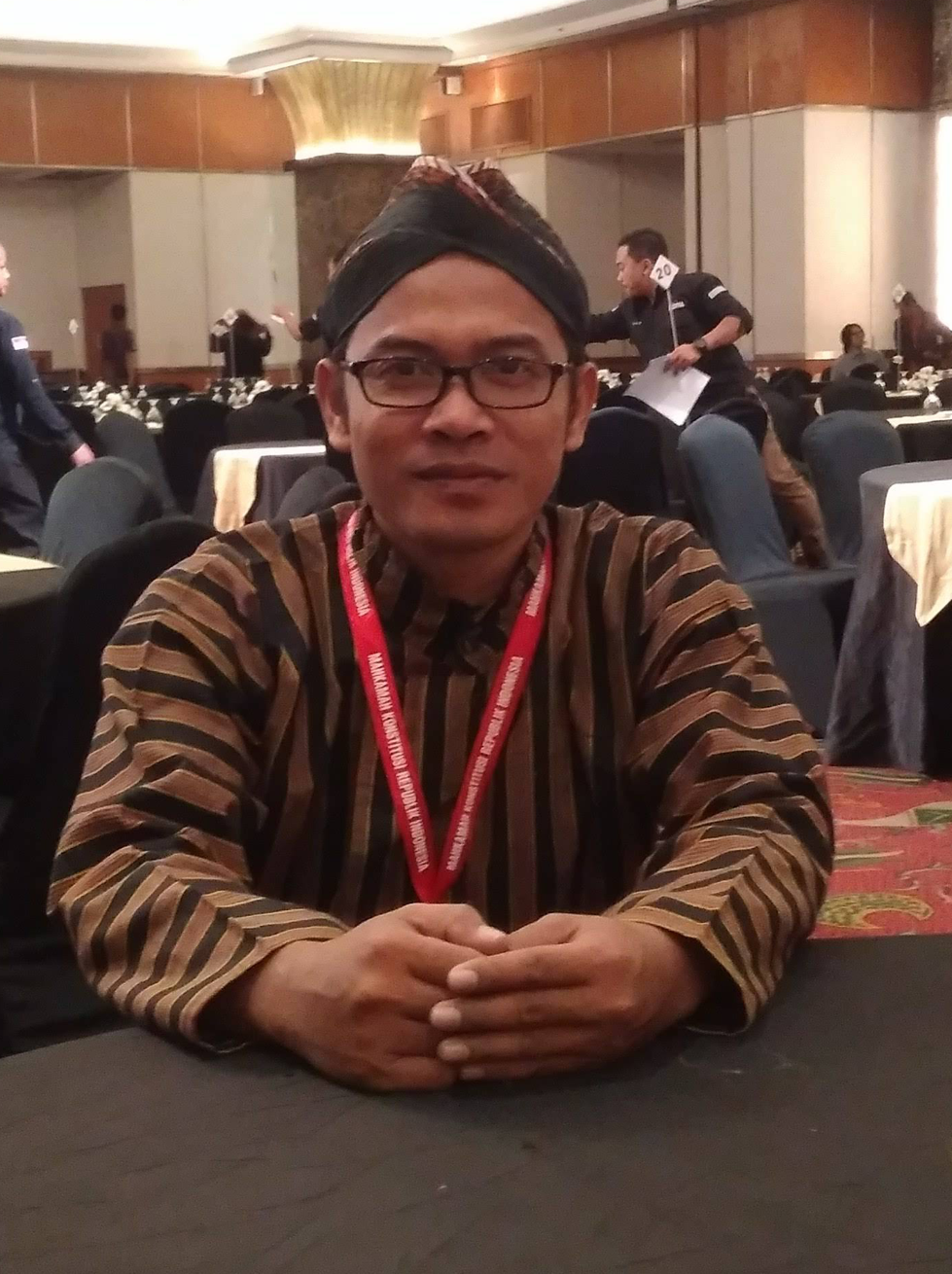
Sunarwan
CCRL Alumni Batch 5
Guru MIN 2 Kota Madiun, Jawa Timur
0 Comments