Written by Anas
Education is the soul of every nation. Its existence is absolute for maintaining the integrity, progress, and development of a country. As Musthofa al-Ghulayani stated in Idhah an-Nasyi’in, education is an institution capable of transforming students into individuals who can do good, love every action, and provide benefits to the nation. Educational institutions, and education in general, should be able to give their best to students.
With its wealth of natural resources, tribes, races, cultures, traditions, and religions, Indonesia should be able to provide a strong foundation for its pluralistic condition. The world of education has a great responsibility to educate, develop, and maximize the potential of students. However, another equally important task is to instill and foster literacy and tolerance across cultures and religions. The existence of religion and culture in Indonesia is inseparable from the long history of the Republic of Indonesia (NKRI).
The general public has a very low interest in and awareness of literacy. But for students, teachers, and anyone connected to education, as regulated by Law No. 20 of 2003 on the National Education System, this situation must be improved for the development and quality of education.
Of course, this cannot be achieved in a short time; it requires continuous planning, programming, and evaluation. Madrasahs, schools, campuses, and other educational institutions have a great responsibility for teaching and habituating Cross-Cultural Religious Literacy (CCRL), and therefore, they need the courage to change and grow within the nation’s diversity.
Literacy was the first invitation in Islam, given in the first revelation delivered by the Angel Gabriel to the Prophet Muhammad in Surah Al-‘Alaq, verses 1-5. This phenomenon did not happen by chance. Historically, pre-Islamic Arab society was adept at creating proverbs, poems, and Arabic poetry. Thus, the Quran was revealed to spread the teachings of Islam in accordance with the state of society at the time.
In his Tafsir Al-Misbah, Quraish Shihab explains how to realize the command of these verses. First, there must be a text in the form of a journal, book, or research findings to serve as the object of reading. Reading itself has a variety of meanings, from conveying, analyzing, perusing, delving deep, researching, and knowing specific characteristics, among many others. CCRL plays an important role as a platform for guiding, teaching, and developing diversity literacy.
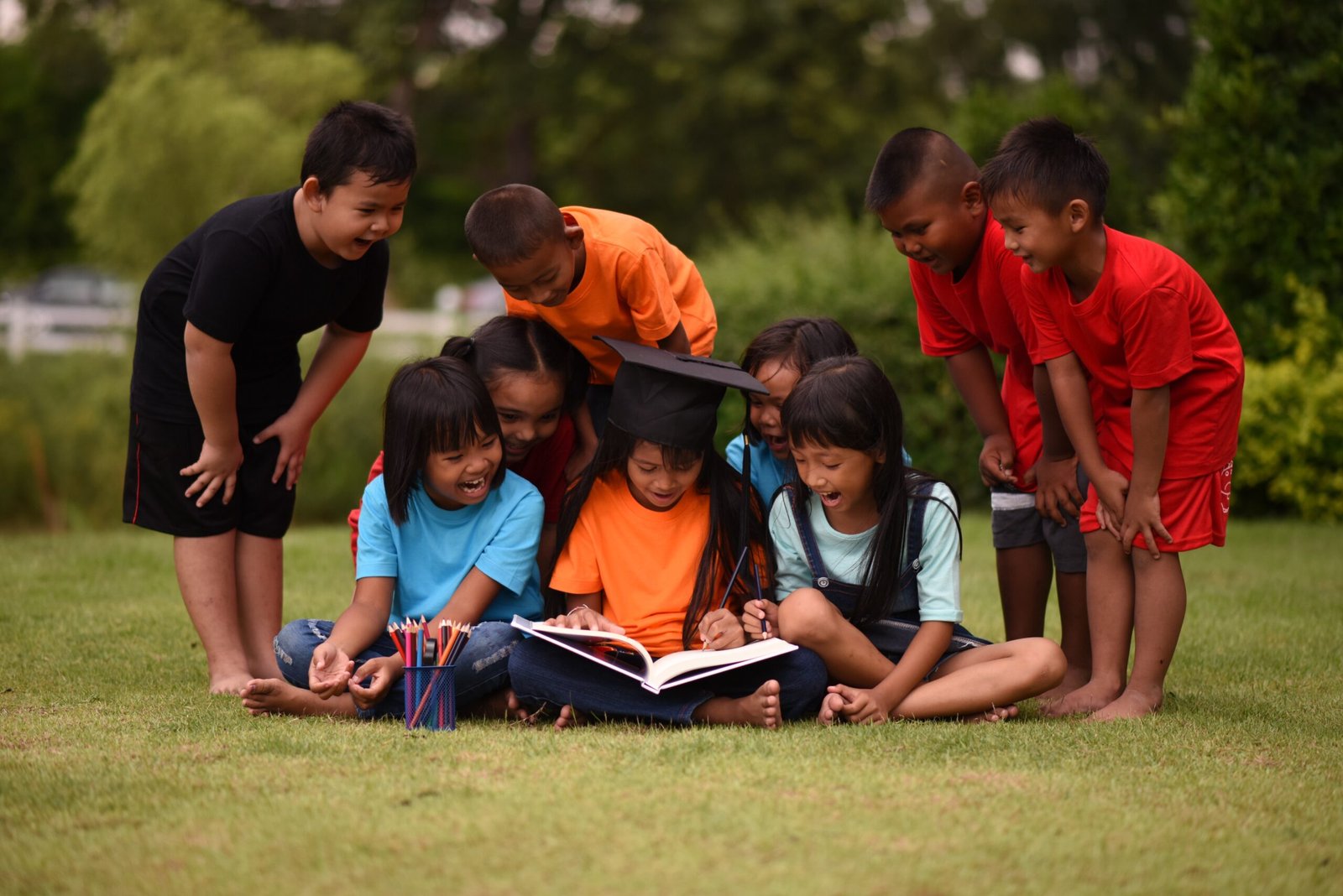
This event should serve as an example for us to realize the importance of reading and writing. An awareness of reading and writing is more effective and efficient if it begins during school years, as this is the age when starting and habituating an activity is easily remembered and understood. Education, with its institutions, has a heavy task given the vastness of the country.
Educational institutions are the perfect environment to make literacy a habit, starting with the educators themselves, followed by providing adequate facilities. Starting with ourselves and then reaching out to others while also improving our own human resources is a duty for educational institutions, with the hope of being able to attract and set an example for students, pupils, and university students.
Education and educational institutions are good environments and habits for developing literacy. There are six fundamental literacy skills: reading and writing, numeracy, science, digital, financial, and cultural and civic. These six components are the foundation of literacy, and therefore educational institutions require great effort and extra thought to implement them. The contribution of educational institutions is highly needed to achieve the desired literacy goals. To achieve this, all sectors of education must work together in synergy as one whole unit.
Indonesia’s diverse religions and cultures are a source of wealth, but they can also be a “boomerang” that leads to differences, disputes, and even war. We can maintain the integrity of the nation with these two assets by using literacy in education. A sensitive attitude toward religion still often colors national life and even national political struggles. The same goes for culture, which often becomes a point of difference between cultures, creating barriers that often lead to a desire to win at all costs.
These attitudes should be avoided from an early age through various levels of education. The hope for the progress, security, and peace of a nation lies in its education and educational institutions. Similarly, CCRL will be difficult to achieve if it is only carried out by individuals without the presence of a community or institutional implementation. The urgency of education is an absolute necessity (wajib al-wujud) that must receive support from the government and educational policymakers.
The CCRL program is a starting point on the path to success in a pluralistic society and will certainly face great obstacles. Therefore, all sectors of society must play an active role in advancing and developing the program by supporting each other in their respective fields. Education is the hope of a nation in conquering the world and participating in international competition. The presence of education is an oasis for a country that is barren of tolerance, blind to literacy, blind to action, and can awaken an awareness of the importance of wisdom. We must never tire of doing good and providing benefits to our fellow human beings, to others, and to our beloved homeland.
The advancement of education will save a nation steered by the pluralism within it. Pluralism is a necessity that must be protected and a beauty that represents God. It is fitting that CCRL should continue to be implemented, to innovate, and to improve for the sake of progress, for the achievement of literacy awareness, and for cultural and religious diversity in such a pluralistic country. Keep your spirit strong and never give up for the unity of the Republic of Indonesia.
The CCRL program, as a starting point on the path to success in a pluralistic society, will certainly face major obstacles. Therefore, all sectors of society must play an active role in advancing and developing the program, supporting each other according to their respective fields.
Writer’s Profile
Anas
CCRL Alumni Batch 24
Teacher at Islamic Boarding School Al-Falah Harjowinangun Barat, Batang, Central Java
0 Comments