Oleh Renny Veronika M.
Indonesia is a pluralistic nation with a diverse range of cultures. This diversity can strengthen students’ nationalism because understanding that differences are not a weakness but a strength is crucial. Differences are a social reality that should naturally exist in a heterogeneous society. However, when linked to national problems like SARA issues (issues related to ethnicity, religion, race, and inter-group relations) and a lack of nationalism, it is highly appropriate to provide students with Cross-Cultural Religious Literacy (CCRL).
The pledge of “one homeland, one nation, and one language” needs to be revived in the current structure of Indonesian society, especially among students. CCRL encourages students to understand that diversity is a necessity. The variety of religions, beliefs, ethnicities, and cultures should not be rejected or forced, but rather met with respect, tolerance, and social empathy.
The Huma Betang Philosophy as a Model for Unity
A multicultural approach is essential for a diverse nation like Indonesia, as it fosters the recognition of equality in difference. Each religion and culture has its own way of life that must be understood within its specific social and cultural context.
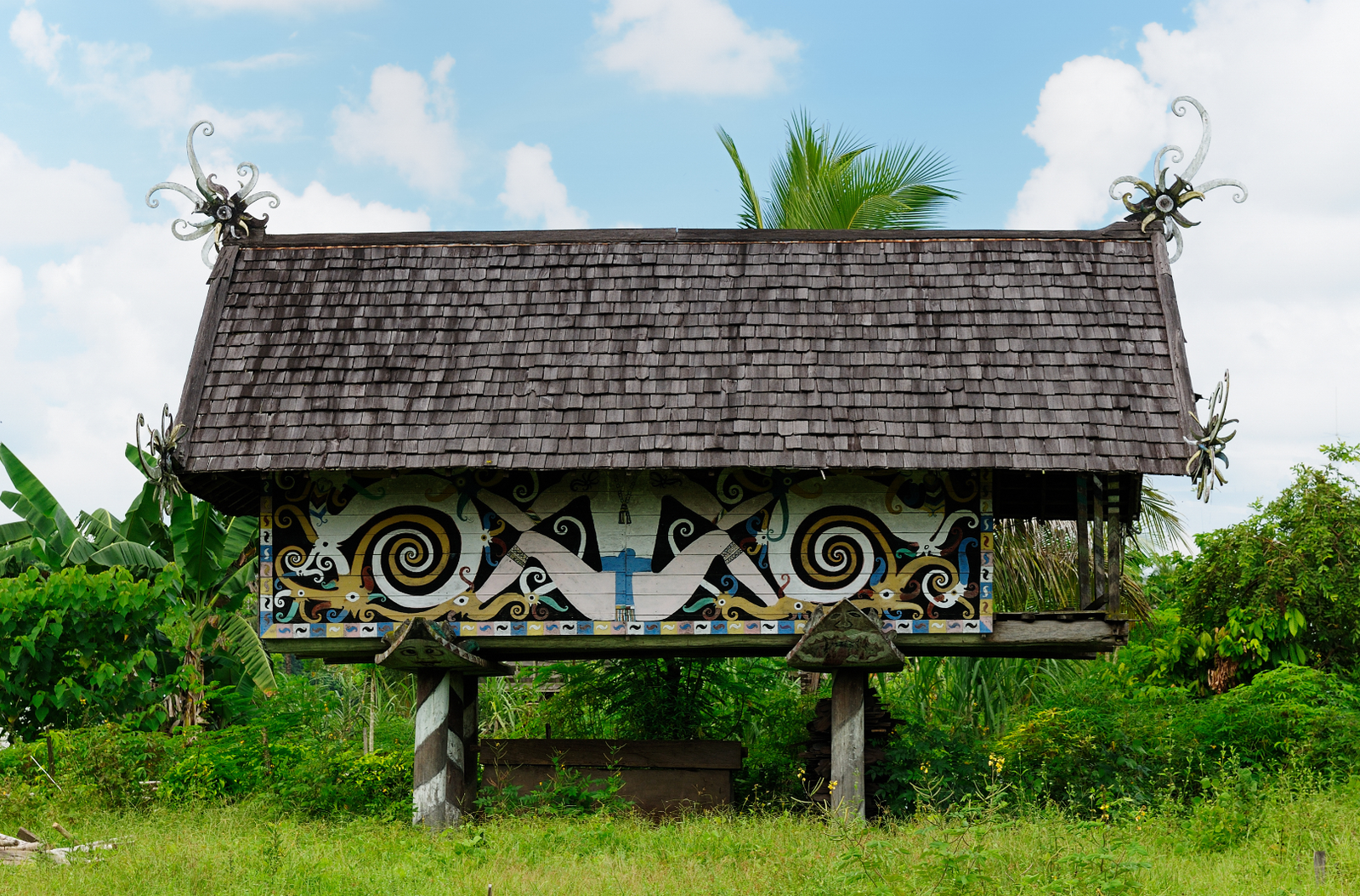
As an example of this principle, the Dayak community of Central Kalimantan lives in a Huma Betang, a traditional longhouse. This elevated, stilt-built house can accommodate around 100 people. Inside, there are rooms for living and a kitchen. The front area is for receiving guests or for meetings, and the house typically has only one door and one set of stairs.
The Dayak people of Central Kalimantan have a unique culture that holds values of unity represented by their traditional Huma Betang dwelling. This icon of the Dayak community has stood and endured for hundreds of years. The Huma Betang is built with strong materials, and its residents always maintain and preserve it as a cultural icon.
The Huma Betang can be seen as a macro-development concept that integrates various elements to support progress. The concept is symbolized by a large house that serves as a home for people of diverse religions and cultures. These people live together in a single house, with numerous rooms, as a manifestation of togetherness, led by a tribal chief called a Bakas Lewu.
The Huma Betang embodies a concept of multiculturalism because its residents come from various religions and beliefs. This concept also aligns with Indonesia’s ideology, which recognizes and honors differences in the equality of individuals and cultures. The Huma Betang reflects the mosaic of Indonesia, which includes various cultures within a smaller scope and the realization of a society on a larger scale.
Applying Wisdom to Modern Challenges
Based on this understanding, it’s clear that the existence of a multicultural society in Indonesia is in line with the ideology of Bhinneka Tunggal Ika (Unity in Diversity). The reality is that Indonesia’s diversity is not just in ethnicity, religion, and race, but also includes the evolution of cultures, from the simple to the highly complex. Indonesia, as a pluralistic nation, can sometimes still experience division due to political, religious, or social issues. The interests of certain groups attempt to suppress others, which creates conflict.
Prolonged conflict can threaten Indonesia’s integrity as a nation. The cause is often a configuration of social divisions that tend to lead to subjective conflict. The translation of objective conflict into a subjective domain is common in Indonesian society. This social division makes it susceptible to conflict, with cultural boundaries created by social segregation. In reality, if multiculturalism could be perfectly implemented, it would de-escalate tensions and foster a sense of acceptance and tolerance among individuals. Ultimately, the spirit of diversity would remain ingrained in the social fabric of Indonesian society.
The local wisdom of the Dayak community is evident in a highly respected philosophy called “Belom Bahadat,” which means living with manners. It represents a way of life that upholds honesty, equality, togetherness, tolerance, and obedience to the law (state, customary, and natural law). When people are able to live according to “Belom Bahadat,” it is actualized in the form of “Belom Penyang Hinje Simpei,” which is to live side by side, in harmony and peace for the common good.
A pluralistic condition also exists in the Dayak community of the Huma Betang, where religious diversity is not an obstacle to harmony among residents. An equally important philosophy is the minimization of social friction through deliberation (musyawarah). Leadership is central to the social structure of the Dayak community. Leaders are respected as they are representatives of the people. Decision-making during a problem is guided by a pattern of behavior that relies on deliberation to reach a consensus (mufakat). Respecting opinions, listening to the other side of an issue, and having a wise leader are all representations of diversity.
In addition to the curative and repressive measures taken during a problem, the residents of Huma Betang also have preventive actions. An example is teaching children from a young age to live with good manners and be civilized. This learning will indirectly become a guide for a child’s life into adulthood. The noble qualities instilled from a young age will become the adornment of a harmonious and peaceful life. The existence of these philosophies should be applied in modern society. Conflicts over religion, ethnicity, and race can be easily resolved if Indonesian society has the intention to reflect on local wisdom. The willingness to know, understand, and learn to live together happily in harmony, tolerance, and collaboration will foster a sense of nationalism in a person because they have come to understand the noble values of a multicultural society.
The Indonesian nation is composed of a pluralistic society with various cultures. Pluralism can enhance students’ nationalism because understanding that differences are not a weakness, but rather a strength that needs to be instilled.
Writer’s Profile
0 Comments