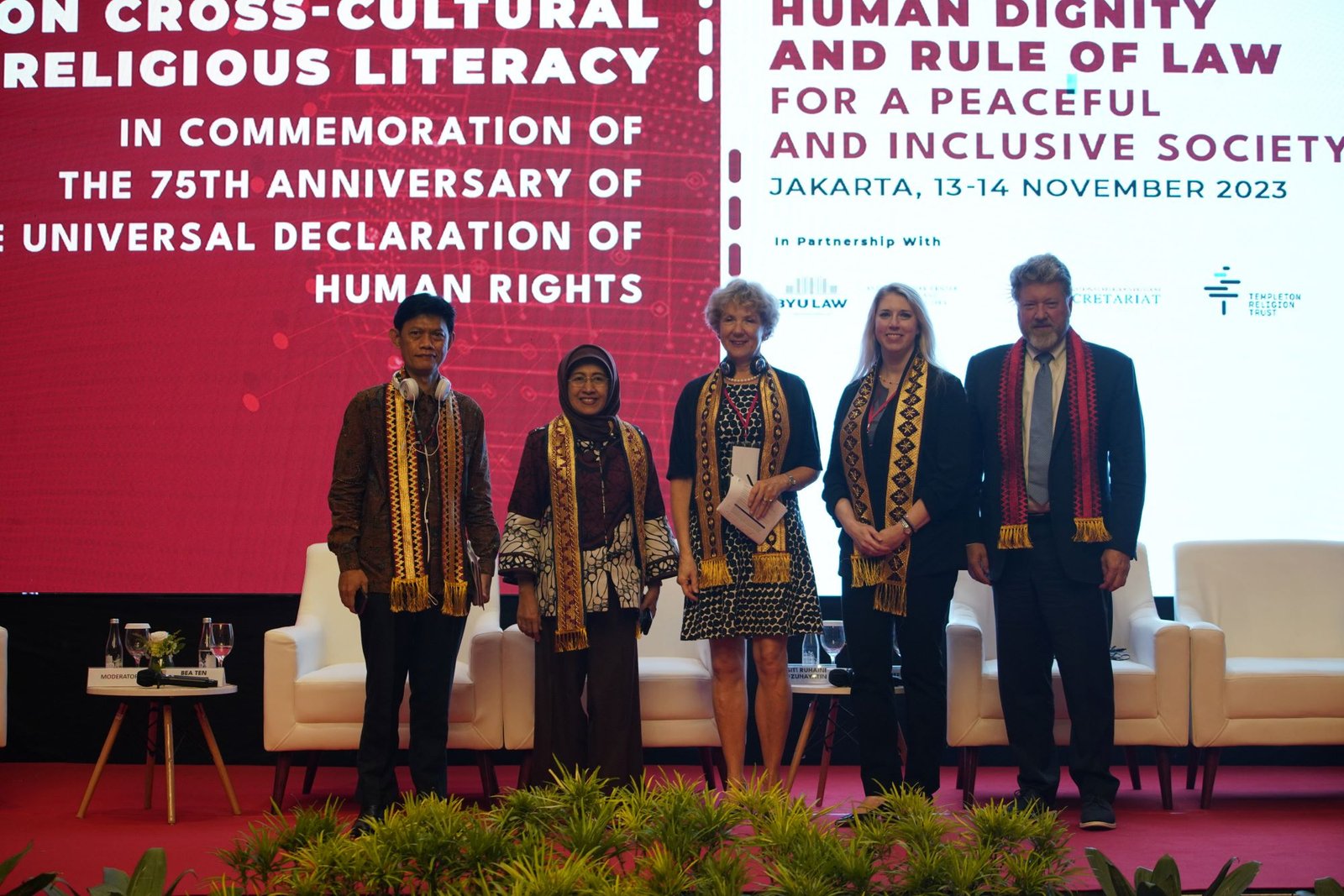
Executive Director of Maarif Institute Abd. Rohim Ghazali (moderator), Senior Advisor to the Executive Office of the President (KSP) Siti Ruhaini Dzuhayatin, Special Envoy for Freedom of Religion or Belief, Ministry of Foreign Affairs of the Kingdom of the Netherlands, Bea ten Tusscher, Senior Advisor for East Asia Pacific and South Asia at the Office of International Religious Freedom, U.S. Department of State, Tina Mufford, as well as Founder of the International Religious Freedom Secretariat, Greg Mitchell.
Jakarta, LKLB News – The presence of the government is highly necessary to realize equality for all citizens regardless of religion and belief. The government can involve various interfaith and intercultural institutions so that a peaceful, inclusive, and collaborative multi-faith society may be created.
Senior Advisor for East Asia Pacific and South Asia at the Office of International Religious Freedom, U.S. Department of State, Tina Mufford, in Panel Session 3 of the International Cross-Cultural Religious Literacy Conference at Kempinski Hotel, Jakarta, Monday (13/11/2023), said that issues of peace, inclusion, and human rights (HR) are very relevant to be discussed in the current situation, where the world is in a complex condition due to the increasing disinformation and hate rhetoric both online and offline.
“This means that we cannot have a discussion about justice and inclusion without supporting rights both as citizens and non-citizens. That is why it is the government’s responsibility to be present to protect everyone within its territorial boundaries,” said Tina Mufford in the session titled “The Importance of Equal Citizenship for an Inclusive and Collaborative Multi-Faith.”
According to Tina, there are many ways to increase inclusion and equality for human beings. In the United States (U.S.) itself, there are similarities with Indonesia. The U.S. is also strengthened by diversity. If Indonesia has the motto Bhinneka Tunggal Ika (Unity in Diversity), then the U.S. also has the motto E Pluribus Unum, meaning unity in diversity.
With this motto, the U.S. established the Office of Diversity and Inclusion with the goal of creating a more inclusive workforce, which strengthens U.S. foreign policy based on three pillars: internationalism, transparency, and accountability.
“This can ensure the recruitment and retention of a diverse workforce, combat discrimination, and serve as a role model for core values based on the principles of diversity, inclusion, and accessibility,” Tina continued.
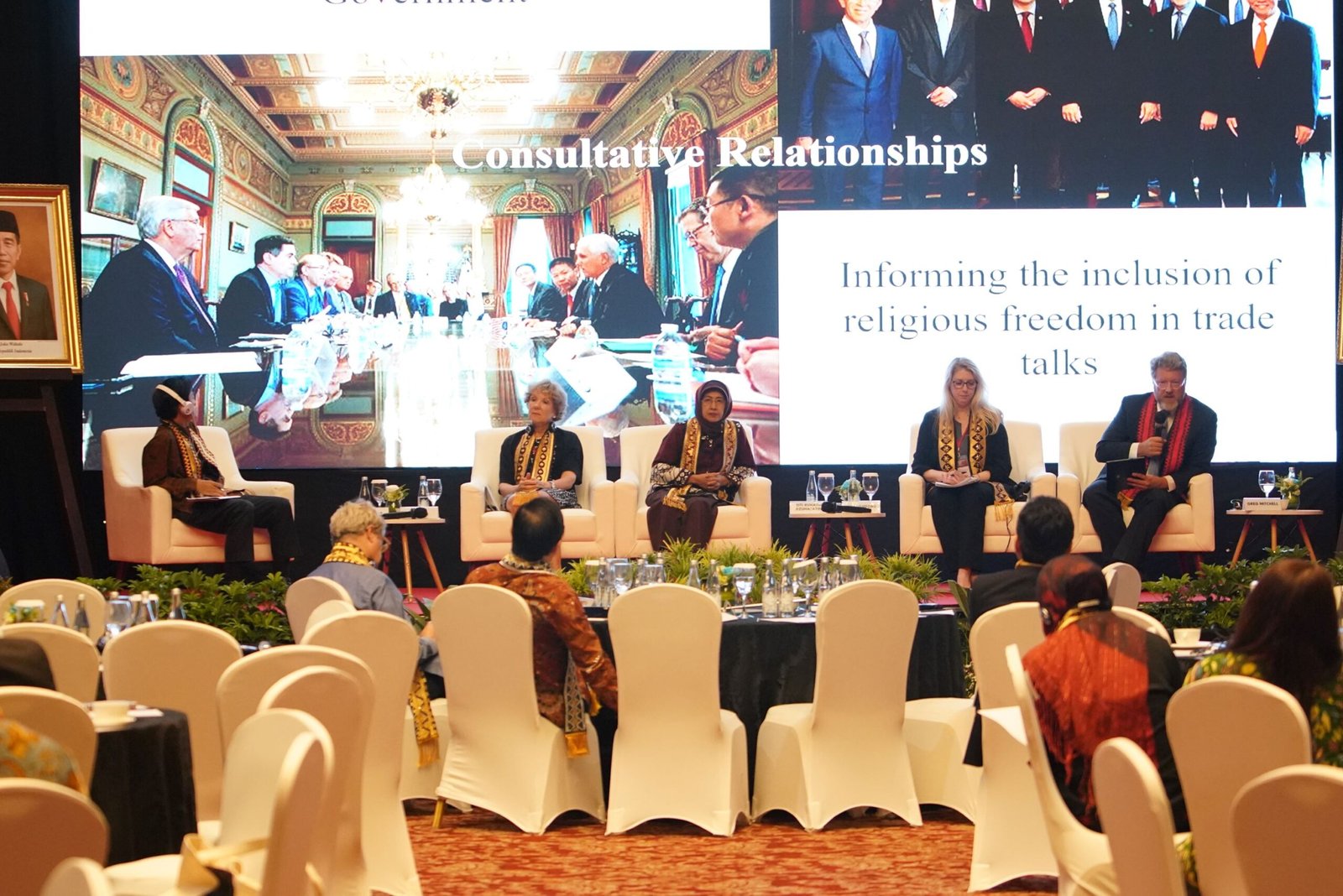
Presentations of the speakers in Panel 3 of the International LKLB Conference.
In addition, the U.S. Government also established the Interagency Policy Committee on Cross-Cultural and Interethnic Issues in December 2022. The Committee was created to address issues of discrimination and xenophobia. The Committee also works to develop a national strategy to combat antisemitism and Islamophobia.
“Working with community leaders, legislators, and other members of society, the Government established and affirmed that there is no place for hate for anyone within U.S. territory,” said Tina.
Tina added the importance of combating hate and fostering interfaith tolerance. This means that although we may not believe in or accept someone’s faith, we can still fully respect their right to live according to their beliefs.
“I want to emphasize once again how hatred becomes an obstacle to inclusion. Acts of violence based on hatred will not promote peace or uphold the rights of one group. We are responsible for combating hatred in all its forms, then promoting equality and inclusion for all,” said Tina.
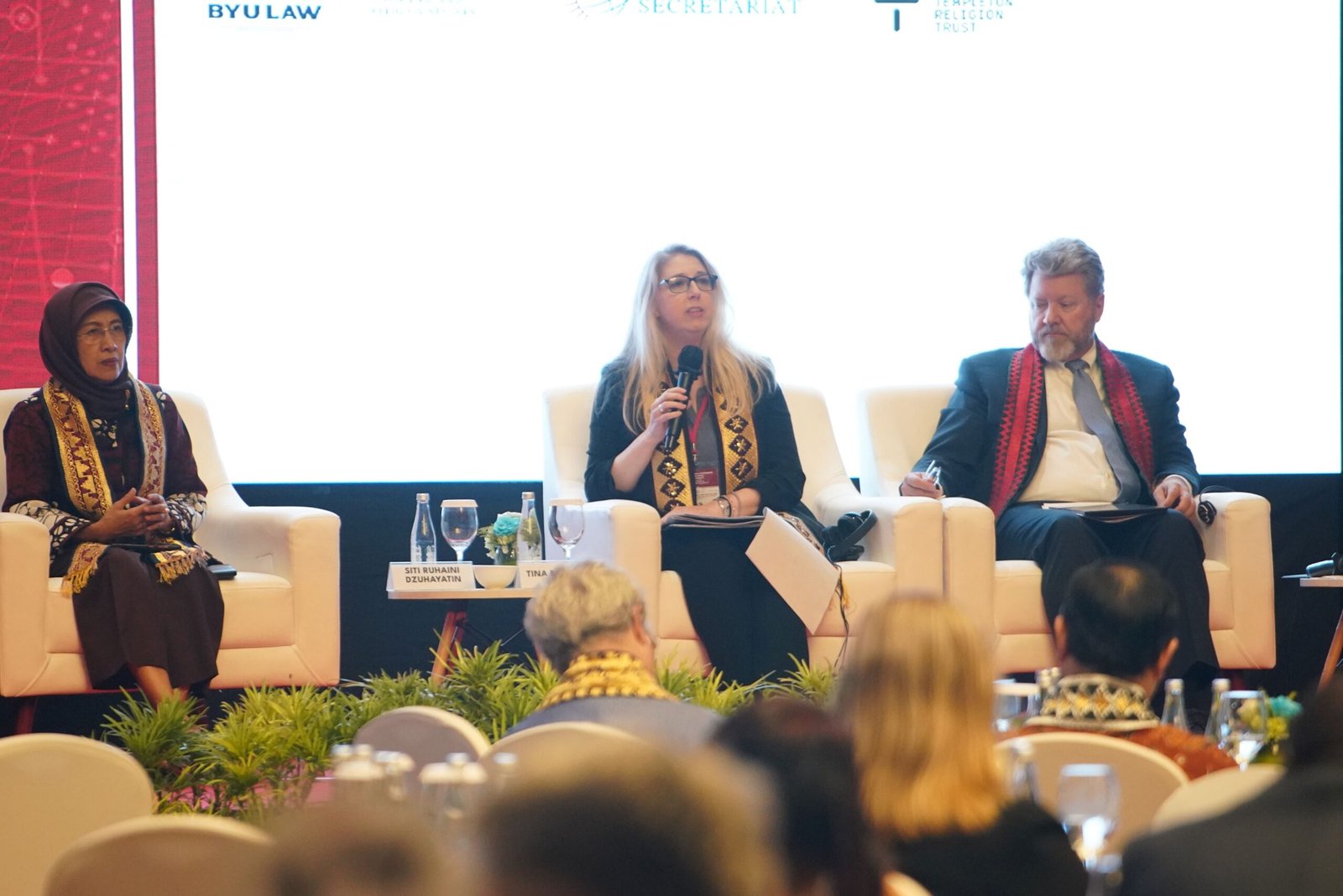
Tina Mufford shared experiences of government presence in religious freedom issues in the United States.
IRF Roundtable
Founder and Chair of the International Religious Freedom Secretariat (IRF Secretariat), Greg Mitchell, said that IRF Roundtable activities would not occur without government support. In this roundtable, interfaith leaders discuss, religious communities meet regularly to share stories and the challenges they face. After recognizing various problems, they then try to unite and act as an equal and inclusive society to solve these problems.
“We also involve the government in this effort from various interfaith communities and also government elements. We work together constructively. This is interfaith advocacy. We also work with the government to improve the quality of public policy and address various social issues,” explained Greg Mitchell.
In line with this, Special Envoy for Freedom of Religion or Belief, Ministry of Foreign Affairs of the Kingdom of the Netherlands, Bea ten Tusscher, said that freedom to express thought, conscience, and religion must be free from fear and deprivation. However, the rule of law is still needed to create a peaceful and inclusive society where equal citizenship is treated fairly.
In the Netherlands itself, to promote equal citizenship, they are active in combating intolerance and discrimination. The Dutch Government actively works against racism and discrimination, and since 2021 it has had a national coordinator implementing programs to promote equality and inclusion. In addition, a national commission has been established to investigate acts of discrimination and racism.
“What we do in the European Union is also interesting. Recently a special envoy was appointed to combat anti-Muslim hatred. Although it has not yet received full support, I am trying to support it. So we need to continue encouraging tolerance and understanding to support integration and inclusion in combating hate speech,” said Bea.
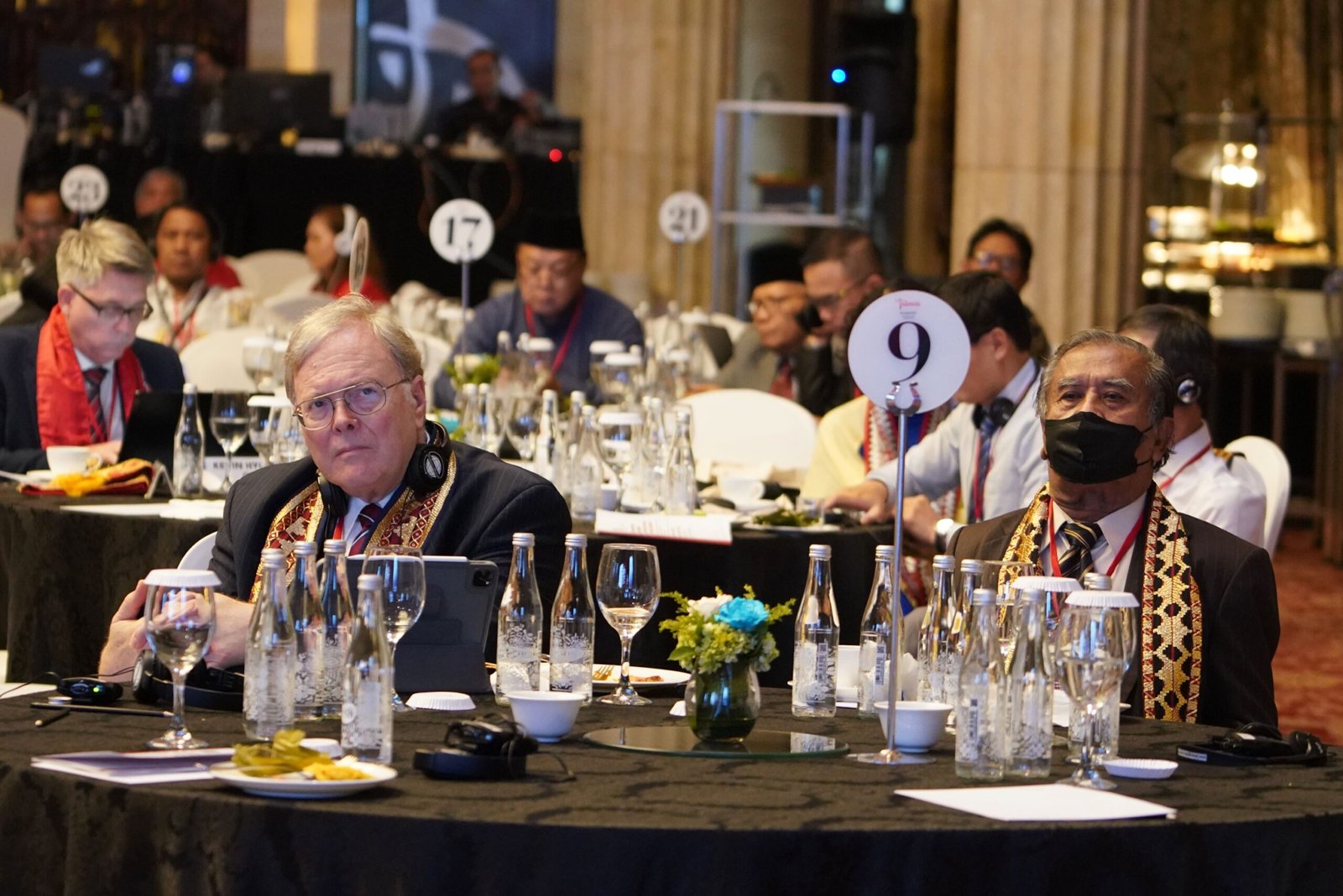
President of G20 Interfaith Forum Association, Cole Durham, Jr., and Senior Fellow of Leimena Institute as well as one of Indonesia’s first constitutional judges, Maruarar Siahaan, listening to the speakers’ presentations.
Senior Advisor to the Executive Office of the President (KSP), Siti Ruhaini Dzuhayatin, emphasized that equal citizenship is closely related to its formation process. While in many countries, the nation emerged after the state, Indonesia took a different path, namely that the nation already existed before the state.
“In 1928, a nation called Indonesia had already been declared in Indonesia. This was initiated by many large ethnic groups in Indonesia,” said Ruhaini.
However, in its development, the complexity of problems as a nation has increasingly risen due to divisions. Indonesia faces the challenge of having to work hard to unite all the different parts to become solid or united.
“Therefore, religious and cultural moderation is mainstreamed by the government together with civil society. One of the mechanisms, one methodology used by Leimena Institute, in terms of cross-cultural religious literacy, is in order to promote and uphold religious moderation,” said Ruhaini.