
Former United States (US) Ambassador-at-Large for International Religious Freedom, Rashad Hussein, in an International Webinar organized by the Ministry of Religious Affairs of the Republic of Indonesia, Leimena Institute, Voice of Istiqlal, and the Nasaruddin Umar Office, Tuesday, June 17, 2025.
Jakarta, LKLB News – As the world continues to be shaken by unending conflicts, education must be continually voiced as an effort to plant the seeds of peace. Former United States (US) Ambassador-at-Large for International Religious Freedom, Rashad Hussein, appreciated the work of Leimena Institute through the Cross-Cultural Religious Literacy (CCRL) program, which he considered capable of promoting peace through the role of teachers and educators.
“If we have good education systems around the world, that will help solve many problems, even before those problems emerge to the surface,” said Hussein in the International Webinar commemorating the International Day for Countering Hate Speech with the theme “Shaping Words, Spreading Love: Promoting Interfaith Collaboration in Countering Hate Speech,” Tuesday, June 17, 2025.
Hussein emphasized that criminalization approaches toward hate speech often backfire because they draw greater attention to the perpetrators and their hateful content. Instead, the US promotes approaches that target the root causes through improving education and media literacy, while also demanding legal accountability for physical violence against the targets of hate speech.
Hussein appreciated the initiatives of Leimena Institute in implementing the Cross-Cultural Religious Literacy (CCRL) program, including through the CCRL International Webinar Series held in collaboration with the Ministry of Religious Affairs of the Republic of Indonesia, Voice of Istiqlal, and the Nasaruddin Umar Office.
“You are truly planting the seeds of peace,” he said.
Hussein reminded that seeds of peace will only grow if planted in spaces of open and inclusive dialogue. In many countries, the seeds of peace have failed to grow because approaches toward hate speech were instead repressive.
“This is in line with the US national strategy for addressing Islamophobia, which focuses on education, strengthening anti-discrimination laws, protecting public safety including places of worship, and empowering the voices of minority groups,” said Hussein, the first Muslim to have ever served as US Ambassador-at-Large for International Religious Freedom.
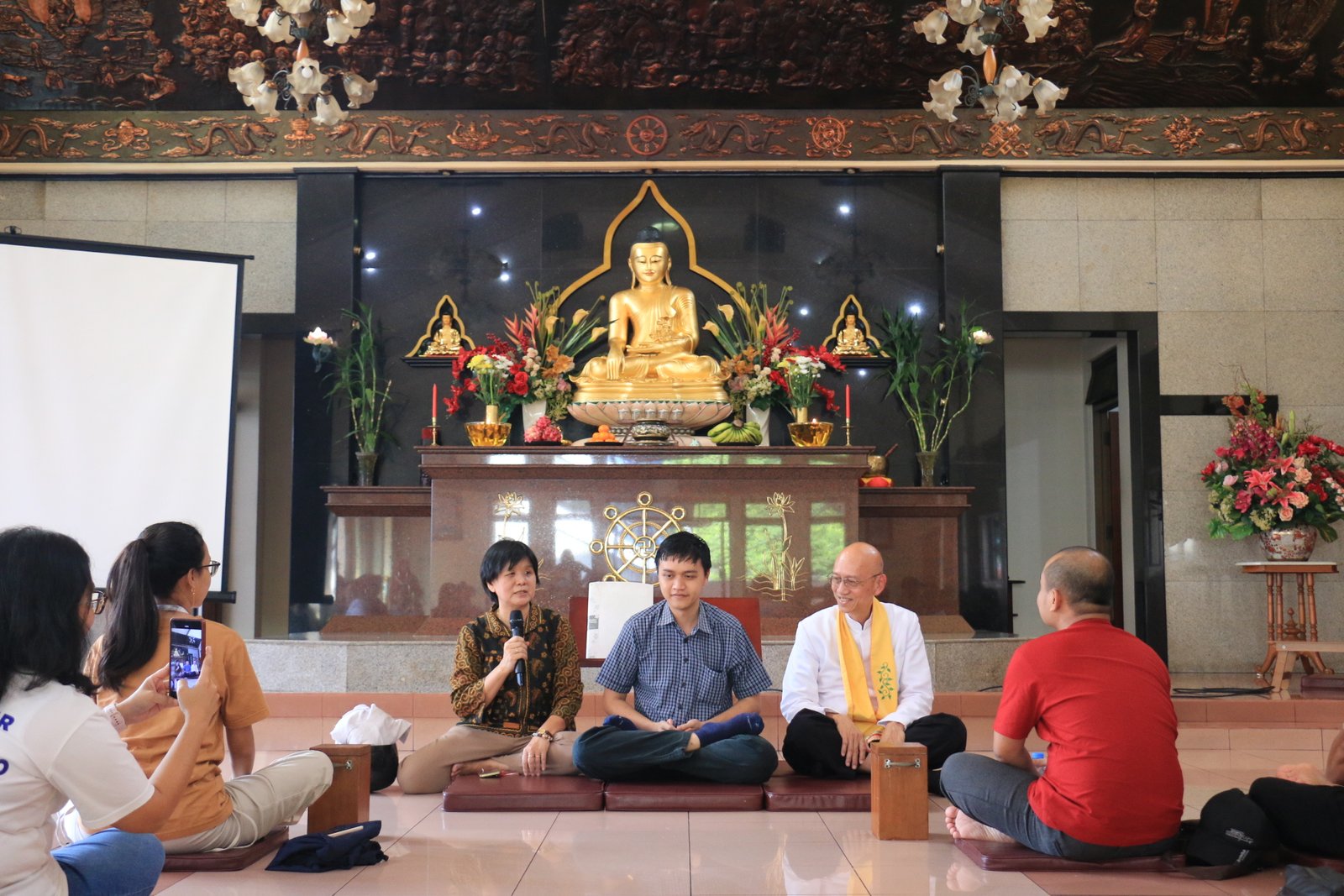
The Cross-Cultural Religious Literacy (CCRL) education program provides participants the opportunity to interact with adherents of different religions in order to strengthen empathy and collaboration, including through activities such as the Hybrid Upgrading Workshop.
Rashad Hussein also revealed that blasphemy laws are highly prone to misuse. “We have laws that actually harm minority communities and, in many cases, become a justification for discrimination and violence,” he said.
Therefore, he proposed pursuing alternative approaches to address the problem—none other than through education.
“Improve the quality of education, as you are doing at Leimena Institute. Increase media literacy and provide training. Ensure that governments act against actual violence, not just speech,” he continued.
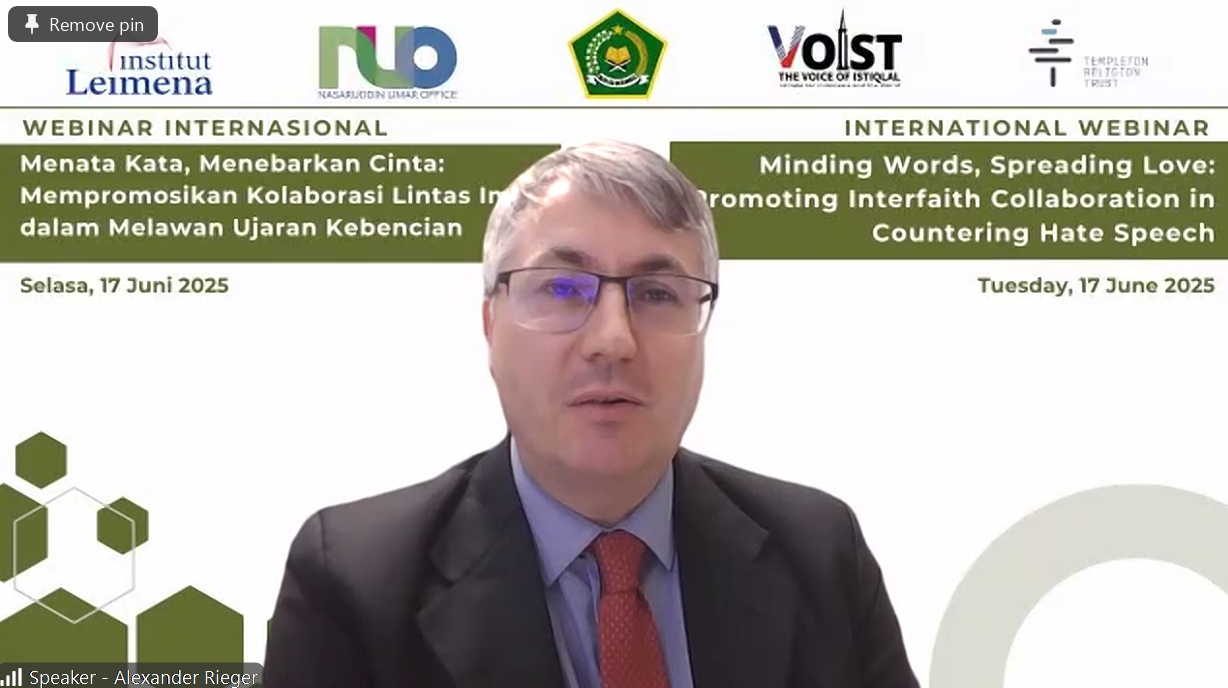
Head of the Task Force for Cultural and Religious Dialogue of the Ministry of Foreign Affairs of the Republic of Austria, Alexander Rieger, presented examples of peacebuilding efforts in Austria.
An Example from Austria
Meanwhile, Head of the Task Force for Cultural and Religious Dialogue of the Ministry of Foreign Affairs of the Republic of Austria, Alexander Rieger, stressed the importance of community-based movements outside government to create peace. According to him, religious communities are not passive spectators, but instead hold a unique position in cultivating ethical dialogue into concrete action.
Rieger enriched his presentation by sharing inspiring experiences from Austria. “In 2012, sixteen legally recognized religious communities in Austria together formed a joint platform. This platform actively issued joint statements and appeared publicly as a united voice of conscience,” he said.
Such platforms, Rieger noted, play an important role in turning ethical dialogue into real action to address various social challenges. Through the platform, religious communities can help shape a positive moral climate for the nation.
“They (religious communities) not only provide spiritual guidance, but also voice reconciliation, serve as spaces of healing, and offer a shared vision for living together in peace,” said Rieger.
At the same time, Rieger emphasized the importance of the role of teachers as agents of peace, who must therefore be equipped with a series of specialized education.
“Teachers need to be trained in religious education, interfaith literacy, and how to create classrooms grounded in empathy and mutual respect,” said Rieger.
He described teachers as cultural multipliers, not merely agents for transferring information. In other words, what teachers cultivate in the classroom will determine the future of society.