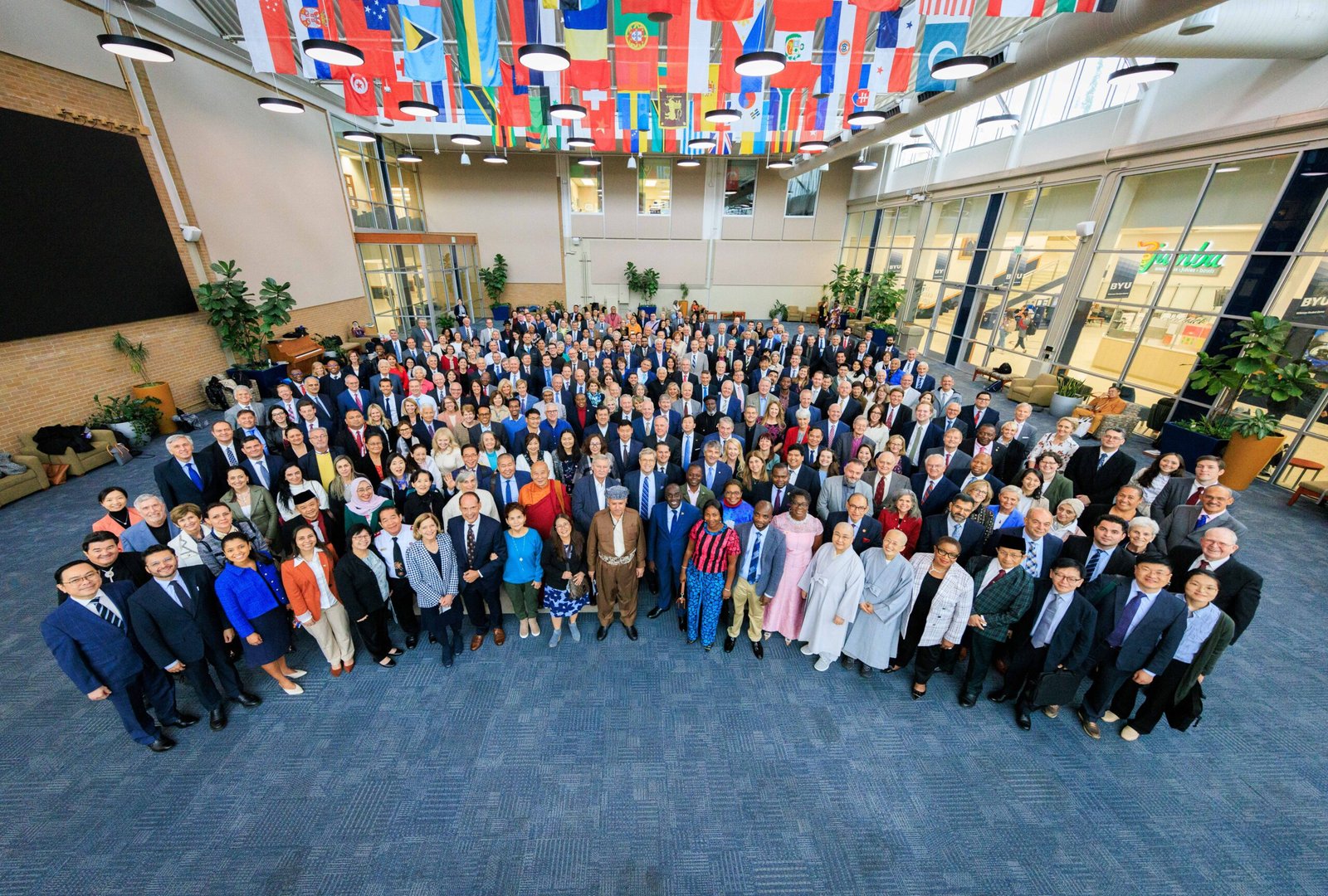
Participants of the 30th Annual International Law and Religion Symposium organized by the International Center for Law and Religion Studies, Brigham Young University (BYU) Law School in Provo, Utah, United States of America (USA), October 1–3, 2023.
Jakarta, LKLB News – Efforts to maintain interreligious harmony not only require dialogue; beyond that, humility is needed for real collaboration among followers of different religions. Harmony cannot be reduced to a mere choice; rather, it is a vital necessity that generally becomes a measure of success in a pluralistic society.
This was conveyed by Senior Fellow of the Leimena Institute, Prof. Alwi Shihab, at the 30th Annual International Law and Religion Symposium organized by the International Center for Law and Religion Studies, Brigham Young University (BYU) Law School in Provo, Utah, USA, on October 3, 2023. In the event, the Executive Director of the Leimena Institute, Matius Ho, was also present as one of the speakers along with several other Indonesian figures.
“I emphasize that to protect the ‘freedom of thought, conscience, and religion,’ we need to move from mere rhetoric to action. Beyond interfaith dialogue to interfaith collaboration,” said Alwi Shihab, who served as Special Envoy of the President of the Republic of Indonesia for the Middle East and the Organization of Islamic Cooperation in 2016–2019.
Alwi revealed that the growth of radicalism and intolerance in Indonesia is particularly caused by rigid and exclusive interpretations of the holy scriptures, closed off from the scriptures of other religions. Such hermeneutical approaches are supported and promoted by extremist and transnational religious groups.
According to Alwi, thanks to the stable national ideology of Pancasila, Indonesia has enjoyed years of a moderate society with a pluralistic reality. The Constitution of Indonesia guarantees freedom of religion and religious expression as well as worship, in line with Article 18 of the Universal Declaration of Human Rights.
“Indonesia and most East Asian countries do not have historical grievances and racial clashes that hinder dialogue and interaction between religious communities. This advantage greatly encourages the possibility of applying freedom of religion and freedom of expression,” said the interreligious relations scholar.
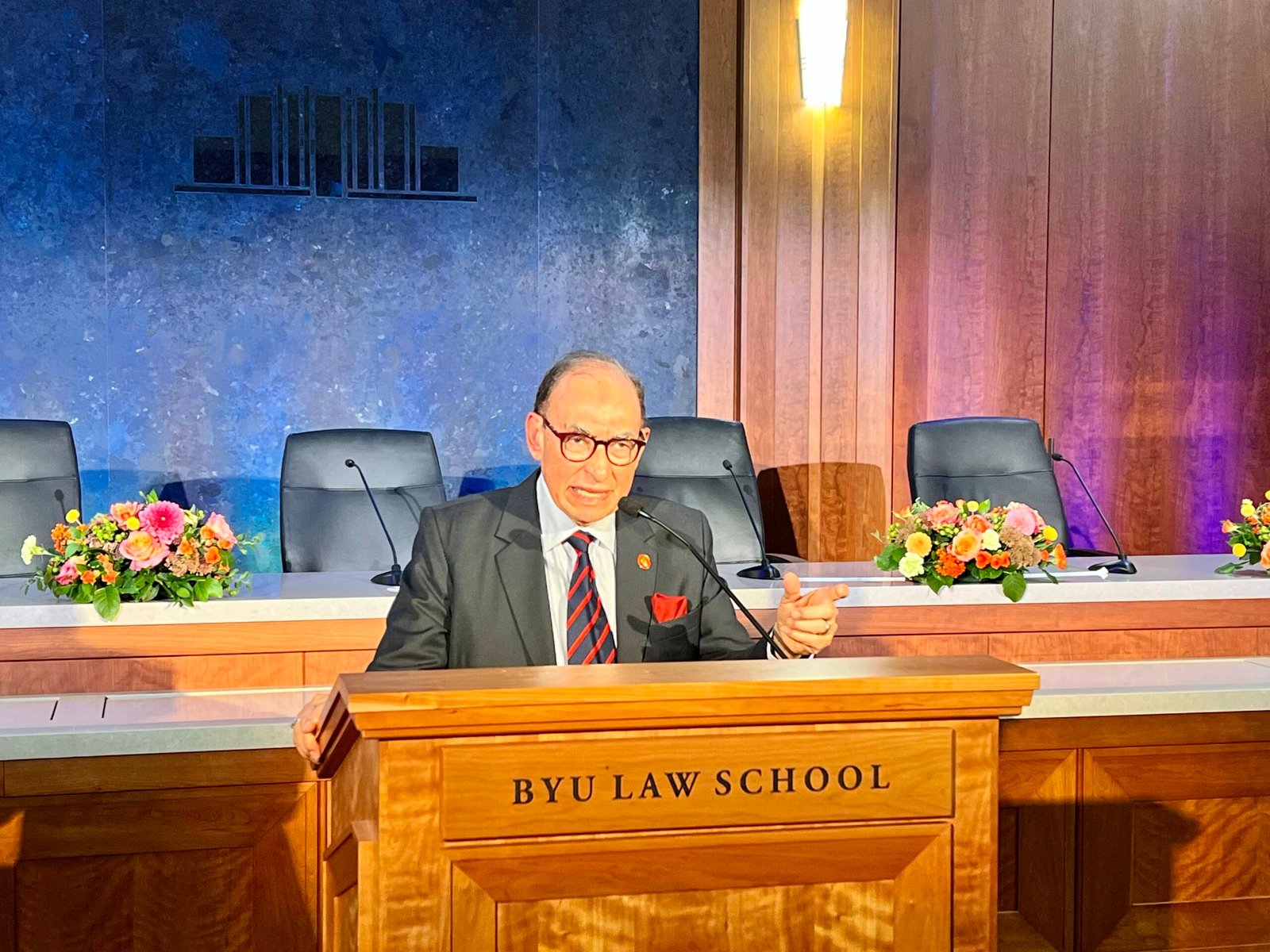
Senior Fellow of the Leimena Institute, Prof. Alwi Shihab.
Alwi added that based on a survey by the Center for the Study of Islam and Society (PPIM) of Syarif Hidayatullah State Islamic University, as many as 57% of Muslim teachers hold intolerant opinions toward other religions. This is very concerning because teachers have a strategic position and play an important role in shaping students’ values, perspectives, and behavior.
“This also has worrying implications for Indonesia, which is religiously diverse and has the world’s largest Muslim population,” Alwi said.
Departing from the importance of interfaith collaboration, in 2021, the Leimena Institute launched the Cross-Cultural Religious Literacy initiative as a teacher training program for madrasahs and schools aimed at developing teachers’ competencies in building peaceful interreligious relations and interfaith collaboration.
“This also has worrying implications for Indonesia, which is religiously diverse and has the world’s largest Muslim population,” Alwi said.
Departing from the importance of interfaith collaboration, in 2021, the Leimena Institute launched the Cross-Cultural Religious Literacy initiative as a teacher training program for madrasahs and schools aimed at developing teachers’ competencies in building peaceful interreligious relations and interfaith collaboration.
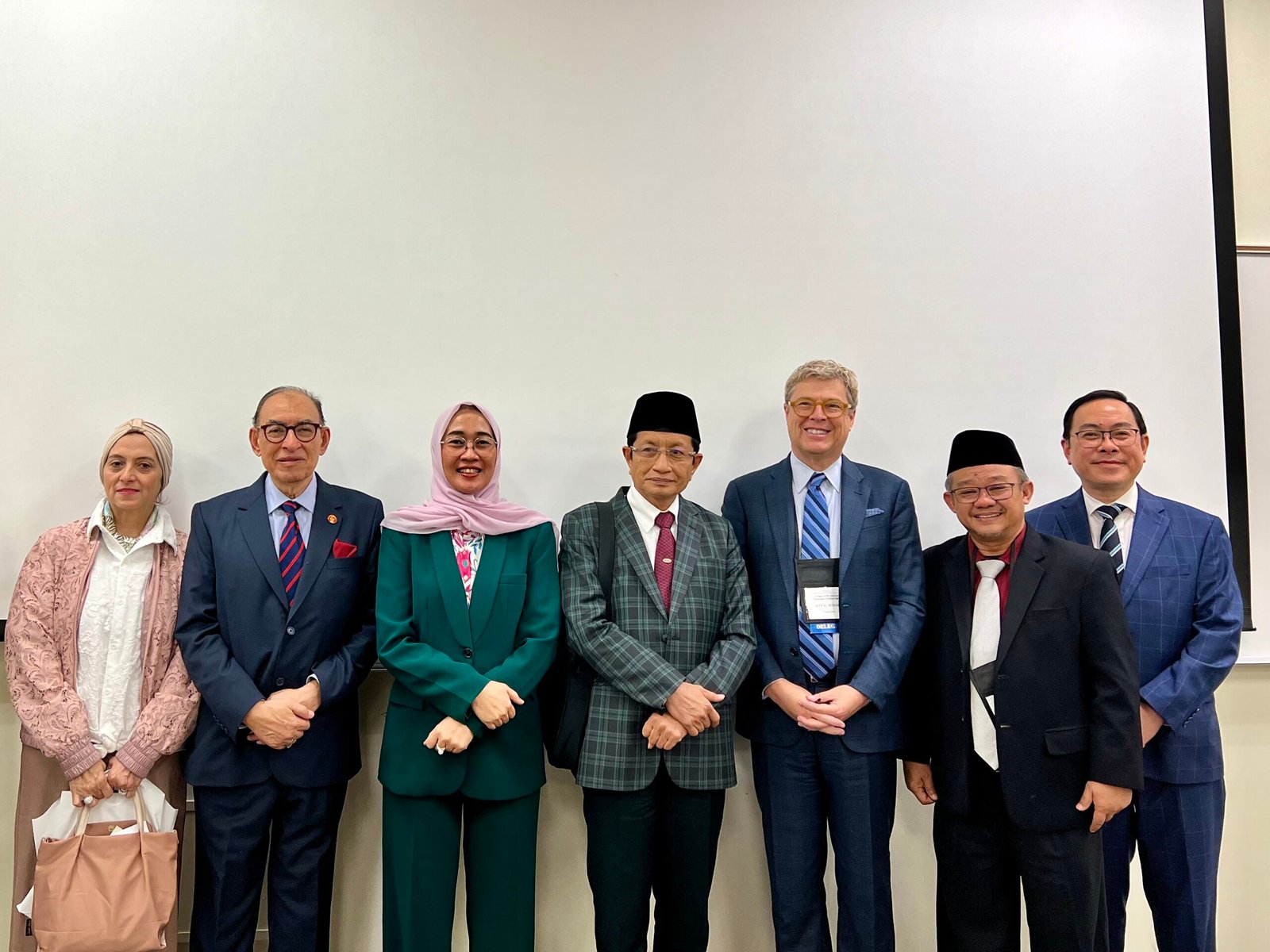
Symposium participants from Indonesia were Alwi Shihab, Member of the House of Representatives of the Republic of Indonesia Anggia Erma Rini, Grand Imam of Istiqlal Mosque Nasaruddin Umar, Dr. Brett Scharffs, Director of ICLRS BYU, Secretary General of Muhammadiyah Abdul Mu’ti, and Executive Director of the Leimena Institute Matius Ho.
The Urgency of Religious Literacy
According to him, scholars and experts in religious studies have long argued that the educational value of comparative religion studies can overcome religious intolerance. The urgency of recognizing religious literacy has increasingly been felt and began to take root since the September 2001 terrorism attacks in the USA.
“Working together with Islamic, Christian, and Jewish scholars, and others, facilitated by the Leimena Institute, a Christian organization, many of us from Indonesia present at this symposium such as Prof. Amin Abdullah, Prof. Abdul Mu’ti, Grand Imam Nasaruddin Umar, and Matius Ho, we worked together to design and implement the Cross-Cultural Religious Literacy program,” said Alwi.
Alwi explained that the Cross-Cultural Religious Literacy program, or CCRL, trains teachers to develop harmonious interactions, mutual respect, and positive collaboration across religions. The CCRL training started with Muslim and Christian teachers, who make up 97% of Indonesia’s population, with the goal of reaching and training teachers of other religions so that positive interreligious dialogue and collaboration may be created.
The CCRL training seeks to educate and enlighten teachers in three different competencies: personal, comparative, and collaborative. In the context of Indonesian society, Alwi continued, teachers are at the forefront of protecting their communities from the influence of religious intolerance and extremism. Unfortunately, we observe that the rise of radicalism in educational institutions is linked to certain models of interpretation, understanding, teaching, and schools of thought.
“This program lays the foundation and provides the necessary competencies toward an inclusive understanding within the framework of freedom of religion,” said Alwi.
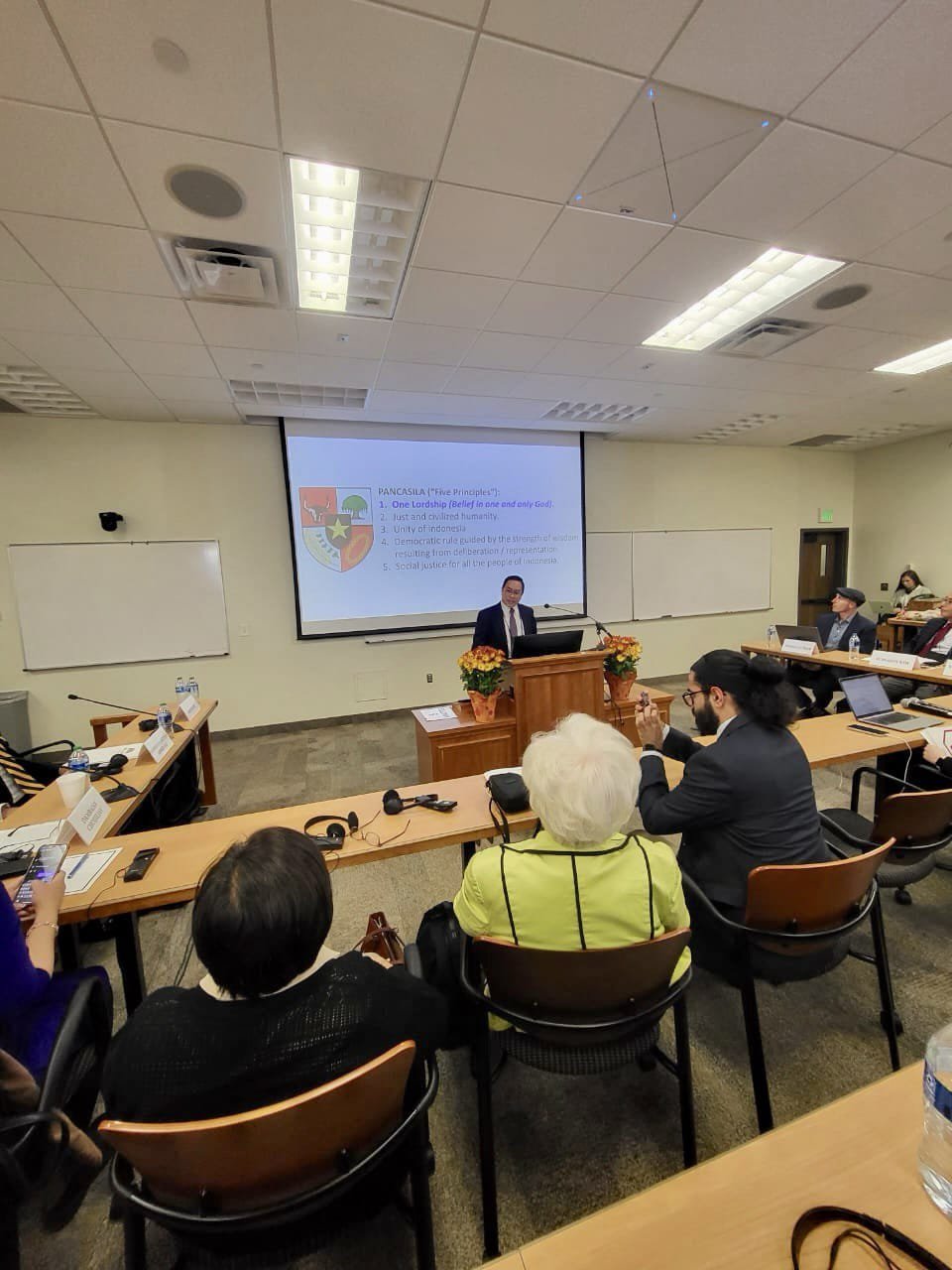
In line with that, Matius Ho, who spoke at the session “Asian Religious and Interreligious NGOs”, delivered Protecting the Right to Freedom of Thought, Conscience, and Religion: Cross-Cultural Religious Literacy in Indonesia.
“The CCRL program organized by the Leimena Institute together with dozens of interfaith partners is in line with three recommendations of the 2017–2018 national survey by PPIM UIN Syarif Hidayatullah Jakarta, namely the need for interfaith education and religious literacy, the introduction of other religions in Islamic religious education, and exposing teachers to positive experiences of diversity,” said Matius.
The annual symposium organized by Brigham Young University was attended by CCRL figures such as Alwi Shihab, Grand Imam of Istiqlal Mosque Nasaruddin Umar, and Secretary General of Muhammadiyah Abdul Mu’ti. Also present was Member of the House of Representatives of the Republic of Indonesia, Anggia Erma Rini.