
Written by Abdul Rochim
As religious-based educational institutions, madrasahs and pesantrens (Islamic boarding schools) have a very significant and important role in the development of society. However, their homogenous environment, where there is only one religion—Islam—presents a unique challenge when students must interact directly with the broader community outside of their own religious sphere.
The government of Indonesia officially recognizes six religions, in addition to indigenous beliefs. The six religions are Islam, Catholicism, Protestantism, Hinduism, Buddhism, and Confucianism. In almost every region in Indonesia, people follow different religions, not just in cities with their heterogeneous populations but also in rural areas. One example is Jrahi Village in Gunungwungkal District, Pati Regency, Central Java, which is known as a Pancasila Tourism Village. In a single family, there are members who adhere to Christianity, Islam, and Buddhism.
So, what about areas where the majority of the population is Muslim? Many madrasahs and pesantrens are established there. These institutions have a powerful role in the transformation of knowledge and culture. According to data from the Directorate of Diniyah and Pesantrens of the Indonesian Ministry of Religious Affairs in 2020/2021, there are 30,494 pesantrens spread throughout Indonesia. Meanwhile, the number of madrasahs in Indonesia is recorded at 83,548 across various educational levels. The large number of pesantrens and madrasahs in Indonesia has a significant influence on social life.
The Challenge of Homogeneity in a Pluralistic Society
The practice of instilling religious moderation is often seen as something foreign and is not introduced at all to students, given the homogenous sociological environment. According to the Great Dictionary of the Indonesian Language (KBBI), moderation is defined as not being excessive or deficient, and the reduction or avoidance of violence. This means moderation is a middle-ground attitude that does not clash with any group. Among Muslims, this is known by the term tawasuth, meaning the middle way. Therefore, we can interpret religious moderation as an attitude, behavior, and viewpoint in practicing religion that is not extreme, not excessive, and not coercive.
Students in madrasahs and pesantrens have the same obligations and rights as students in other educational institutions. They have the same responsibility and role to maintain peace and national unity without differentiating between backgrounds of ethnicity, race, or religion. Everyone is part of a single entity within the Unitary State of the Republic of Indonesia. They must respect and appreciate one another.
Some religious educational institutions have already incorporated elements of religious moderation into their curriculum. However, the implementation has not been fully maximized. This is because the community within the madrasah or pesantren shares the same religious background. The situation would certainly be different if we were to interact directly with a community with diverse religious backgrounds.
Students are taught how to be wasath (moderate) but also to hold firm to their convictions. The presence of Muslims in society should be a mercy to their surroundings, acting as a mediator and a guardian of peace. Allah SWT says in the Quran, Surah Al-Baqarah, verse 143:
وَ كَذٰلِكَ جَعَلْنٰكُمْ اُمَّةَ وَسَطًا لِّتَكُوْنُوْا شُهَدَآءَ عَلَى النَّاسِ وَ يَكُوْنَ الرَّسُوْلُ عَلَيْكُمْ شَهِيْدًا…
“And thus we have made you a middle community, that you may be witnesses over mankind and the Messenger may be a witness over you…”
Bridging the Gap: From Theory to Practice
So far, these teachings have remained largely theoretical, which will serve as a provision for students’ future lives, whether in the workplace, on campus, or in communities that may have a diverse population of different faiths.
The instilling of religious moderation would become more effective and tangible if these educational institutions were to include community programs that involve direct interaction with people from different religious backgrounds. For example, by organizing joint camps or student exchange programs, rather than just social services like fundraising for disaster relief and aid distribution. Through prolonged collaborative activities with people of different faiths, we will learn to control ourselves and to respect and appreciate other religions and their followers. What would become of this country if its leaders were intolerant, radical, or extremist? Conflict, oppression, and tyranny would surely occur anytime, anywhere.
To achieve this, synergy among government agencies is crucial. The Ministry of Education, Culture, Research, and Technology (Kemendikbud Ristek) together with the Ministry of Religious Affairs (Kemenag) must sit down and develop programs that can bridge religious moderation in madrasahs, pesantrens, and other educational institutions with different religious backgrounds. These two government bodies oversee educational institutions in Indonesia. Both Kemenag and Kemendikbud Ristek share a role and a responsibility for education and culture in Indonesia. By increasing Cross-Cultural Religious Literacy (CCRL) in educational institutions, including pesantrens, we can reduce attitudes of intolerance.
The development of moderate attitudes among students has become a non-negotiable imperative, as they are the future leaders of the nation who will fill roles and become the shapers of Indonesia and the world. As an example, a few years ago, several madrasahs and pesantrens in Central Java hosted volunteers from the foreign organization Dejavato to learn about Indonesian culture and national identity, specifically in pesantrens and madrasahs. One of these was the Tarbiyatul Banin Madrasah Foundation in Pekalongan Village, Winong District, Pati Regency. If this can be developed more broadly, there is no doubt that cultural and religious diversity will not be a barrier to peaceful coexistence.
CCRL is an approach to thinking, acting, and behaving that enables us to cooperate with people of different religions and beliefs (collaborative competence). It is based on an understanding of one’s own personal moral, spiritual, and intellectual framework (personal competence) and that of others who hold different religions and beliefs (comparative competence). Through the introduction of CCRL programs for madrasah teachers, pesantren teachers, and religious counselors, we hope to strengthen the peaceful coexistence and collaboration among religions in Indonesia.
Hopefully, with a correct understanding and application of religious moderation at all levels of society, the Indonesian nation—a “good land with a forgiving Lord” (baldatun thoyyibatun warobbun ghofur)—can become a reality. An Indonesia that safeguards world peace, as mandated by the 1945 Constitution, is not a mere illusion. Bhinneka Tunggal Ika is not just a slogan, but the unifying bond of the nation. Amen.
The instilling of religious moderation would be more effective and tangible if educational institutions were to include community programs that involve direct, real-world interaction with people from different religious backgrounds.
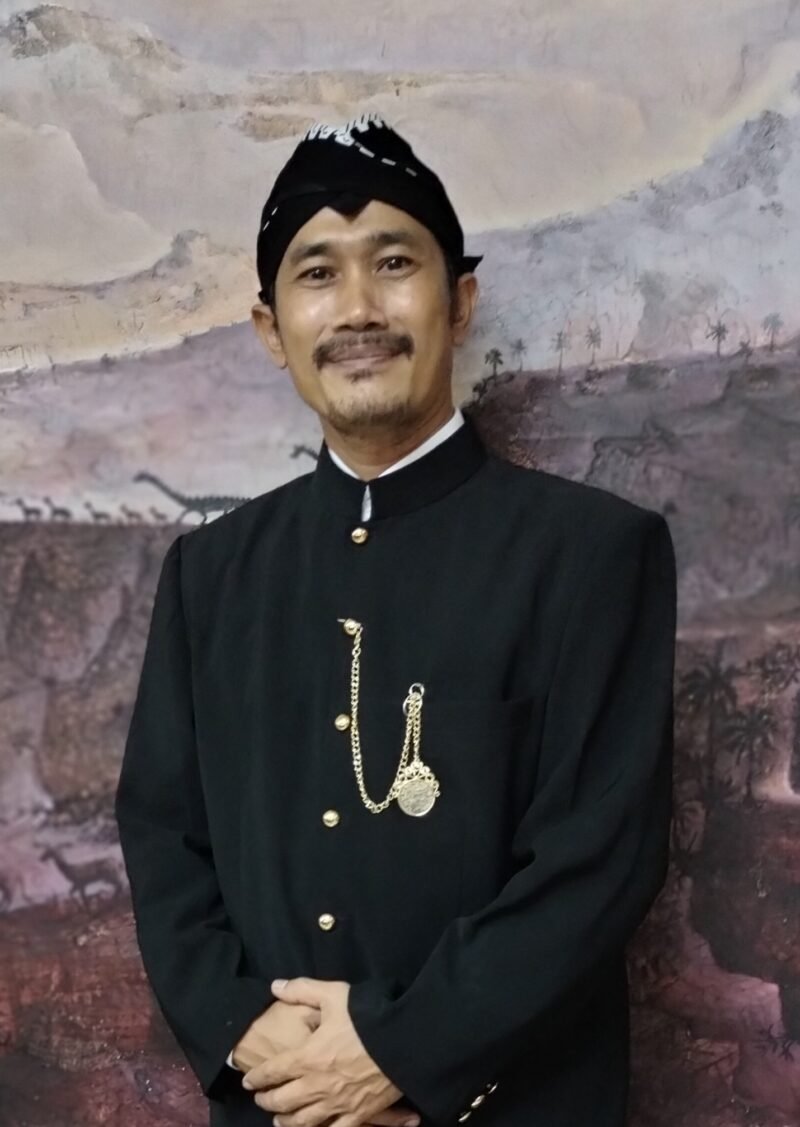
Writer’s Profile
0 Comments