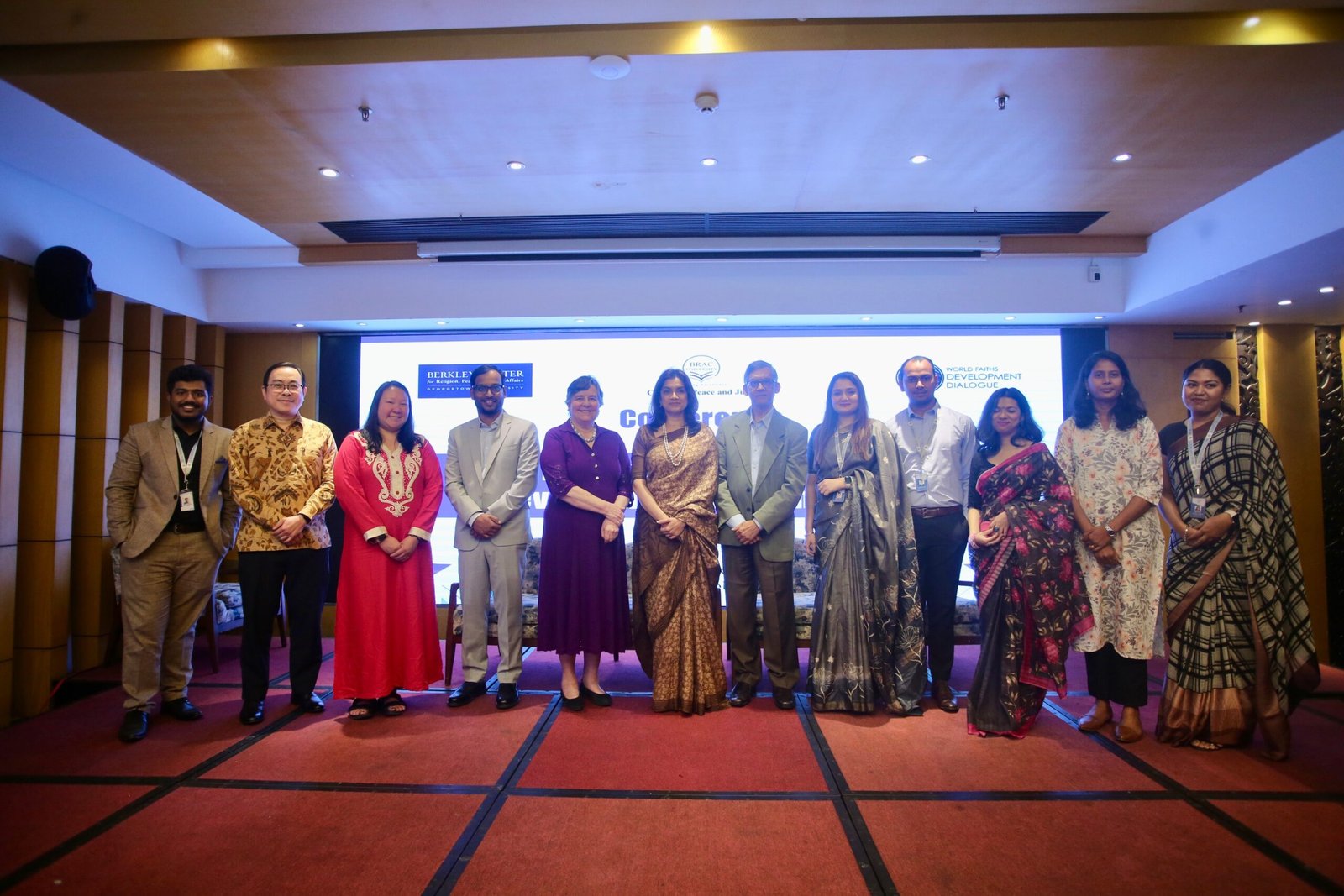
The speakers of “The Intersections of Faith and Development in Bangladesh” held in Dhaka, Bangladesh, at the end of October 2023.
Dhaka, IL News – Religion is one of the important factors in determining the success of global development. The challenges of an increasingly diverse and polarized world make religion a potential unifying force among groups to support development programs.
This was raised at a conference held in Dhaka, Bangladesh, by the Centre for Peace and Justice (CPJ), Brac University, and the World Faiths Development Dialogue (WFDD) at the Berkley Center for Religion, Peace, and World Affairs, Georgetown University, on October 29–30, 2023. The conference carried the theme “The Intersections of Faith and Development in Bangladesh.”
The Executive Director of the Leimena Institute, Matius Ho, was present as one of the speakers in the session entitled “Faith and Education” with the topic Cross-Cultural Religious Literacy: An Indonesian Perspective. According to Matius, the role of religion is still rarely discussed in development issues such as health and education. Yet, the involvement of religious factors, including religious institutions, is needed to sharpen perspectives in solving development challenges.
“Indonesia’s experience with the Cross-Cultural Religious Literacy (CCRL) program has drawn a lot of interest, and most of the questions were directed toward Indonesia’s experience,” said Matius.
Matius explained that the CCRL program, initiated by the Leimena Institute along with various educational, religious, and even ministerial partners, has equipped teachers with the competencies and experiences to interact with people of different religions. That is why teachers who participated in CCRL training became richer in their understanding to build a pluralistic society through education.
Matius added that interfaith encounters are the strength of the CCRL program in Indonesia. Teachers not only engage in formal dialogue but also have the opportunity to directly ask questions about other religions to their leaders or adherents.
“One of the questioners, an Islamic studies lecturer from Bangladesh, even asked for advice on developing a similar program for madrasahs in Bangladesh, so I offered to explore the possibility of online training for madrasah teachers in Bangladesh,” he continued.
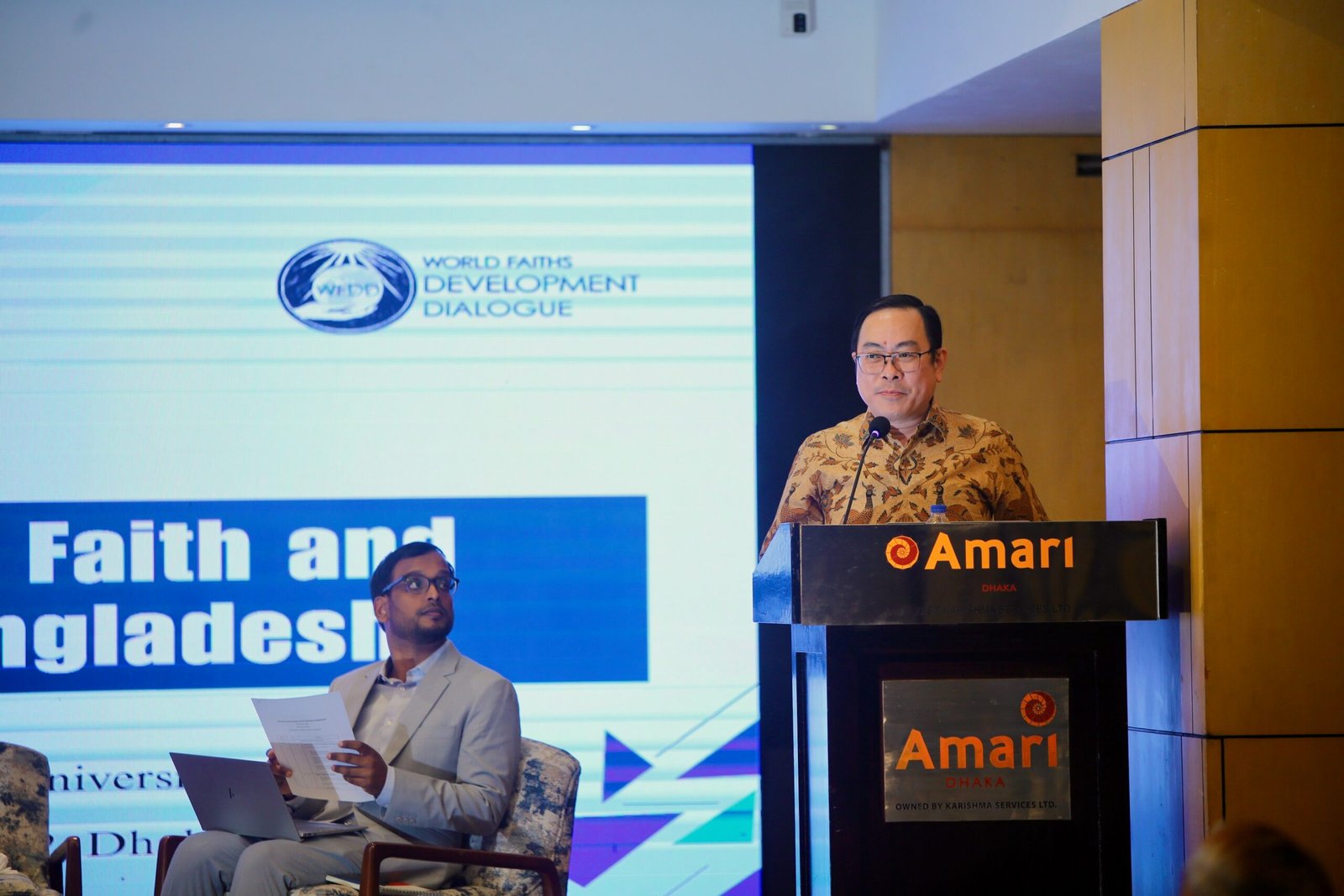
The Executive Director of the Leimena Institute, Matius Ho, delivering his presentation.
Matius shared the session with four other speakers: Dr. Sudipta Roy, Senior Researcher at WFDD; Dr. AQM Shafiul Azam from the Directorate of Secondary and Higher Education, Bangladesh; Dr. Huhua Fan, Education Program Specialist at UNESCO; and Prof. Mahan Mirza, Executive Director of the Ansari Institute for Global Engagement with Religion.
Meanwhile, the Dean of General Education and Research Fellow at CPJ, Brac University, Prof. Dr. Samia Huq, in her remarks emphasized that faith is an integral part of understanding and strengthening social cohesion.
“Collective, cohesive, and consultative efforts are needed to enhance the role of faith in advancing a nation’s development,” said Samia Huq.
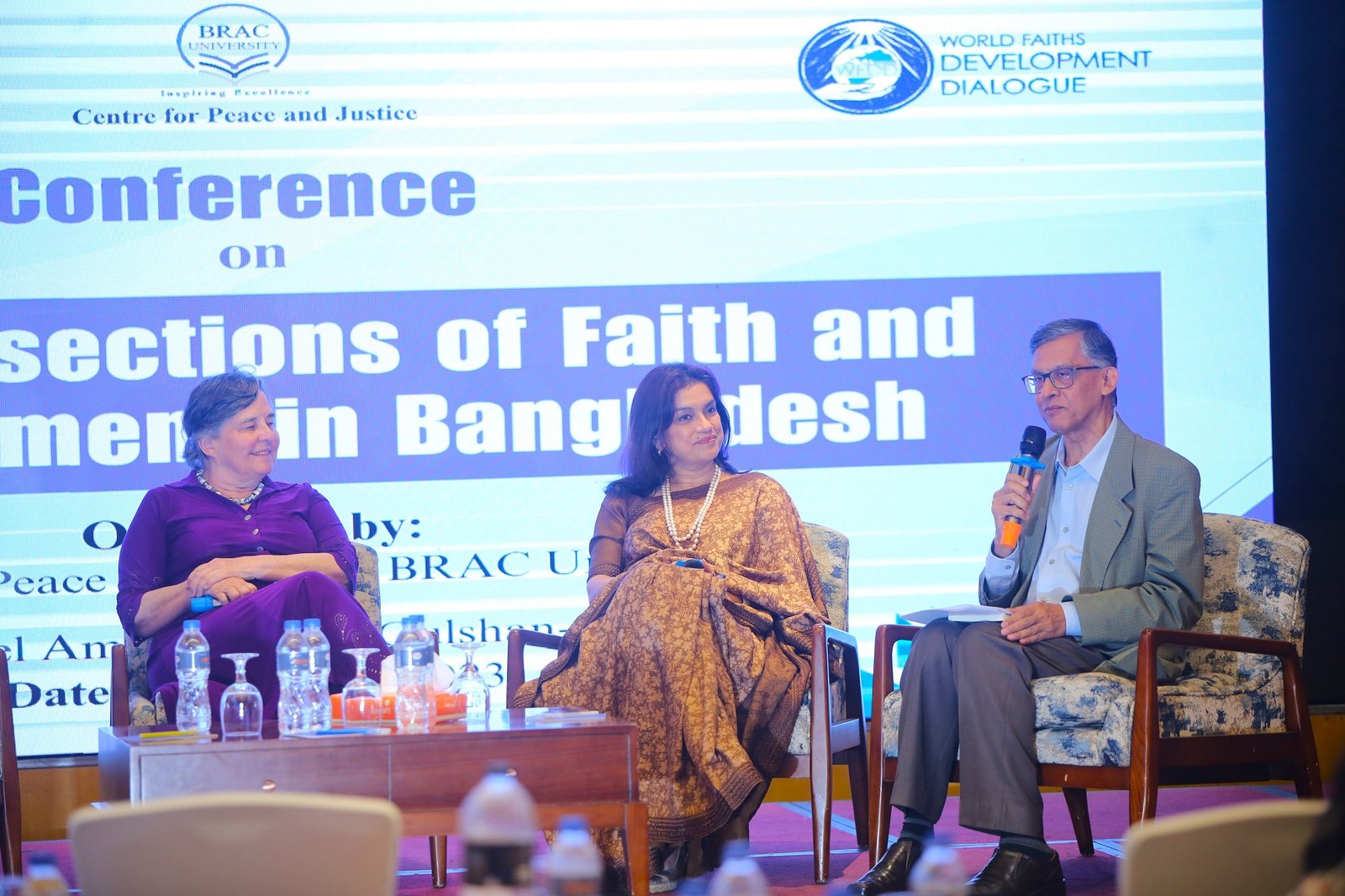
From left to right: Executive Director of the World Faiths Development Dialogue (WFDD), Prof. Katherine Marshall; Dean of General Education and Research Fellow at the Centre for Peace and Justice (CPJ), Brac University, Prof. Dr. Samia Huq; and Executive Director of CPJ, Brac University, Manzoor Hasan OBE.
In line with this, the Executive Director of WFDD at the Berkley Center for Religion, Peace, and World Affairs, Georgetown University, United States, Prof. Katherine Marshall, highlighted that religion is one of the most important factors influencing all other areas of development. “This is important because it is often overlooked or not visible at all in discussions and decision-making related to development,” she added.
The conference “The Intersections of Faith and Development in Bangladesh” sought to bring together academics, policymakers, and practitioners to facilitate discussions and knowledge-sharing as well as explore opportunities and challenges through the perspective of religion in development issues. The conference consisted of four sessions on the themes of Faith and Education; Faith, Youth, and Media; Faith, Gender, and Social Inclusion; and Faith, Environment, and Climate Change.