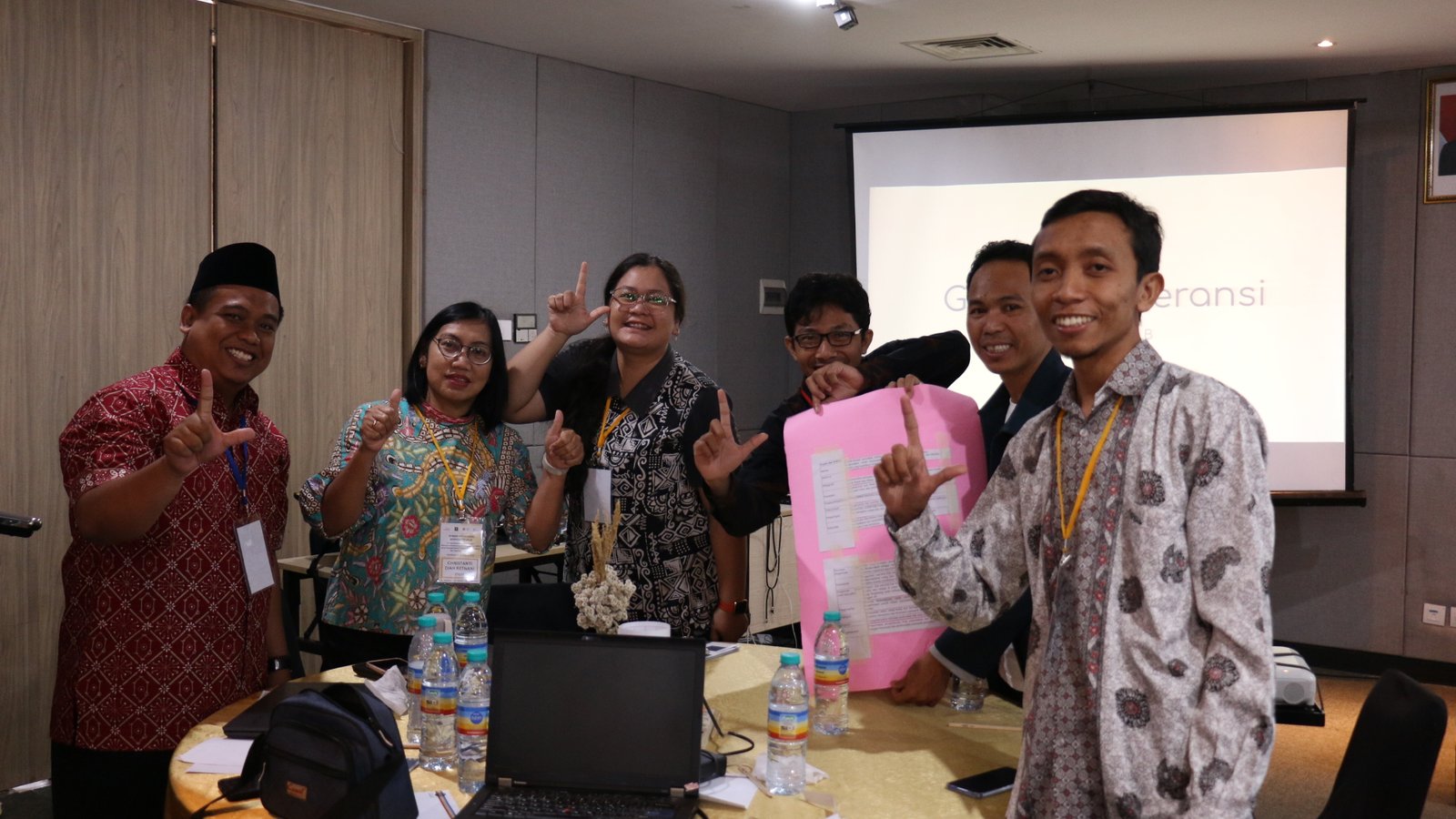
One of the participant groups in the CCRL Hybrid Upgrading Workshop held in Surabaya, October 6–8, 2023.
Surabaya, LKLB News – The International Cross-Cultural Religious Literacy (CCRL) program differs from interfaith programs that have previously existed. The CCRL program is unique and strategic because it is able to reach the grassroots, namely teachers and students in schools.
Coordinator of the CCRL Alumni Program at Leimena Institute, Daniel Adipranata, said that the targets of the CCRL program are teachers and religious instructors. The CCRL program helps ensure that efforts to build interreligious harmony are not merely normative, but instead can truly be applied in society.
“I often join interfaith dialogues that are limited to policymakers or leaders, but the CCRL program is different because it tries to penetrate down to the grassroots, to the level of teachers and students who are rarely touched by interfaith programs,” said Daniel in an interview with the press during the opening of the CCRL Hybrid Upgrading Workshop themed “Program Development and Lesson Plan (RPP) for Strengthening Religious Freedom and Rule of Law”, Friday (6/10/2023).
At least 5,700 educators have been equipped with competencies and skills from the CCRL program, which are highly practical to be implemented in classroom teaching. Daniel said teachers, as agents of change, have an important role in shaping students’ character to be open and tolerant.
“Tolerance is not just theory. Teachers cannot merely teach the definition of tolerance, but in order to truly understand the meaning of tolerance, one must go out, experience, and directly accept existing differences,” Daniel said.
That is why the CCRL program does not consist only of theory, but also provides training through workshops that have already been held nine times in various cities such as Yogyakarta, Malang, Semarang, Palu, Makassar, Solo, and most recently in Surabaya.
“The CCRL workshops cover complete sessions starting from material presentation, group discussions guided by facilitators, field visits to mosques and churches, and micro teaching practice so that teachers can integrate CCRL values into classroom learning,” Daniel said.
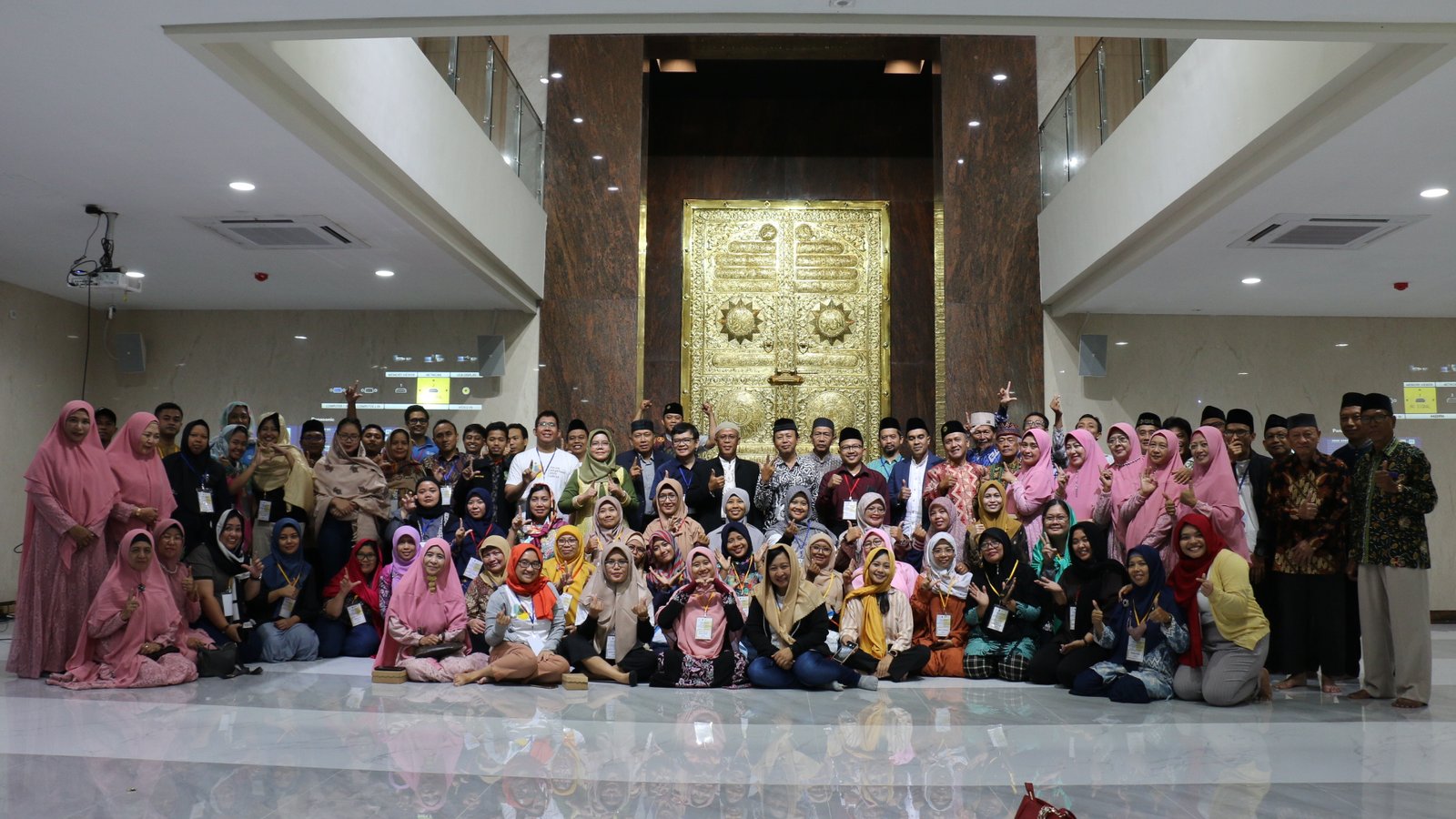
Participants of the CCRL Hybrid Upgrading Workshop visiting Masjid Gunungsari Indah, Surabaya, Saturday (7/10/2023).
Three Competencies
The CCRL program focuses on training teachers with three competencies: personal, comparative, and collaborative. Personal competence means encouraging someone to understand what their religion and holy scripture say about those who are different/the “other.” Meanwhile, comparative competence invites someone to learn about another religion directly from its adherents.
“Comparative competence in CCRL means we learn about another religion from its followers, not from YouTube or from someone of the same religion as us, because bias will surely occur,” said Daniel.
In order to deepen comparative competence, participants of the CCRL workshop in Surabaya were brought to visit Masjid Gunungsari Indah and Gereja Kristen Abdiel (GKA) Gloria, Pacar.
“For Muslims entering a church for the first time, for Christians entering a mosque for the first time. It turns out it’s perfectly fine for a Christian to enter a mosque or vice versa for a Muslim to enter a church. Does their faith weaken? No. That is the kind of experience we hope teachers can pass on to their students,” Daniel said.
According to Daniel, the main purpose of visiting mosques and churches is not to compare religions, but to engage in dialogue and conversation, because each religious adherent certainly has assumptions about other religions.
In the CCRL workshop, Muslim teachers were given the opportunity to ask pastors or church leaders directly about Christianity, while Christian teachers could ask mosque administrators about Islam. Questions could be on any matter, including theology, as long as they were conveyed respectfully.
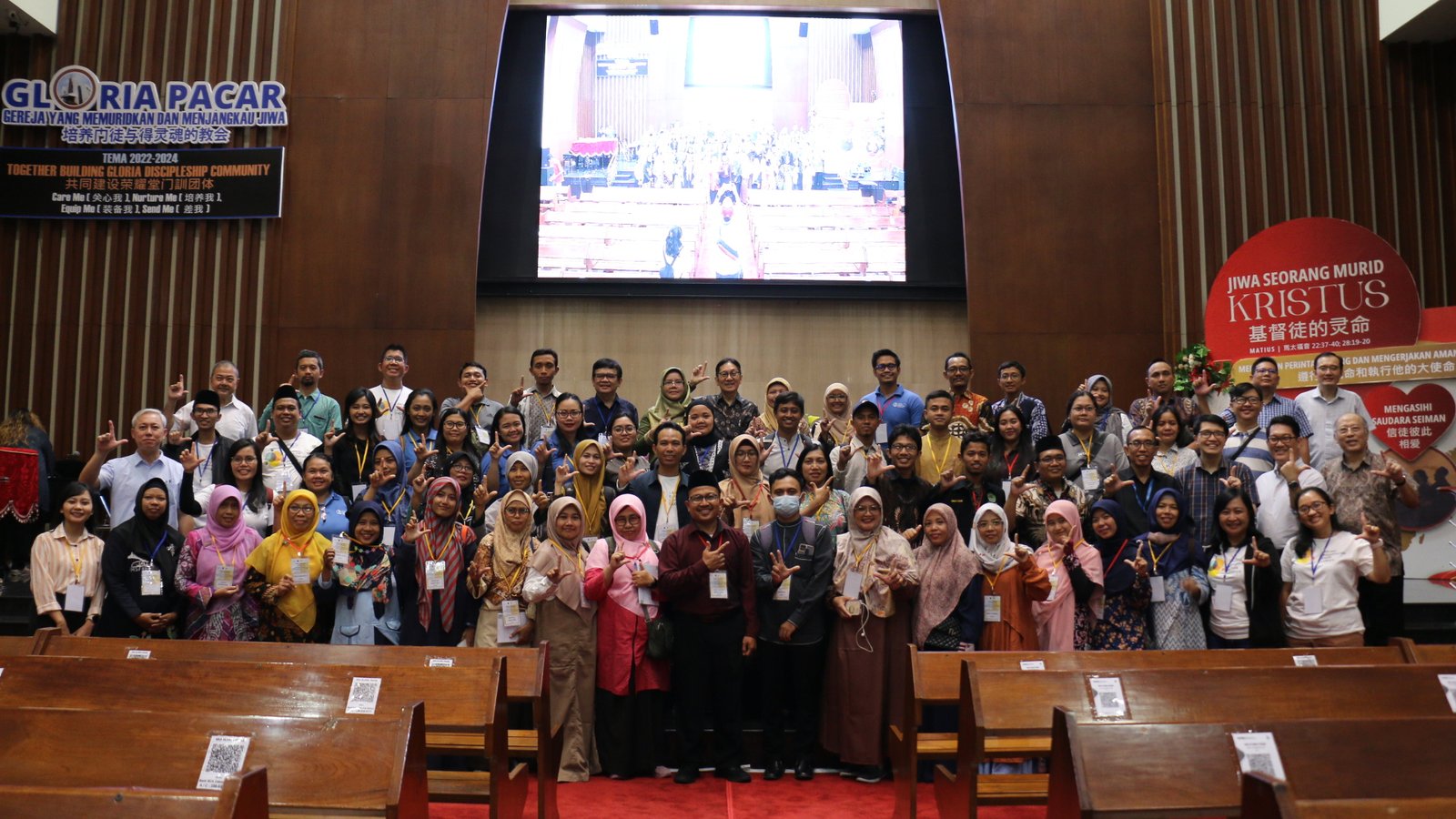
Participants of the CCRL workshop visiting Gereja Kristen Abdiel (GKA) Gloria, Pacar, Surabaya, Saturday (7/10/2023).
Chair of Takmir Masjid Gunungsari Indah (MGSI) Surabaya, Hidayat Fatoroni, expressed deep gratitude and honor because the Council for Primary and Secondary Education of Muhammadiyah Central Board (PP) through Muhammadiyah Regional Board of East Java Province appointed MGSI as a destination for the CCRL workshop visit. MGSI is a mosque that won first place in the Mosque Administration and Prosperity Management competition organized by Muhammadiyah City Board of Surabaya in commemoration of Muhammadiyah’s 109th anniversary.
“Of course, we say welcome to this mosque which is still under development. We are very glad and grateful to be able to communicate with people of different religions,” said Fatoroni.
The arrival of CCRL workshop participants at Masjid Gunungsari Indah was welcomed by dozens of mosque leaders, including women from the Women’s Study Group (Pengajian Wanita). Christian teachers were given shawls to wear as head coverings (kerudung) when entering the mosque.
Meanwhile, Chair of the GKA Gloria Pacar Congregational Board, Surya Tamara, said the arrival of CCRL workshop participants, especially Muslim teachers, was an honor.
“We believe this meeting is not just a coincidence, but God arranged it so that we can get to know and understand each other, because the progress of Indonesia begins with teachers,” he said.